Spiced Rum Kabocha Mousse will be posted soon. In the meantime, I hope you enjoy reading the old post about the Kabocha pumpkin before cooking with it soon.

Posted in Recipes | Leave a Comment »
You say Pummelo, I say Pomelo, and Thais say ”Som Oh”
One of my goals for the New Year is for my blog readers to learn light and easy Thai cooking and some new exotic ingredients. Thai cuisine has been famous for many centuries and I want people to have a more in-depth knowledge of it.

Pomelo, Thai Grapefruit - The Flower Market in Bangkok
One way that I hope I can deepen your culinary skills is simply by showing you some of the techniques that Thais use to handle their ingredients, methods learned from our families, our communities and our ancestors. I hope the instructions in my video demonstration will help you to open your pomelo.
Pomelos tastes so great by themselves, you don’t need to cook them. I created this simple fun recipe on New Year’s Eve to provide a zing to welcome the year 2011.
Best wishes to you all.
I love pomelo. It is in season around New Year’s time, but you can enjoy it every week to give a zing to your life. There are so many way to create a wow moment with pomelo. My favorite recipe is from Phuket, Thailand, and is made with shrimp, tamarind sauce and caramelized shallots. It is a great dish for teaching my students about the layer of flavors and textures that can be found in a Thai salad.
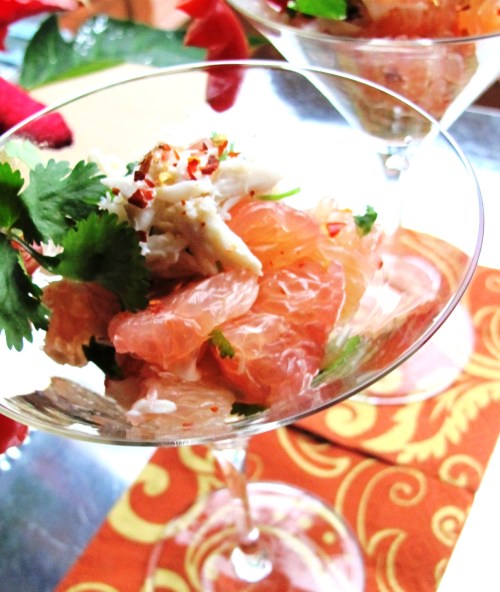
Yum Som Oh, Pomelo Salad with Crab
For my blog visitors, I think learning to open a pomelo is challenge enough, so I am keeping this recipe simple (which is also how I cooked during this past week). This recipe is prepared like a crab or shrimp cocktail rather than the traditional pomelo salad from Thailand.

Pomelo Salad with Crab
Yum Som Oh Khup Phu
ยำส้มโอกับปู
Serves: 6
1 pomelo (prepared as shown in the video above), about 2 cups 1 shallot, peeled and sliced 1/4 cup chopped cilantro, plus 6 cilantro sprigs for garnish 1/2 cup cooked crab meat or cooked shrimp 1 tablespoon palm sugar or brown sugar 1 tablespoon tamarind concentrate 2 tablespoons lime juice, about 1 lime 1 tablespoon fish sauce, or more as needed 1/8 teaspoon chili powderPlace pomelo, shallot, cilantro and crab in a medium size salad bowl. Whisk sugar, tamarind concentrate, lime juice, fish sauce and chili powder until well-blended, then pour over pomelo. Fold all of the ingredients together gently with a salad spoon and serve in a nice glass. Serve at room temperature or chill. Garnish with cilantro sprigs.
Vegetarian option:
Omit crab and use a few pinches of sea salt instead of fish sauce.
© 2011 Pranee Khruasanit Halvorsen I Love Thai cooking Pranee teaches Thai Cooking classes in the Seattle area. Her website is: I Love Thai cooking.com . Related articles- Tropical Fruit Facts and Legends: Pomelo – The Fruit of Reunion (travellingartist.wordpress.com)
- National Dish of the Week – Thailand (beatcancer2010.wordpress.com)
- ~Thai Fish Sauce Condiment Recipe, Nam Pla Prik~ (ilovethaicooking.wordpress.com)
- ~Acacia Omelet Recipe, Khai Jeow Cha-Om~ (ilovethaicooking.wordpress.com)
Posted in Pranee's Thai Cooking Videos, Recipes, Thai Cooking School: How to series, Thai Gluten Free Recipe, Thai Recipe for Kid, Thai Salad Recipe, Thai Side Dish Recipe, Thai Vegetarian Recipe | Tagged Chili powder, Crab, Fish and Seafood, Recipes, Thai Crab Cocktails, Thai Cuisine, Thai Grapefruit Salad, yum som oh | 3 Comments »
Pranee’s Curried Crab Filo for Holiday Entertaining
It is not a fusion and there is no confusion, they’re just for fun. Enjoy crab rangoon for a festive time.
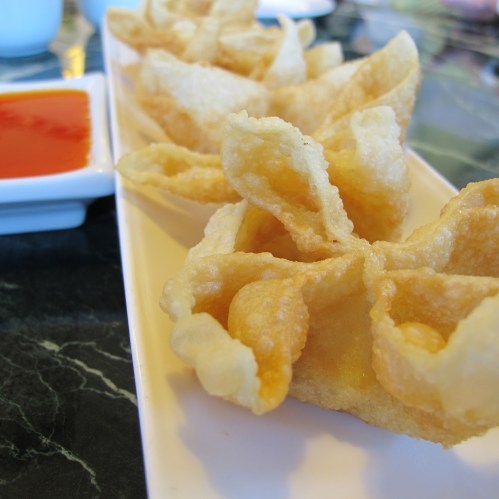
Crab Wonton from a Chinese Restaurant
I first tasted crab wonton, or crab rangoon, in a Thai restaurant many years ago. It tasted great, but I was confused because it was not related to any Thai food in Thailand, which left me wondering about its origin. When my assistant suggested that my Thai green chili jam would be great with crab wonton, I started exploring this dish and came up with the following fun version.
I rarely do deep-frying at home, so using filo dough was the way to go for me. It provides the texture of a fried wonton, but it is a crunch with less guilt. I always heighten the flavor of a crab dish with curry powder and green onion, but this time I used pineapple chunks as well to add an interesting sweet experience to a savory dish.
Last week I attended a Girls’ Holiday Appetizer Party. As we all surrounded a dining table filled with many kinds of appetizers, I was happy to see everyone’s expressions when they tried the Curried Crab Filo. It is amazing what flavors can be experienced in just one bite!
I like to make the stuffing the day before and chill it in the refrigerator. It is a good idea to thaw your filo dough then as well. Both will be ready for you the next day. The rest is easy. Just preheat the oven, wrap and bake.
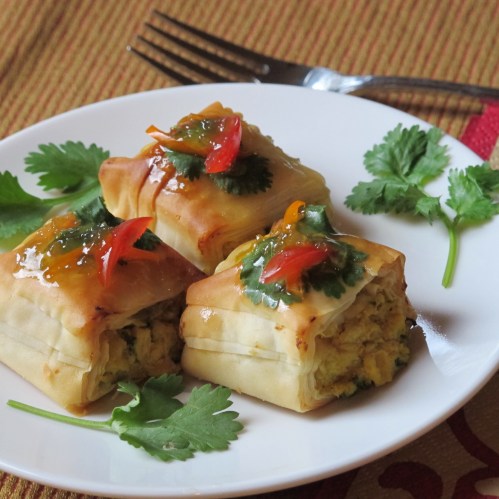
Curried Crab Filo at Home Party
Curried Crab Filo with Thai Lime-Green Chili Jam
Yield: 36 pieces
Preparation Time: 20 minutes
Baking time: 10 minutes
1 cup cream cheese 1 cup chopped fresh or canned pineapple, squeeze out excess liquid to get about ⅔ cup of pineapple ⅓ cup sliced green onions (about 5 green onions) 4 teaspoons Madras curry powder A dash of Thai chili powder 8-ounces crab meat (about 1 cup), squeezed lightly to drain out excess water 9 (17 by 12-inch) sheets filo dough, thawed if frozen ½ cup cooking oil 3 tablespoons Thai Lime-Green Chili Jam (see blog recipe) 36 cilantro leaves 36 sliced red peppers or red loganberriesPreheat oven to 375°F.
To make the filling, combine cream cheese, pineapple, green onion, Madras curry powder, and chili powder in a medium size bowl; mix well. Gently fold in crabmeat until combined. Yield: about 2 cups filling.
Take one filo sheet from the stack and lay it out on a work surface. Brush well with oil to cover the entire surface. Lay another layer on top and brush with oil again. Add a third layer and brush with oil again.
With the length facing you, place one-third of the cream cheese filling along the edge lengthwise from left to right to make a line of filling 1 inch by 17 inches. Fold the edge forward to make a roll. As you continue to roll, brush the dry surface of filo dough with oil. The finished roll should be about 1 inch in diameter. Using a knife, cut the roll into 12 pieces and place them on a greased baking sheet.
Repeat these steps to make two more rolls, for a total of 36 pieces. Place on the same baking sheet and bake until golden, about 10 minutes.
Transfer to a platter and place a ¼ teaspoon Thai lime-green chili jam on each curried crab filo and garnish with cilantro leaves and sliced red pepper or loganberries.
Enjoy warm or at room temperature.
© 2010 Pranee Khruasanit Halvorsen I Love Thai cooking Pranee teaches Thai Cooking class in Seattle areas, her website is: I Love Thai cooking.com
Posted in Thai Recipe for Kid | Tagged Crab, Crab Rangoon, Crab Wonton, Cream cheese, Phyllo, Recipes, Thai Cuisine, Thai Green Chili Jam, Thailand | Leave a Comment »
Sticky Rice in a Bamboo Tube, Kao Lam
I have fond memories of sticky rice in a bamboo tube—it looks so cool! At every festival in my village when I was growing up, there was a man who made and sold this Kao Lam. We would eat some at the festival then bring home a few for family members who couldn’t go. It is a perfect take-home food, since it is already packaged in a bamboo tube.
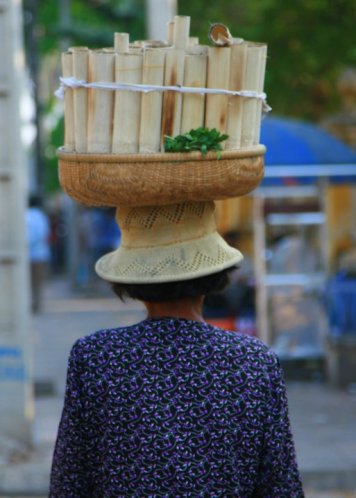
Sticky Rice in a Bamboo Tube, Cambodia
The sticky rice is cooked in a segment of bamboo, the kind that has a thin wall so the heat can penetrate to cook the rice inside the tube. After it is filled with the sticky rice ingredients, the bamboo is plugged with a piece of coconut husk wrapped with banana leaf to keep in the steam for cooking the rice. Then the bamboo tubes are placed over charcoal. When it is done, the outer skin of bamboo is removed and a thin wall left behind to protect the rice inside. All Southeast Asian countries have some version of this, and they are all cooked in a similar way. The photo below is from Cambodia. In Thailand this dish is called Kao Lam; in Malaysia it’s Lemang.

Thai Sticky Rice in Bamboo Sticks in Cambodia
If you like sticky rice with mango, you will like Kao Lam, too. I love the fact that when you peel the bamboo away (see photo below), the powdery fiber in the bamboo tube leaves a sheen. The rice comes out shaped like a stick and looks like it was wrapped in edible paper. The vendor in my village usually made three varieties: white sticky rice, black sticky rice, and white sticky rice with black beans.

How to open the bamboo tube
In America you can find cooked sticky rice that comes straight from Thailand in the frozen food section in Asian markets. But I would rather you try my sticky rice recipe below. I wrap it up in parchment paper, roll it into a cylinder, and bake it. It is delicious, has a very nice texture, and is as satisfying as the original.
During the summer of 2010, I taught Grilled Sticky Rice with Black Bean and Banana Stuffing in a Banana Leaf (Kao Neow Mad) in my Thai Grill class. Organizing my photos from my recent trip to Cambodia led me to this project, a Kao Lam version baked in the oven. It is not easy to cook sticky rice in a bamboo tube—only a few experts from each Thai village know how. Last August I created this adaptation, wrapping and rolling the sticky rice in pieces of parchment paper and then baking them. The results were good. It was easy, and the flavor and texture were satisfying. Then I made a lot of them in small packages and even put some in the freezer. I microwave them or reheat them in the oven and eat them for a protein snack before teaching my classes. In Thailand, most farmers eat sticky rice before working in the rice field.

Baked Sticky Rice and Black Bean Wrapped in Banana Leaf
Kao Neow Yang
Serveings: 8
2 cups Thai sticky rice, soaked in water for 3 hours or overnight, then drained (see note) ¾ cup coconut milk ¼ cup water 2 tablespoons granulated sugar, optional 1 teaspoon salt 1 cup canned black beans, drained 8 (8×8) inch pieces of banana leaves or parchment paperPreheat oven to 350°F.
Stir sticky rice, coconut milk, water, sugar and salt in a large pan over medium heat. Stir until all coconut milk is absorbed. Stir in black beans and fold gently to mix.
Put equal amounts of the sticky rice mixture onto 8 banana leaves. Form the rice into a cylinder about 6″ long and lay it in the center of the leaf so that you have about 1 inch left on either end. Fold the banana leaf in half around the rice, then roll it around the cylinder; fold in both ends and secure them with a toothpick, poking down and then up, or you can twist the ends and tie them. When you are done, each bundle will make a round tube about 6 inches long and 1 to 1 1/2 inches in diameter. Grill for 5 minutes on each side until the sticky rice is translucent and cooked, or bake in the oven for 10 minutes.
Pranee’s note:
In Thailand, recipes generally use one of two types of rice: jasmine rice or Thai sticky rice. The starch in rice is made up of two components, amylose and amylopectin. Jasmine rice has more amylose than amylopectin, giving it a puffy appearance, whereas Thai sticky rice has more amylopectin than amylose, creating its sticky texture. Both white and purple Thai sticky rice are long-grain rices with a firm grain and become sticky when cooked. They are tropical rices, and different from Japanese, Chinese or Mediterranean (Arborio and Valencia) rices, which have a medium or short grain and grow in temperate climates.
© 2010 Pranee Khruasanit Halvorsen I Love Thai cooking Pranee teaches Thai Cooking class in Seattle areas, her website is: I Love Thai cooking.com


Outer layer of bamboo tube is removed
Posted in Pranee's Culinary Tales, Recipes, Thai Cooking School: How to series, Thai Dessert Recipe, Thai Gluten Free Recipe, Thai Recipe for Kid, Thai Snack & Street Food Recipe, Thai Vegetarian Recipe | Tagged Asian supermarket, Banana leaf, Cambodia, Cambodian Cuisine, Coconut, Coconut milk, Glutinous rice, Kao Lam, Laos Cuisine, Lemang, Malaysian Cuisine, Phuket Cuisine, Rice, Sticky rice in bamboo tube, Thai Cuisine, Thailand, Traditional Thai Cooking | 7 Comments »
Rice Soup for breakfast
My grandmother loved rice soup for breakfast. And I can recall a memory– I often joined her savoring this soul food before our day began. To this day when I visit Thailand, in my village, I still love having this rice soup but instead of our kitchen, I join local at the breakfast stall.
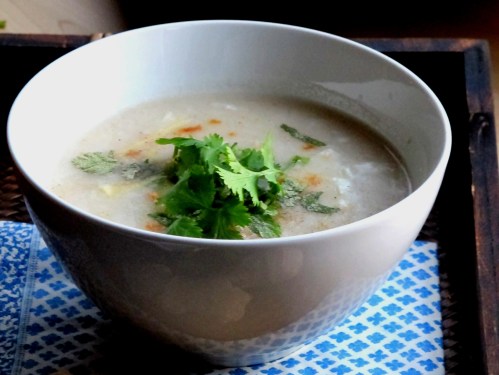
Rice Soup for Breakfast
I like rice soup in another occasion too, in the winter for lunch or dinner, as it is a real comfort food for every occasion and nothing is as good and satisfying as rice soup on a cold day and when one’s body needs gentle food. Just like American enjoys the chicken noodle soup.
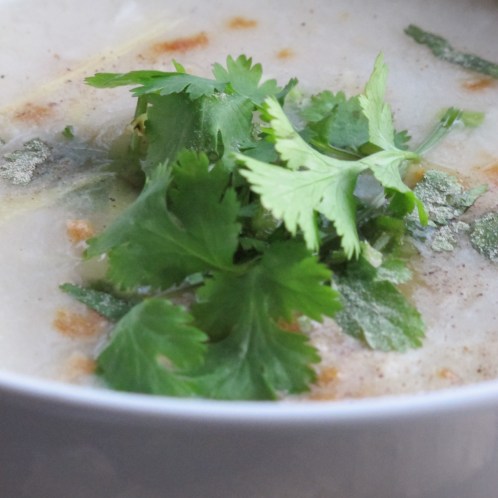
Kao Tom, Thai Rice Soup for Breakfast
It is easy to make with either from scratch or use leftover rice. But when one has an extra time, I would recommend to make the rice soup from scratch, please follow the recipe below to make rice porridge. It has a nice softer texture. I never think rice soup as a pot luck dish, however my student once told me that she brought to her office potluck party and it was a hit.
Thai Rice Soup with Chicken & Egg
Kao Tom Gai Sai Kai
Serves: 1 about 2 cups
Cooking Time: 5 to 8 minutes
1 ½ tablespoons canola oil 1 tablespoon minced garlic, about from 3 cloves ¼ cup ground chicken or pork (from chicken thigh or breast) ½ teaspoon salt 2 teaspoons soy sauce 1 ½ cups chicken broth 1 cup steamed jasmine rice or rice porridge (see note) 1 egg 1 tablespoon thinly shredded fresh ginger 1 green onion, thinly sliced 1 tablespoon coarsely chopped cilantro A dash white pepper powderHeat canola oil in a medium size pot on medium-high heat and stir in garlic. Stir constantly and when garlic is yellow, remove a half portion of fried garlic for garnish. Stir in chicken and cook with remaining oil and garlic, then season with salt and soy sauce. Pour in chicken broth and jasmine rice and let it cook on medium-high heat for 3 to 5 minutes.
When it reaches the desire texture of soup or porridge like, it is cooked and almost ready to serve. On high heat, crack the egg open and drop in the center of rice soup. You may stir or poach the egg in the hot rice soup; it can take from 30 seconds or 1 minute depending on your preference to cook the egg.
Pour the hot rice soup in a bowl and top with fried garlic, ginger, green onion, cilantro and white pepper powder.
© Pranee Khruasanit Halvorsen
Rice Soup, Kao Tom ideally taste best when made from rice porridge specially prepare for rice soup. For this recipe you may use cold leftover rice or cooked warm rice but the texture will be different. Below is how to make rice porridge for a rice soup. The amount is enough to make 4 rice soups from the recipe above.
Kao Tom Buey
Plain Rice Porridge
Yield: 4 cups
Cooking Time: 20 minutes
1 cup jasmine riceBring jasmine rice and 2 cups water to a boil on high heat, and stir often while cooking for 5 minutes. Add 4 cups water and bring to a boil and let it cook on medium heat for 15 more minute. Then cook until it yields 4 cups.

Thai Rice
Posted in Pranee's Culinary Tales, Thai Gluten Free Recipe, Thai Main Dish Recipe, Thai Recipe for Kid, Thai Soup Recipe, Thai Vegetarian Recipe | Tagged Phuket Cuisine, Recipes, Soup, Thai Egg Recipe, Thai Foods | 8 Comments »
Dark Soy Sauce, an Essential in Thai Cooking
Two years ago my friend Pom arranged for me to visit the Junsaeng soy sauce factory in Thalang, Phuket. I was fortunate to learn firsthand about their establishment and how soy sauce is made. Out of four soy sauce factories in Phuket, it is the only one still in business. I hope the video below will help you understand how soy sauce is made.
There are two types of soy sauce: light and dark. The dark soy sauce is a little-known but very important ingredient in many dishes, such as Phad See Ew, Kee Meo and Lahd Nah Noodles. After Phad Thai, these are the best known Thai noodle dishes for Americans. The secret ingredient in these dishes is a good dark soy sauce. For me personally, I love the flavor of dark soy sauce in Singaporean Noodles and Hainan Chicken. The challenge is that most of my students know how to use light soy sauce, but few have had a chance to experience cooking with dark soy sauce. Moreover, a good dark soy sauce is hard to find in America. My favorite brand is from Indonesia.
Before teaching my Thai Comfort Foods class for PCC Cooks, I decided to create a homemade, gluten-free, dark soy sauce. I didn’t want students to have to turn the world upside down to find dark soy sauce, but even more importantly, is almost impossible to find one that is gluten-free. After a few experiments at home, I was happy with the results. My dark soy sauce recipe below was a success when I used it in stir-frying the noodles for my class. I hope that this recipe made it easier for you to cook Thai noodles at home. A few drops of dark soy sauce go a long way.
Dark Sauce
See Ew Dam
In America, good dark soy sauce is hard to find. I created this recipe to make it available for students as a substitute for store-bought dark soy sauce. It is an important ingredient for stir-fried noodles and rice dishes that require a sweet molasses-like soy sauce.
Yield: ¾ cup
¼ cup water 1 cup dark brown sugar ½ cup wheat-free soy saucePlace water and brown sugar in a heavy-bottom sauce pan and bring to a boil over a high heat. Stir until the sugar and water mix well together, then stop stirring completely. Let the sugar mixture cook on medium-low heat. Stand and watch the bubble. When it gets dark like coffee or molasses, pour in the soy sauce—be careful as there will be an eruption of bubbling liquid. Keep stirring until it becomes the consistency of molasses. Store in the refrigerator.
© 2010 Pranee Khruasanit Halvorsen I Love Thai cooking Pranee teaches Thai Cooking classes in the Seattle area. Her website is: I Love Thai cooking.com .Posted in Pranee's Culinary Tales, Pranee's Thai Cooking Videos, Recipes, Thai Gluten Free Recipe, Thai Sauce & Condiment Recipe, Thai Vegetarian Recipe | Tagged Dark Soy Substitutes, Glueten-Free Dark Soy Sauce, Phuket Cuisine, Sauces Dips Gravies and Toppings, Soy sauce, Thai Foods, The difference between light and dark soy, Traditional Thai Cooking | 35 Comments »
Spiced Up Cranberry Sauce with Thai Herbs
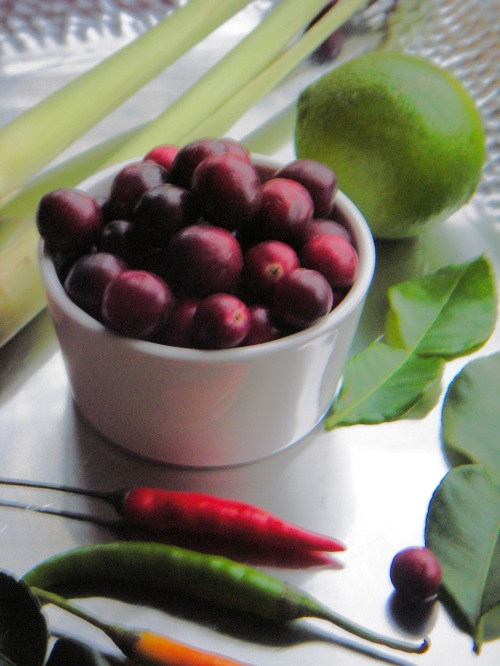
Spiced Up Cranberry Sauce with Thai Herbs
Many years ago, when I cooked my very first cranberry sauce, I just followed the recipe on the back of the cranberry package. Now that I have lived in America for almost twenty years, I know the ingredients in the sauce quite well and have done some experimenting. For the past few years, I have enjoyed adding Thai flavors to the sauce, but now I have settled on this flavor profile. The sweet from the evaporated cane juice organic sugar (Wholesome Sweeteners Brand) goes well with the hint of caramel from the rum. Thai herbs and a unique sea salt balance out the flavors. This recipe has the sweet, sour, salty and spicy elements that add the Thai accent to my family’s Thanksgiving traditions. I hope you will enjoy cooking this recipe. Have a great Thanksgiving.

Pranee's Cranberry Sauce with Spiced Rum and Thai Herbs
Pranee’s Cranberry Sauce with Spiced Rum and Thai Herbs
Yield: 4½ cups
2 (12 ounce) packages fresh cranberries, washed and drained 2 cups organic evaporated cane sugar, or regular white sugar 1 ½ teaspoons Hawaiian Kine Seasoning Salt – Lemon Grass, or regular sea salt 1/2 cup water 2 tablespoons Sailor Jerry Spiced Rum 2 tablespoons Triple Sec orange-flavored liqueur 3 tablespoons lime juice, about 1 lime 1 stalk lemongrass, trimmed (cut off the lower bulb and remove tough, outer leaves) and smashed 1 to 2 fresh Thai chilies, smashed 3 Kaffir lime leaves 1 shallot, peeled and minced 2 tablespoons minced cilantro roots or stemsPlace cranberries, sugar, salt, water, rum, triple sec, lime juice, chilies, shallot and cilantro root in a large pot, stir well and bring to a boil. Then stir as needed while cooking on medium heat until it reaches a jam-like texture, about 15 to 20 minutes. Remove lemongrass, chilies, and Kaffir lime leaves. Pour cooked cranberry sauce into sterilized jars. Keep in the refrigerator for up to two weeks, or freeze.
Pranee’s note:
Sailor Jerry Spiced Rum is a Caribbean rum with spice, caramel and other natural flavors.
Hawaiian Kine Seasoning Salt – Lemongrass is made from rock salt, pepper, garlic, ginger and lemongrass. You may use any sea salt.
Cilantro roots (rahk pak chee) are an important Thai flavoring ingredient. Unfortunately, cilantro usually comes with its roots already cut off. Look for whole cilantro plants with roots at farmer’s markets, grow your own, or substitute the bottom stems. If you do find cilantro with roots, rinse them well and use the roots along with about an inch of the bottom stems to which they are attached. You may also find frozen cilantro root in Asian markets.
Posted in Recipes, Thai Gluten Free Recipe, Thai Sauce & Condiment Recipe, Thai Vegetarian Recipe | Tagged Caribbean, Cranberry, Cranberry Sauce, Culinary Adventure in Pacific Northwest, Eat locally, From Farm to Table, Go Wild with Lemongrass, Kaffir lime, Lime juice, Recipes, Sailor Jerry, Thai Cooking in Seattle | Leave a Comment »
Inle Lake Green Tomato Salad, a Recipe from Shan StateMyanmar

Green Tomato, Red Tomato and Somewhere in Between
Today, on my way back from the University District Farmers Market, I visited a friend and saw her tomatoes in various shades of colors on her windowsill. Then I remembered that I wanted to share this recipe with you.
When I see green tomatoes, I think of my family’s visit to Inle Lake, Myanmar in June 2008. Our two-hour boat ride was enchanting, and we saw a fisherman using his foot to row his canoe. At the shallow edge of the lake were floating gardens with rows and rows of tomato plants. We had a chance to see the hydroponic farms and miles of tomatoes growing on floating gardens.

Inle Lake Fisherman
When we stopped for lunch and a cooking class at the View Point Restaurant, the chef surprised us with a green tomato salad along with many famous Shan State dishes. The menu reflected the local abundance of tomatoes from local farming, as Inle lake is the largest source of tomatoes and vegetables in Myanmar.
If you are planning to visit Myanmar anytime soon, please do make sure that the View Point Restaurant & Cooking School is in your itinerary. I love the people who work there, and the views of rice fields, the river, and the bridge—a great place to observe locals going about their daily lives.
I had never eaten green tomatoes before but I am familiar with the concepts of fried green tomatoes, pickled green tomatoes, and green tomato relish. So what else can you do with green tomatoes? Inle Lake Green Tomato Salad is an answer here.
Before cooking and eating green tomatoes, this is what you should know.
Thisis an excerpt about Tomatoes & Health that I copied from About.com:.“Although green tomatoes are wonderful when cooked or pickled, they should be avoided in large amounts when raw. Green tomatoes contain large amounts of tomatine, a toxin in the same alkaloid family as solanine which may be found in green potatoes, another member of the nightshade family. ”
I ate a few pieces of green tomato slices and felt fine but didn’t like the taste; it was too tart and bitter. My friend Deb had mentioned that green tomatoes shouldn’t be eaten fresh, so I decided to bake the green tomato slices for 15 to 20 minutes at 350 degrees Fahrenheit. The cooked tomatoes tasted great, but the color was dark green. I bake my green tomatoes or simply use firm ripe tomatoes instead.

Inle Lake Green Tomato Salad
This green tomato salad is very simple to make. You start by making Lemongrass Vinegar. I would recommend making a lot of it and storing it in the refrigerator. It can be added to any recipe that calls for vinegar.
Inle LakeGreen Tomato Salad
Yum Makruatad Keow
4 large green or ripe tomatoes, sliced 1 shallot, peeled and minced 1 tablespoon chopped peanuts, dry roasted and unsalted peanut 1 tablespoon fried minced garlic plus 1 teaspoon garlic oil ( this the oil that the garlic was fried in) 1 to 2 tablespoons lemongrass vinegar 1 teaspoon toasted dark or light sesame oil ½ teaspoon black sesame seeds Salt to tastePlace green tomato slices on a large platter.
To make salad dressing, combine the shallot, peanuts, fried garlic, garlic oil, lemongrass vinegar, and sesame oil in a small bowl and whisk until combined. Pour over green tomatoes and garnish with black sesame seeds.
© 2010 Pranee Khruasanit Halvorsen
I Love Thai cooking Pranee teaches Thai Cooking classes in the Seattle area. Her website is: I Love Thai cooking.com .Posted in Recipes, Thai Gluten Free Recipe, Thai Salad Recipe, Thai Side Dish Recipe, Thai Vegetarian Recipe | Tagged Burmese Cooking, Burmese Tomato Salad, Cooking School and Restaurant in Myanmar, Culinary Adventure in Pacific Northwest, Eat locally, From Farm to Table, How to prepare lemongrass for Thai cooking, Inle Lake, Recipes, What to Do with Green Tomatoes | Leave a Comment »
Pranee’s Thai Lime-Green Chili Jam
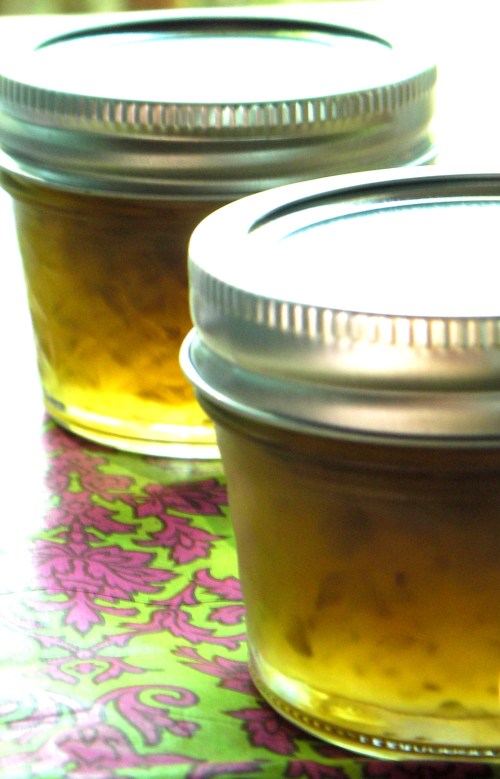
Thai Lime-Green Chili Jam
I have three different kinds of chili jam in my kitchen cabinet: Plum-Ginger Thai Pepper Jelly, Mango Madness, and Sweet Pepper Jalapeño Jam. These were precious gifts from good friends and they inspired me to create my own jam recipes. When my friend Ron gave me a bag of fresh green Star Fire Chilies from his favorite farm, “Krueger Family Peppers and Produce, Inc.” in Wapato, Washington, a journey began.
I wanted to create a Thai Lime-Green Chili Jam with a fun flavor from Kaffir lime leaf. First I explored the jam-making process and daydreamed about the flavor combinations, then I got a hands-on lesson on canning from my friend Kaia. She recommended a few books, and I purchased one, the “Ball Complete Book of Home Preserving.” A week later, I found the best price for canning jars, and in the past few weeks, I have created three combinations of chili jam. Honestly, I love all of them: Sweet Red, Lime-Green and Pineapple-Orange.
I have also learned my lessons on the do’s and don’ts of using powdered pectin. If the jam doesn’t set, follow the Sure-Jell instructions on how to remake the jam. After a few experiences, I became comfortable with the process. The most important part was that I had so much fun making close to one hundred jars of jam, and so did my friends. All I have to do now is to listen to their creative ways of using the chili jam.
I would like to share my Thai Lime-Green Chili Jam with you. It would be fun to serve side-by-side with cranberry sauce at Thanksgiving. You can learn to use it creatively during the holidays, and it makes a great gift for families and friends.

Thai Lime-Green Chili Jam with Citrus Flavors
Like green curry paste, the green color in this jam comes from fresh Thai green chilies. I also use green-colored peppers, herbs, lime juice, and all the Thai herbs to give it a real Thai flavor.
Thai Lime-Green Chili Jam
Yam Prik Keow
Yield: 5 1/2 cups or 14 (4-ounce) jars or 6 (8-ounce) jars
4 green bell peppers, cored and diced 30-40 fresh Thai green chilies, stems removed (I used Star Fire chilies) 1/2 cup diced red onion, about 1/2 medium-size onion 1 package Sure-Jell fruit pectin 2 cups cane vinegar (a vinegar made from cane sugar, available in most Asian markets) 2 to 4 tablespoons lime juice 4 cups sugar 1 1/2 teaspoons salt 10 Kaffir lime leaves 1 stalk lemongrass, trimmed and smashed 1 tablespoon butter 1 drop green food coloring, optionalPlace bell pepper, fresh Thai green chilies, and onion in a food processor; pulse to make a fine chunk (about 3 cups). Combine the mixture with Sure-Jell, vinegar, lime juice and salt in a large, deep, stainless steel saucepan. Mix well until the pectin is dissolved. Bring to a boil over high heat. Stir in Kaffir lime, lemongrass and butter. Bring to a boil and cook for 3 minutes, stirring constantly. Stir in sugar all at once and return to a full rolling boil; stir constantly for 4 minutes.
Remove from heat and ladle into jars filling to within 1/8 inch of the top. Wipe jar rims and threads. Cover tightly and store in refrigerator.
Note: If you want a jam that can be stored (unopened) at room temperature, visit the Sure Jell website for instructions on how to process the jars.
© 2010 Pranee Khruasanit Halvorsen I Love Thai cooking Pranee teaches Thai Cooking classes in the Seattle area. Her website is: I Love Thai cooking.com .Posted in Recipes, Thai Gluten Free Recipe, Thai Sauce & Condiment Recipe | Tagged Culinary Adventure in Pacific Northwest, Eat locally, From Farm to Table, Kaffir lime, Recipes, Recommended Cookbook, Thai Cooking in Seattle, WA | 10 Comments »
Everything Goes in Rice Pilaf
Kao Op
Today, I looked for some leftovers in the fridge, but there weren’t any ready to heat up. Instead I found odds and ends of leftover ingredients.
I had stewed tomatoes, sliced Jimmy Nardello Peppers (Sweet Italian Frying Peppers from Tahoma Farm), a halved onion and chorizo. In my cabinet I had Bomba rice (a Spanish rice used in paella) from The Spanish Table and Harissa spice mix, a hot chili spice blend from Northern Africa that I had purchased from World Spice Merchants. Right on the spot, I decided to cook rice pilaf. I didn’t want to open any cookbooks or Google for ideas, and because it was a busy day I could just put it in the oven and go back to work in my home office. I just wanted to have fun and rice pilaf is a very easy recipe for anyone to come up with unique flavors. The ingredients I had were mainly Spanish so I went with that as my theme.
To cook any rice pilaf, the important part to remember is the liquid to rice ratio. For example, for basmati and jasmine rice you will need 1½ cups of liquid to a cup of rice, but for Bomba rice the ratio is 1½ to 2 cups of water to 1 cup of rice.
Spanish Rice Pilaf with Chorizo and Italian Frying Peppers
Kao Op Spain
Yield: 7 cups
Servings: 6
3 tablespoons canola oil ½ cup diced onion, about ½ onion 2 cups Bomba, calrose, or basmati rice 1 ½ teaspoons salt 6 links chorizo sausage, sliced 1 cup diced sweet peppers, about 4 sweet pepper 1 cup stewed tomato chunks or stewed tomatoes from a can 2 tablespoons Harisssa spicy mix powder 3 cups chicken or vegetable broth, or water (use 4 cups if you are using Bomba rice)Preheat the oven to 350 degree Fahrenheit
Heat the oil in a Dutch oven or heavy-bottom pot on medium heat, then stir in onion until it is fragrant and translucent. Add Bomba rice and salt and stir until it is well coated with oil. Stir in chorizo sausage, sweet peppers, tomatoes, Harissa mix and water; combine and bring to a boil for 1 minute, stirring well. Cover the pot with the lid and place on the rack in the center of the oven. Set the timer for 30 minutes, then remove the pot from the oven and leave it on the cook top to sit for at least 15 minutes without opening the lid. Before serving, stir well to combine all ingredients together.
Pranee’s note: Bomba rice (Arroz de paella) is a product of Spain and costs about $6 a pound. Thai and basmati rice are usually less than a $1 a pound. Bomba rice is short grain rice that expands in width, while most rice varieties expand in length. It absorbs more liquid than other types of rice, but remains firm when cooked and has a great texture.
See also Pranee’s Thai Kao Mok Gai Recipe, a form of rice pilaf from Thailand.
This history of rice pilaf and definition from Wikipedia
“Depending on the local cuisine, it may also contain a variety of meat and vegetables. . Pilaf and similar dishes are common to Middle Eastern, Central and South Asian, East African, Latin American, and Caribbean cuisines…….The English term pilaf is borrowed directly from Turkish, which in turn comes from (Classical) Persian پلو and Hindi pulav (पुलाव), and ultimately derives from Sanskrit pulaka (पुलाक)[2″© 2010 Pranee Khruasanit Halvorsen
Pranee teaches Thai Cooking classes in the Seattle area. Her website is: I Love Thai cooking.com .
Posted in Thai Gluten Free Recipe, Thai Main Dish Recipe | Tagged Recipes | Leave a Comment »
Hi Pranee!
I made tom yum gai and green curried fried rice. It was delicious.
Can I freeze leftover coconut milk? I’m never sure what to do with the leftovers when I only need a portion out of a can.
Thanks so much.
JC
Dear JC,
Thank you for your questions. Could you please save some leftovers for me? I mean the soup and the fried rice, not the coconut milk.
Yes, keeping it in the freezer is a good way to save the leftover coconut milk. I would recommend saving it in a portion needed according to your favorite recipe. Then thaw it overnight in the fridge or place the whole container of coconut milk in warm water for a short period of time. When the frozen coconut milk separates from the container then place the coconut milk in a small pot and let it sit at room temperature or heat at a low temperature until it thaws.
After opening a can of coconut milk, you may store it for 2 to 4 days in the fridge, then it goes bad quickly after that. So the freezer is the sure thing.
I hope these tips help.
Pranee
Posted in Q & A Thai Cooking, Thai Cooking School: How to series | Tagged Coconut milk | Leave a Comment »
Northern Thai Cuisine with the Kantok Diner
When planning a trip to Chiang Mai, the largest city in northern Thailand, one must see all of the cultural aspects that Northern Thai culture or Lanna culture has to offer. That is why I took my tour members to the Old Chiangmai Cultural Center. It is my favorite place for eating Northern Thai cuisine, listening to Thai music, and watching the dances. This may seem like a tourist trap, but for a short visit to Chang Mail, I recommend this experience before returning home. My visits with tour members in February 2007 and 2008 were memorable. We sat under the moonlight in a courtyard surrounded by old Thai teak buildings, ate, and watched the dance show. And of course the visitors had a chance to dance at the end.

Kantok Dinner at the Old Chiangmai Cultural Center
A typical Kontok dinner menu consists of Pork-Tomato Chili Dip (Nam Prik Ong), Green Chili Pepper Dip (Nam Prik Num), Fried Chicken (Gai Tod ), Chaingmai Curry Pork (Geang Hungley), Fried Banana (Kleuy Tod) and all of the vegetable condiments that go with chili dip, plus steamed sticky rice and steamed jasmine rice. All of these dishes were placed in bowls (kan) and set on a small round teak or rattan table (tok) that was only about 10 inches tall. We sat around the table and ate the food with our fingers, or with forks and spoons.
Tomato-Pork Chili Dip, Nam Prk Ong
Inspired Recipe from Our Chiang Mai Kantok Dinner

Nam Prik Ong
Tomato-Pork Chili Dip
Nam Prk Ong
น้ำพริกอ่อง
This dish is easy to make, and among Thai chili dips, pork-tomato chili dip is easy to love. It has a tomato base and is spicy hot with chili pepper, but does not have too strong a taste of shrimp paste. The secret is to use the ripest, reddest and sweetest tomatoes you can find. I recommend multiplying the recipe so you will have enough to keep some in the freezer. In Seattle I keep some Nam Prik Ong in the fridge to use as a condiment when I serve a meal with one main protein dish. I also love to use it as a condiment with steamed jasmine rice or to accompany other savory dishes or an array of fresh vegetables.
Yield: 1 cup
2 cilantro roots, or 1 tablespoon chopped cilantro stems 1 stalk lemongrass, trimmed and sliced, about 3 tablespoons 3 Chile Guajillo, or New Mexico chili pods, sliced and soaked in warm water for 30 minutes 5 whole dried Thai chilies, soaked in warm water for 30 minutes 10 cloves garlic, peeled 5 shallots, peeled and sliced 1 to 2 teaspoons shrimp paste placed on a piece of parchment paper and roasted in a 350BF oven for 10 minutes, (or substitute 1 tablespoon Napoleon anchovy paste) 1 teaspoon salt, or more as needed 3 tablespoons canola or peanut oil ¼ cup ground pork 1 cup sweet cherry tomatoes or any sweet tomato variety, chopped 1 tablespoon palm sugar or brown sugar 1 tablespoon fish sauce ¼ cup chopped cilantro to garnishMake a curry paste by placing the cilantro roots, lemongrass, chili Guajillo, Thai chilies, garlic, shallots, shrimp paste and salt in the food processor. Turn on the machine and while it runs, pour cooking oil into the spout in a stream (like making pesto). Let the processor run for 3 minutes, stopping it occasionally to use a spatula to scrape down the sides of the machine.
Place the curry paste in a frying pan with the pork and cook over medium heat until the pork is no longer pink. Stir in tomato, palm sugar, and fish sauce and let it simmer until the tomato is softened. Nam Prik Ong should have the consistency of tomato sauce (not watery). When it is done, stir in chopped cilantro and serve with jasmine rice and vegetable condiments, or serve it Kantok Dinner Style with sticky rice and other traditional dishes.
Vegetable Condiments: Sliced cucumbers, long beans, wing beans, Thai eggplants, banana blossoms, steamed Kabocha pumpkin.
© 2010 Pranee Khruasanit Halvorsen I Love Thai cooking Pranee teaches Thai Cooking classes in the Seattle area. Her website is: I Love Thai cooking.com .Related articles
Posted in Recipes, Thai Curry Recipe, Thai Gluten Free Recipe, Thai Sauce & Condiment Recipe, Thai Side Dish Recipe | Tagged น้ำพริกอ่อง, Chiang Mai, Eat locally, From Farm to Table, How to prepare lemongrass for Thai cooking, Lanna, Nam Prik, Nam Prik Ong, Recipes, Thai Chili Dip, Thai Cooking in Seattle, Thai Cooking with Children, Thai Cuisine, Thai curry paste, Thai Food Blog, Thai Kantok Dinner, Traditional Thai Cooking | 5 Comments »
Posted in Recipes | Tagged Edible Banana Blossom | Leave a Comment »
Phuket Open Air Market at Kamala Village, Talad Nad

Talad Nad Market in Kamala, Phuket, Thailand
The other day I prepared dinner for my family using Massaman curry paste that I purchased during my last trip to Phuket in March 2010. I bought it at my home town’s open air market, which is almost like the Farmers Market here in Seattle. One difference is that the vendors are not necessarily farmers, and many items besides food are sold.
If you are in Phuket, I recommend visiting the Phuket Open Air Market or Talad Nad. My favorites in the Thalang district are the ones at Bangtoa and Kamala Village. The Bangtao Open Air Market is on Fridays from 4 to 6 pm and is located west of Tesco Lotus on Srisunthorn Road. The Kamala Open Air Market is on Wednesdays and Saturdays around the same time, and it is on the main road just at the foot of the hill.
Before leaving Phuket, I enjoyed buying spices and curry pastes for my Thai Kitchen in Seattle.
Posted in Pranee's Travel Thailand & Beyond | Tagged Culinary Adventure in Phuket, Culinary Adventure in Thailand, Phuket, Thailand, Thing to do in Kamala, Travel and Tourism | 2 Comments »
Amazing Thai & Vietnamese Flavors with Local Organic Farm Produce from Orting
Last Saturday, October 1st, was my first visit to the town of Orting, which is only one hour from Seattle. It was a beautiful fall day and I had a beautiful drive. I love the town. I was doing a cooking demo for PCC Cooks and PCC Farmland Trust at the Orting Valley Farms. It is PCC Culinary Trust’s latest preserved farm to save local organic farmland forever! It was also Pierce Country Harvest Fest and there were many people visiting, including young kids who decided on the spot that they love Thai and Vietnamese flavors.
At Tahoma Farms, Dan, the owner of the farm, grilled corn and served warm apple cider, while I cooked and handed out samples of my Northwest Salad with Thai Chili-Lime Vinaigrette and Vietnamese Lemongrass-Scented Eggplant Stew. Groups of visitors came by either before or after taking a hayride, and live country music was playing in the barn.
It was fun to meet so many people, including many families with young kids. It was great to learn that they all enjoyed my cooking. Therefore, I would like to share one of the recipes with you: Northwest Salad with Thai Chili-Lime Vinaigrette. At the farm I used dinosaur kale, sweet basil, Johnny Nardello peppers, and heirloom tomatoes for the salad. A Roy Dee Kha!
Northwest Salad with Thai Chili-Lime Vinaigrette
Yum Pak

Northwest salad with Thai chili-Lime vinaigrette Recipe, Yum Pak
Whisk olive oil, sea salt or fish sauce, sugar, pepper, chili powder and lime or lemon juice until well mixed. Fold in shallots, tomatoes, arugula, kale, sweet peppers, dill or cilantro and mix gently. Sprinkle with sunflower seeds and serve immediately.
© 2010 Pranee Khruasanit Halvorsen I Love Thai cooking Pranee teaches Thai Cooking classes in the Seattle area. Her website is: I Love Thai cooking.comRelated articles
- Smoked Tuna Salad with Lime Parsley Vinaigrette (cowtalesbyacowgirlcook.wordpress.com)
- Peppery Coleslaw with Orange Chili Vinaigrette (nolagirlsocial.wordpress.com)
- Duck fat for later, a salad for now (seattletimes.nwsource.com)
Posted in Recipes, Thai Gluten Free Recipe, Thai Recipe for Kid, Thai Salad Recipe, Thai Side Dish Recipe, Thai Vegetarian Recipe | Tagged Culinary Adventure in Pacific Northwest, Eat locally, From Farm to Table, Recipes, Thai Cooking in Seattle | 3 Comments »
Tamarind Tree Restaurant
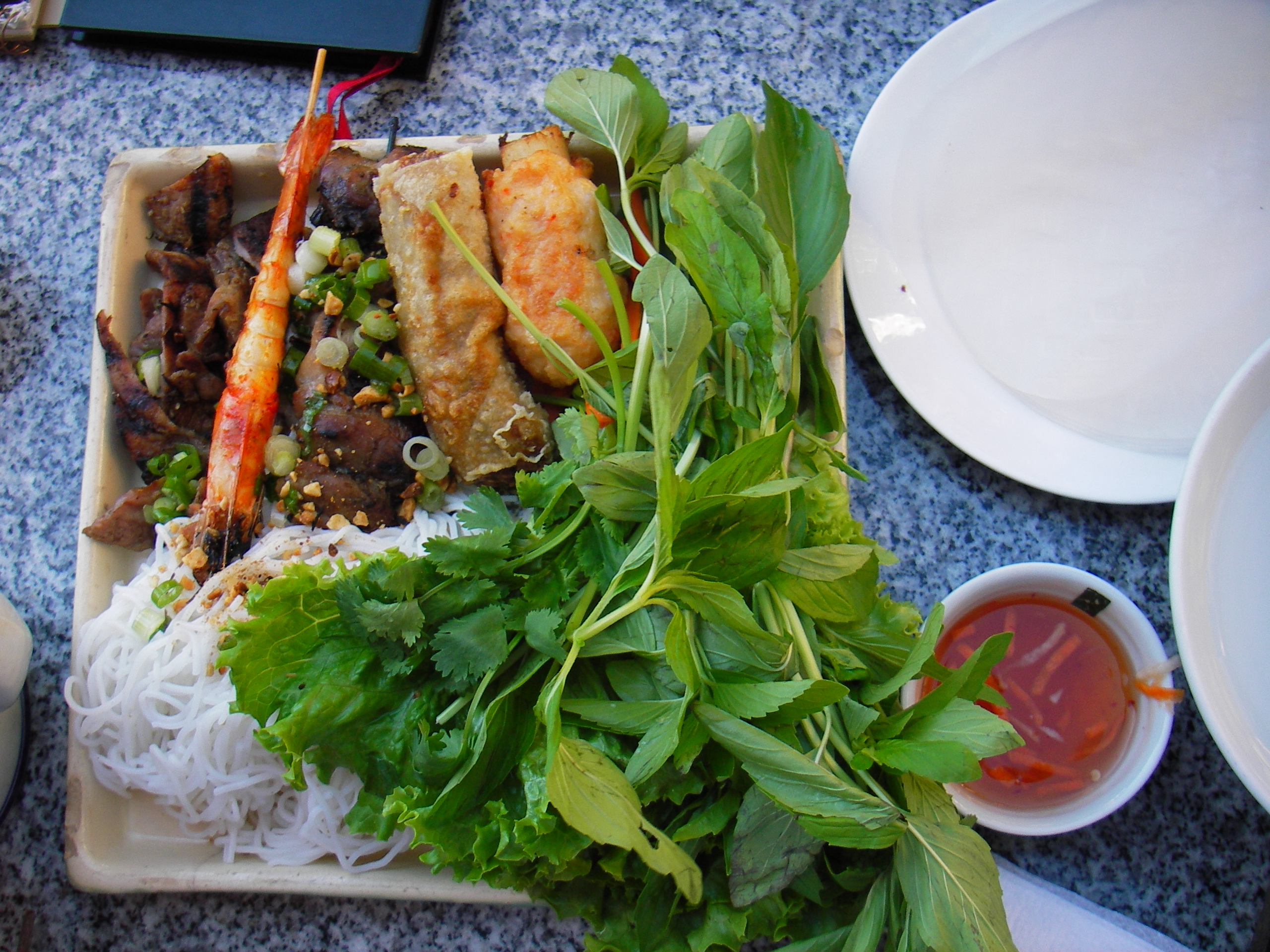
Tamarind Noodle Tray
Tamarind Tree Restaurant has been my favorite restaurant since the day they opened their doors. I like the price, quality and service. It is excellent in every way one can expect from a restaurant. This is a place that I would go with a group of friends, or by myself. The menu has many choices, but don’t forget to check their special menu on the days when they offer many selections for $5 each. The setting has a modern Asian contemporary interior design, yet one can still feel casual.
There are many more Vietnamese restaurants to visit, but for now this is my favorite Vietnamese restaurant in Seattle.
1036 South Jackson Street
Suite A, Seattle, Washington 98104
Telephone: 206. 860. 1404
Website: http://www.tamarindtreerestaurant.com/index.php
Pranee’s Star RatingFood: *****
Ambience: *****
Service: ***** Price: $$
Posted in Pranee's Restaurant Reviews | Tagged Restaurant, Seattle, Vietnamese Cuisine, Vietnamese Restaurant in Seattle, Washington | Leave a Comment »
Seattle Feast with Friends, 2010
I created this recipe for Seattle Feast with Friends event (http://futurewise.org/action/SeattleParticipants) held on Thursday, September 30th, 2010. This celebration brings together local food producers, winemakers, and guest chefs.
I hope to see you there. If you cannot attend, then enjoy cooking this recipe. Cheers, Pranee

Thai Mussel Curry with Tomato and Lemongrass
Thai Mussel Curry with Tomato and Lemongrass
Gaeng Hoi Nang Rom
This recipe uses red curry paste, coconut milk and just enough lemongrass to create a flavorful soup. The sweet and sour from the tomato and the tamarind juice heighten the flavor of the mussels. It is a very well balanced dish that you can enjoy by itself as a soup, or served it with steamed jasmine rice as a mild curry dish. Dill and cilantro are the perfect herbs for a finishing touch.
Serves: 2 as a main dish
1 tablespoon canola oil 1 tablespoon red curry paste 2 tablespoons chopped lemongrass 3 tablespoons coconut milk, or more as needed 2 medium size ripe tomatoes, cut into large chunks 15 mussels, de-bearded and halved (about a pound) 2 tablespoons tamarind juice, or 1 teaspoon tamarind concentrate plus 1 teaspoon sugar 2 tablespoons chopped dill 2 tablespoon chopped cilantroStir canola oil, red curry paste, and lemongrass together in a pan on high heat until fragrant. Then stir in coconut milk and let it cook until the oil separates out from the rest of the mixture. Stir in the tomatoes and mussels and stir well. Cover with lid and cook until the mussels open up, about 5 minutes. Stir in tamarind juice; stir well and cook until the mussels are done (see below). Stir in dill and cilantro and serve right away.
Recipe by Pranee Khruasanit Halvorsen http://ilovethaicooking.com/Mediterranean Mussels by Taylor Shellfish Farm http://www.taylorshellfishfarms.com/
Wine Pairing: http://www.skyriverbrewing.com/
Sky River Semi-Sweet Mead
$14.99 per bottle
“Sky River Semi-Sweet Mead, although drier, enjoys a similar depth and character to the Sweet Mead. With hints of pear and a crisper finish Sky River Semi-Sweet Mead, served well-chilled, delicately offsets the exotic notes of sesame and ginger in Pan-Asian cuisine, and the rich herbal textures of the Mediterranean.”
Cooking Tips from the Expert, Jon Rowley
The Mediterranean mussels, which are just now coming into season and will be very plump, aren’t done when they open. They need to continue cooking after they open until you see the meat contract. This makes a BIG difference in the flavor. If the mussels are not cooked enough, they have an unpleasant fleshy taste. If cooked properly they are gloriously sweet. These mussels are so fat, you don’t have to worry about overcooking.
Also if some mussels don’t open and the others are done, the ones that are closed will also be done. They just need to be pried open. Bum mussels will be open before cooking and should be discarded. Mediterranean mussels that are closed after cooking, if you have any, are fine.
© 2010 Pranee Khruasanit Halvorsen I Love Thai cooking Pranee teaches Thai Cooking classes in the Seattle area.Her website is: I Love Thai cooking.comPosted in Recipes, Thai Curry Recipe, Thai Gluten Free Recipe, Thai Main Dish Recipe, Thai Soup Recipe | Tagged Coconut milk, Cooking, Coriander, Eat locally, From Farm to Table, Mussel, Phuket Cuisine, Shellfish, Thai Cuisine, Thai curry paste, Thai Foods, Thai Mussel Recipe, Tomato | Leave a Comment »
I Couldn’t Say No to Nectarines
It was too much temptation for me! Yesterday I went to a market and saw a box of a dozen local nectarines. Off course I purchased a box to take home. I had no idea at the time what I wanted to do with them. I ate a few and still had nine left. Then I remembered the cookbook that I had purchased the day before: A Passion for Ice Cream by Emily Luchetti. It won an IACP award. It was just perfect–I looked through the index and found a nectarine ice cream recipe. I want to give it a try today since I already had my ice cream machine ready in the freezer. It is not difficult nor time-consuming to make ice cream, but it is all about planning.
I spent a good forty-five minutes prepping and cooking, and now everything is ready to chill in the fridge. I will put the mixtures in the ice cream machine tomorrow while I am working at home, then let the machine do the work.
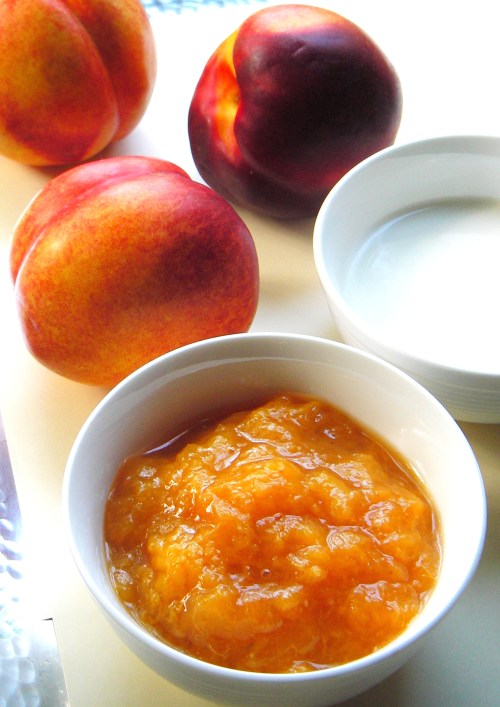
Nectarine and Coconut Cream, Ready for the Ice Cream Machine
This is my Thai adaptation with tamarind and coconut milk.
Nectarine-Coconut Ice Cream
2 1/2 pounds of nectarines (about 5 fruits), peeled, pitted and chopped 1 tablespoon tamarind concentrate, or lemon juice 8 tablespoons sugar, divided 1 pinch of salt 1 1/2 cups heavy whipping cream 1/2 cup coconut milkPlace nectarines, tamarind concentrate, 4 tablespoons sugar, and salt in a medium size pot and bring to a boil. Let it cook on medium heat until it looks like a jam, about 15 to 20 minutes. Set aside to cool. It should yield about 2 1/2 cups.
Stir cream, coconut milk and the rest of the sugar in a sauce pan on medium heat until the sugar is melted. When it steams up, remove and let it cool.
Now I have both mixtures in separate containers and ready to go into the ice-cream machine. I will keep you posted on how it goes–with photos, off course. It will take a while, though. There is no natural sunshine in Seattle today for a food photograph.
I can’t wait to try the nectarine-coconut ice cream tomorrow.
September 22
Before lunch I placed the chilled nectarine and coconut cream mixtures in my ice cream machine. By the time I finished my lunch, the ice cream was done. I left it in the container and put it in the freezer.
At 2:20pm, I tasted it. OMG, delicious!

Nectarine-Coconut Ice Cream served on a nectarine and topped with coconut flakes.
- Coconut-vanilla ice cream. (lifeasmrsm.wordpress.com)
- Why Coconuts Are So Good For You (fitsofhealth.com)
- dark chocolate coconut frozen yogurt (backtoherroots.com)
Posted in Recipes, Thai Dessert Recipe | Tagged Culinary Adventure in Pacific Northwest, Eat locally, From Farm to Table | 3 Comments »
Phuket Red Curry Paste, My Aunt’s Recipe
I have five women in my life that I am thankful everyday for their talents, strength and kindness. I grew up with my grandmother, mom and my three aunts. It was quite an experience. When it came to culinary skills, my three aunts each had their own specialty. My aunt Pan specializes in curry paste making and her curry paste is well known among family and friends. It was the year I left Phuket to go to Seattle that I visited my Aunt Pan to pick up a kilo of her homemade curry paste to bring with me. I kept it in the freezer for a year. But when I visited her a year later, I felt a little guilty asking her to make some more for me because it takes a week of pounding by hand. Instead, I asked her for her secret. She taught me to feel the ingredients in my left palm before putting them in the mortar. I was not sure if I got it at the time, but I was glad that I had also taken note of the amount in standard American measuring spoons. Now I even teach my aunt’s recipes in my cooking class on Southern Thai curry dishes.
Then the other day, I gave myself a final exam. I was in the kitchen preparing a curry paste, conducting every step from memory. I recalled the lesson with my aunt from over 15 years ago. She said that for four servings, start with about 1 teaspoon of salt and about 1 tablespoon of black pepper. For turmeric, she said that if I wanted to use fresh turmeric I should use about 1 inch, and she bent her index finger. If I used dry turmeric, use about 1 teaspoon. The amount for the dry red chili pepper I remember really well. She used 40 dried Thai chilies. I used 20 for my cooking class and everyone thought that it was too hot, so generally I use 15 chilies for American 3 stars and 20 for 5 stars.

Phuket Red Curry Paste--Recipe from Phuket Village
My grandmother, mom, and three aunts prepared this curry paste with a mortar and pestle countless times in their lives. About 30 years ago, when our village had access to electricity for the first time, I remember that the most important modern kitchen appliances that we purchased right away were a rice cooker and a blender.
My mom’s favorite way to make curry paste was with a mortar and pestle, but often she blended them in the blender. For this recipe I decided to prepare it in a blender, which only takes 5 minutes. I hope you enjoy my family recipe.
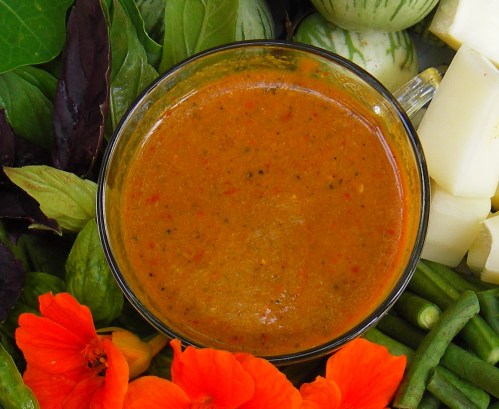
- The Color of Phuket Red Curry Paste
Phuket red curry paste is so versatile. You may use it in any red curry recipe that calls for red curry paste. However, the color is yellow because our family omits dried large red spur chili pods. You may add 3 dried New Mexico Chili Pods to this recipe to add a deep red-orange color.
Phuket Red Curry Paste
Kruange Gaeng Phed Phuket
Yield: 1/2 cup
1 shallot, halved and peeled 6 cloves garlic 1 lemongrass, trimmed and thinly sliced, about 2 tablespoons 1 teaspoon salt 1 teaspoon turmeric 1 teaspoon shrimp paste 1 tablespoon black peppercornsPlace all ingredients in the blender with 1/2 cup water; blend until smooth, about 5 minutes.
© 2010 Pranee Khruasanit Halvorsen
I Love Thai cooking Pranee teaches Thai Cooking classes in the Seattle area. Her website is: I Love Thai cooking.comPosted in Recipes, Thai Curry Recipe, Thai Sauce & Condiment Recipe | Tagged Chili pepper, Garlic, Go Wild with Lemongrass, How to prepare lemongrass for Thai cooking, Hua Mok, Phuket Cuisine, Red curry, Thai Cooking in Seattle, Thai Cuisine, Thai curry paste, Thai Foods, Turmeric | 6 Comments »
Thai Cooking with Mussels

Steamed Mediterranean Mussels with Sweet Chili Sauce
I love mussels, and Thai cuisine has so many great mussel recipes. Unfortunately, cooking classes with mussels don’t sell well in Seattle. But you can enjoy my recipe without being in my class. This delightful, easy recipe uses fresh Mediterranean mussels that are at their peak season right now. The Taylor Shellfish Farm stall at many Seattle Farmers Markets is a good place to get them.
Cooking Tips from the Expert, Jon Rowley
The Mediterranean mussels, which are just now coming into season and will be very plump, aren’t done when they open. They need to continue cooking after they open until you see the meat contract. This makes a BIG difference in the flavor. If the mussels are not cooked enough, they have an unpleasant, fleshy taste. If cooked properly they are gloriously sweet. These mussels are so fat, you don’t have to worry about overcooking.
Also if some mussels don’t open and the others are done, the ones that are closed will also be done, they just need to be pried open. Bum mussels will be open before cooking and should be discarded. Mediterranean mussels that are still closed after cooking (if you have any) are fine.
Steamed Mediterranean Mussels with Lemon Basil and Shallot, and Homemade Chili Sauce
Hoy Nueng Bai Meang Luck
Servings: 8 as appetizer 30 Mediterranean mussels, about 2 pounds 2 tablespoons grape seed oil 3 shallots, peeled and sliced 1 cup lemon basil leaves, or any type of basil 1 Serrano pepper, halved 1 cup sweet chili sauce (see recipe below)De-beard mussels and clean under running water to remove sand and grit. Discard any mussels that open before cooking.
Heat canola oil in a pan and stir in shallots and basil for 30 seconds on high heat. Add mussels, cover the pan, and shake it back and forth without opening the lid until the mussels start to open, about 2 minutes. Keep cooking until the mussels contract and look plump and round, about 1 more minute.
Serve with sweet chili sauce as a dipping sauce or place ½ teaspoon sweet chili sauce on each mussel. Garnish with lemon basil leaves.
Wine Pairing: Washington Pinot Gris
© 2010 Pranee Khruasanit Halvorsen I Love Thai cooking Pranee teaches Thai Cooking classes in the Seattle area. Her website is: I Love Thai cooking.comPosted in Recipes, Thai Gluten Free Recipe, Thai Main Dish Recipe, Thai Recipe for Kid, Thai Sauce & Condiment Recipe, Thai Side Dish Recipe | Tagged Culinary Adventure in Pacific Northwest, Eat locally, From Farm to Table, Phuket Cuisine, Thai Cooking Blog Recipe, Thai Cooking in Seattle, Thai Cooking with Children, Thai Foods, Traditional Thai Cooking | Leave a Comment »
-
Join 2,252 other subscribers
~ Gift Certificate ~ Thai Cooking Lesson

@ Pranee's Thai Kitchen
About Pranee

Pranee Halvorsen
I Love Thai Cooking

I Love Thai Cooking
-
Pranee’s Thai Kitchen Recipe & Journal
Pranee’s Thai Kitchen’s Blog Recipe Categories
Pin Love Thai Cooking

Soup
Thai Soup Recipes
Appetizer
Thai Appetizer Recipes
Salad
Thai Salad Recipes
Main Dish
Thai Main Dish Recipes
Curry
Thai Curry Recipes
Noodle

Thai Noodle Recipes
Stir-fry
Thai Stir-fry Recipes
Beverage

Thai Baverage Recipes
Cocktail

Thai Cocktail Recipes
Dessert
Thai Dessert Recipes
Sauce & Condiment
Thai Sauce & Thai Condiment Recipes
Snack & Street Food

Thai Snack & Street Food Recipes
Thai Ingredient 101

Thai Ingredient What? How?
Thai Cooking School: How to

Prep Everything Thai Style
Pranee on Twitter
Tweets by PraneeHalvorsenAbout Pranee
Google Translator

Hoi An, Vietnam

My Banana
Bagan, Myanmar

Mingalaba
Siem Reap, Cambodia

Angkor Wat
Luang Prabang, Laos

Mini Mart
Bangkok, Thailand

Wat Arun
I Love Thai Cooking on Youtube

Thai Cooking Video
Pranee's Photos: Foods, People and Scieneries
Pranee’s

Website
Posts & Comments
Blog Stats
- 1,825,410 hits
Recent Coments

Tags
Phuket Cuisine Thai Cooking in Seattle Thai Cuisine Thai Foods Traditional Thai CookingPranee’s Thai Kitchen Archives


 Pranee's Thai Kitchen