Here in Seattle, I have been savoring persimmons during all of November and now into December. Persimmons reached their peak this last week. The abundance of this fruit at peak season provides a low price and high quality sweet fruits and this is when I am inspired to cook with persimmons. This year in my kitchen I found two delicious new ways to cook with them: persimmon-orange butter and persimmon upside-down cake. Today I will share with you my discoveries of this divine fruit which only appears once a year.
Fuyu Persimmon fruit – ลูกพลับ
The yellow-orange color of persimmon and its aromatic sweetness make this fruit special. In the U.S., the season for persimmons is in November and December, and they give us a special way to celebrate the holiday seasons. Persimmons arrived in the U.S. and Europe over 200 years ago. There are two varieties in Seattle market: Hachiya and Fuyu. The former is recommended to eat when it is fully ripe. The latter, Fuyu, is my favorite and it is the variety most commonly available, so my focus today will be on the Fuyu persimmon.
Fuyu persimmons (Diospyros Kaki L) are native to Northern China. It is an ancient fruit—a fossilized persimmon was found in the tomb of the emperor of the Han Dynasty. Fuyu persimmons first traveled from China to Thailand in 1937, but they did not become widespread until the Royal Project Foundation under Kasetsart University conducted a study in 1969 that grew various varieties of persimmons in Thailand and led to the successful establishment of persimmon farming in Chiang Mai, Chiang Rai and Phetchabun. These are three persimmon varieties in Thailand: Xichu, Fuyu and Hyakume. (Source: 111 Thai Fruits by Nidda and Thaweethong Hongvivat published by Sangdad). The season for harvesting them is from July till September each year. The nutritional benefits from persimmons are priceless. It is high in potassium, vitamin C, and much more.
Unripe Fuyu persimmon early in the season
When the hint of green disappears from the skin and is replaced by a yellow-orange color, one can snack on unripe Fuyu persimmon, though the ripe ones are the best. Persimmons can accompany an assorted cheese platter, much like pears or grapes, or combining green salad with bacon. For dessert, last year I found my pleasure by adding persimmons in coconut milk to my pearl tapioca pudding just before serving. This year, in the process of creating a dessert for 70 people, I found myself preparing persimmon-orange butter to serve over sweet sticky rice. Then came persimmon upside-down cake; this was magically created right after baking cranberry upside-down cake for my family. For an impromptu inspiration, all we need is to have plenty of persimmons around while they are in season.
Fuyu Persimmon
Persimmon-Orange Butter
Yield: 2 cups
You can use persimmon-orange butter on just about everything, or you can eat it plain like apple sauce. This is my favorite way: served with sticky rice, on top of peanut butter and fruit butter for the sandwich.
6 fully ripened Fuyu persimmons, peeled and chopped
Zest of one orange
6 oranges, peeled and chopped
1/4 teaspoon salt
1/2 cup sugar
1 cinnamon stick
3 tablespoons triple sec
3 tablespoons butter
Place persimmons, orange zest, orange, salt, sugar, cinnamon stick, triple sec and butter in a large saucepan. Let it cook on medium heat until softened and all juices from the fruit have evaporated, about 30 minutes. Stir often during the cooking. Remove cinnamon stick. Pour the mixture into a blender or food processor and blend until smooth. Store in the refrigerator for up to two weeks.
The Making of Persimmon Upside-Down Cake
Sliced persimmon, brown sugar, star anise and triple sac
When I was looking for a spice to compliment the flavor of persimmon, I picked up my cinnamon powder from Vietnam and star anise powder from Thailand. After smelling the star anise, I decided it was a sure thing. At that moment my eye glanced over at the star-shaped center of the persimmon and I decided to place a star anise in between the slices of persimmon. The star anise mirrors the pattern of the star-shaped center of the persimmon. Perfect.
Right Side Up
I was also happy that I had some persimmon-orange butter that I had created on another day. This allowed me to add some persimmon flavor in the body of the cake.
Persimmon Upside-Down Cake
I used organic brown sugar, but any brown sugar would do the work.
A Perfect Persimmon-Star Anise Upside-Down Cake
The pretty star-shaped centers creates a perfect look for this upside-down cake.
Persimmon Upside-Down Cake
Burnt brown sugar with creamy soft persimmons melt in your mouth, almost like a crème caramel.
Persimmon Upside-Down Cake
เค้กลูกพลับ
I baked Yankee Cranberry Upside-Down Cake many times last week, which is what led me to this project. I played around with persimmons and spices I had in the kitchen, and by the time the cranberry upside-down cake was finished, my persimmon-star anise upside-down cake was ready to go in. It became totally a different cake with its own flavor profiles, but it was the Yankee Cranberry Upside-Down Cake that inspired me with confidence.
Baking time: 35 to 40 minutes
Serves: 8 to 12
6 tablespoons butter, melted
¼ cup brown sugar
1 ¼ teaspoons star anise powder, divided
1 tablespoon triple sec, divided
3 persimmons, peeled and sliced lengthwise into 6 pieces, each about 1/3 inch thick
5 star anises, whole
3/4 cup sugar
2 eggs, at room temperature
1 ¼ cups flour
2 teaspoons baking powder
1/2 teaspoon salt
3/4 cup buttermilk
3 tablespoons persimmon-orange butter, persimmon pulps or orange marmalade
Preheat oven to 350°F.
Cover a 9-inch spring form pan with 2 tablespoons melted butter, then sprinkle with brown sugar, triple sec and ½ teaspoon star anise powder to cover entire surface. Arrange persimmon slices and star anise as shown in the photo above.
Combine flour, baking powder, remaining star anise powder and salt.
Beat the remaining 4 tablespoons butter and the sugar very hard by hand until they are well mixed. Then beat in eggs, one at a time, very hard by hand until the mixture is custardy. Whisk in ½ cup of the flour mixture, mix well, then whisk in ¼ cup buttermilk; continue this method of adding the flour and buttermilk until you finish with ¼ cup flour. Pour the batter into the center of the springform pan, smoothing it with a spatula to make it evenly cover the persimmon.
Bake on a rack in the center of the oven until a wooden toothpick inserted into the center comes out clean, about 35 to 40 minutes. Let it cool for 5 to 10 minutes. While the cake is still warm, invert the cake onto a serving platter.
Creating a homemade gift is a wonderful way to express your heartfelt thanks and appreciation for your friends, families or associates. Every year I like to come up with something from my kitchen that will interest the recipients and be easy for them to love, such as curry paste, chutney, chili jam or seasoning salt—there are plenty of ideas.
Thai Yellow Rice Pilaf – A Gift from My Thai Kitchen
This year it works out well for me to choose an old project—making a rice pilaf mix. This is something that I did with my son’s fourth grade classmates as a parent volunteer project, though this time my rice mix recipe is reconstructed from two favorite Thai rice dishes. You may recognize Thai Yellow Curry Fried Rice with Pineapple (Kao Phad Sapparos) and my favorite Southern dish, Phuket Chicken Baryani Rice (Kao Mok Gai). I trust that you will enjoy this versatile recipe often. My plan is to give the rice mix as a gift to friends and family, but it also makes a good side dish combined with leftover turkey. Right after Thanksgiving will be a great time for you to try out the recipe before making up the mix to give as a gift.
Thai Yellow Curry Rice Pilaf Mix
The rice dish made from the mix can also be called a rice pilaf, a traditional Persian dish, as I applied the science of baking rice in the oven instead of using the traditional Thai method of preparing it in a rice cooker or steamer. The recipe below has so much potential that you can add any vegetable you desire, just like in a rice pilaf. Following an American Holiday theme I use craisins instead of pineapple or raisins, which will be fun cooked with leftover turkey or served as a side dish with turkey. So make it fun and be creative with your own accent. I hope you have a chance to create a rice mix for a friend or simply pack a few boxes to take with you to your cabin. Let’s celebrate with a gift from our kitchens!
Jasmine Rice
First start with the uncooked rice, then add the spices, dried fruits and nuts. Keep it simple and creative.
Thai Yellow Curry Rice Pilaf Mix
How to Make Thai Yellow Curry Rice Pilaf Mix
I purchased large quantities of all of the ingredients below and containers from the packaging specialty store. This recipe makes one gift package which will serve four as a main dish or eight as a side dish.
1 two-cup container or a one-quart ziplock bag
1 cup plus 2 tablespoons jasmine, long grain or basmati rice
2 tablespoons dried chopped onions
1 to 2 tablespoons madras curry powder
½ cup chopped or 20 whole raw cashew nuts or almonds
1 teaspoon salt
3 bay leaves
¼ cup each craisins, cranberries and dried pineapple
Place all ingredients in the container or ziplock bag in this order: jasmine rice, dried chopped onion, curry powder, cashew nuts, salt and bay leaves. Cover the container or ziplock bag and seal well, then add printing cooking directions (see below). Add some gift wrap or a bow and your gift is ready.
Thai Yellow Curry Rice Pilaf with Tomato and Onion
(Cut the instruction-recipe below and insert in the rice pilaf box)
Thai Yellow Curry Rice Pilaf
Cooking Instructions
Serves: 4 as a main dish or 8 as a side dish
2 tablespoons canola oil
1 package Thai Yellow Curry Rice Pilaf Mix
1 2/3 cup water or chicken stock
4 cooked chicken thighs with bone in and skin on, or 4 pieces leftover turkey with bone in and skin on
¼ cup sweet chili sauce, as accompaniment
1 English cucumber, sliced for accompaniment
2 tomatoes, sliced for accompaniment
1 cup cilantro leaves for accompaniment
Preheat oven to 350°F.
Heat a Dutch oven or an oven-proof pan that comes with a tight lid on the stove top over medium-high heat. When the pan is hot, add canola oil and the Thai Yellow Curry Rice Pilaf Mix. Stir the mixture until it becomes fragrant and the rice grains turn opaque, about 30 seconds, being careful not to let it burn. Stir in water or chicken broth. Place chicken or leftover turkey in with the rice and the broth. Bring the mixture to a boil, then cover the pan and place it in the center of the oven. Bake for 30 minutes without opening the lid.
Remove from oven and let sit for 15 minutes without opening the lid at all. Then stir it once to mix cooked rice together and put the lid back on. You can keep it warm in the oven at 100°F until it is ready to serve, but not longer than 30 minutes. Serve with accompaniment on the side.
I love pear salad and lately I have been seeing local pears everywhere! After enjoying pears prepared many different ways in restaurants and at a potluck dinner, I began fantasizing about creating a Thai pear salad. Then I had dinner two months ago at the Typhoon Thai Restaurant in Redmond and ordered their sumptuous pear salad—a well-balanced combination of palm sugar, lime juice and fish sauce dressing with fried dry shrimp and cashew nuts for texture. I loved the crisper textured pear that was used. After seeing the creation designed by Chef Bo, the executive chef and owner of Typhoon, I was determined to come up with my own.
I started with the theme of a pear and walnut salad, but added some interesting flavors. First I decided to use a Comice pear. It is buttery-sweet and has a soft texture that allows the pear juice to mix in well with the salad dressing. Then I thought about the nut part of the salad. Walnuts are a traditional addition to American pear salads, and what came to my mind was coconut milk-palm sugar candied walnuts with a hint of Asian spice. They turned out great, with even greater potential for future cooking. I added these ingredients to my shopping list, but it was only when I was at the market that my salad really took shape. I picked up a 5-ounce box of herb salad mix and one bunch of fresh cilantro to provide the base for a mixed salad with a nice Asian touch. Then I chose an orange bell pepper for color. I would julienne it so thin that it would lace around the pear and no longer taste like bell pepper, but when mixed in with the salad dressing it would provide contrasting color as well as a gentle crunch. Finally I chose some shallots, something which my Thai family and I always put in salads.
Preheat oven to 350F. Lay parchment paper over baking sheet.
To make quick and easy caramel, combine coconut milk, palm sugar and cardamom powder in a small saucepan and stir well. Place on a burner over high heat. When the mixture has thickened, about 3 minutes, remove from the heat and stir in walnuts until they are well covered with caramel. Pour the walnuts onto the parchment paper and spread them out. Put in the oven and bake until golden, about 8 minutes. Remove and let cool.
Calamansi – ส้มจี๊ด
In the U.S. you can grow calamansi, a citrus fruit, as an ornamental house plant. In Seattle, I purchased frozen Golden Calamansi juice from the Philippines in a package of twelve .5-ounce packets. I was so delighted to learn that calamasi is related to both of my favorite citrus families: kumquats and mandarins, and I thought it would make an excellent emergency substitute for lime juice. And then I discovered by chance that the calamansi juice in my freezer provided the perfect zing for my pear salad. The aromatic, gentle, sweet and sour calamansi citrus juice was my choice for the sour agent for this salad. I don’t want to disappoint anyone, however, so on my second attempt at this pear salad I created a substitute for calamansi juice that will turn out quite divine, though not so heavenly as with calamansi juice. I used 1½ tablespoons lemon juice and 1½ tablespoons of freshly squeezed orange juice, then I decided to zest the orange peel to get ¼ teaspoon orange zest to add citrus aromatics to the juice.
Now that my fantasy of a pear salad is laid out with all its mouth-watering components, let’s get cooking and living the fantasy! Happy Thanksgiving to you all!
Pear Salad with Calamansi Salad Dressing and Palm Sugar Candied Walnut
Thai Pear Salad with Goodies
I love pear salad. It is the sweet and fragrance of the pear that makes it so appealing and it is easy to blend in any citrus sour-sweet dressing. I love to add a little bit of fish sauce in my Thai salad dressing for the depth of the flavor. Combining lemon and orange juice makes a good substitute for calamasi juice and brown sugar is a good substitute for palm sugar in this recipe. Therefore, I hope you can make this recipe work without an extra trip to an Asian market. I hope you have a chance to create this dish anytime and especially to share with family and friends as a Thanksgiving salad. Cheers!
Serves: 6
1 (5-ounce) package fresh herb salad mix
½ cup cilantro leaves
4 tablespoons extra virgin olive oil, divided
¼ teaspoon sea salt
¼ teaspoon freshly crushed black pepper
½ teaspoon red pepper flakes
1 teaspoon brown or palm sugar
1 tablespoon fish sauce
3 tablespoons calamansi juice (or 1½ tablespoons lemon juice plus 1½ tablespoons orange juice and ¼ teaspoon orange zest)
1 orange bell pepper, thinly sliced
1 large shallot, peeled and thinly sliced
3 comice pears, peeled, halved, cored and sliced
1 cup palm sugar candied walnuts, from recipe above
Combine fresh herb salad mix and cilantro leaves together in a salad bowl, then pour 1 tablespoon olive oil over the greens, gently combining them by hand until they are well-coasted with olive oil. Place on 6 salad plates.
To make Calamansi salad dressing, whisk together remaining olive oil, sea salt, black pepper, red pepper flakes, brown sugar, fish sauce and calamansi juice in a large bowl until well-blended. Gently fold in bell pepper, shallots and pears, then place pear salad equally over the greens. Garnish with the candied walnuts.
Seattle is a beautiful city. When we get some of its rare sunshine, the season becomes memorable. This past week I wished for at least a good week of sunshine and beautiful fall colors and a chance to enjoy the beauty of the Pacific Northwest scenery. I got my wish. But there is another wish I make each fall as well: I wish for a good price for chanterelle mushrooms. This year I got both my wishes.
I enjoy cooking with chanterelle mushrooms from the local market and I love to add northwest flavors to my Thai dishes. This year I discovered a sensational new way to achieve both of these ends by adding chanterelle mushrooms to my vegan Thai green curry.
Chanterelle Mushrooms
The flavor of chanterelle mushrooms reminds me of Hed Kone – a wild mushroom in my village. It has an interesting spicy flavor that goes well with coconut milk or fat. When cooked, the mushroom’s nutty and sweet-fruity flavors combine with its meaty flavor to enrich this meatless green curry dish. This meaty flavor was an added bonus that I didn’t expect but discovered while experimenting last year. I prepared this dish in my series of seven Thai Quick & Easy cooking classes at PCC Cooks. Although I shared the recipe below with more than 14o students, I can still capture the moment when I savored the dish with them during the classes. The chanterelle mushrooms make for a unique combination. This dish is a great reflection of true Thai flavors achieved by using local ingredients such as chanterelle mushroom and Italian eggplant with Thai ingredients such as bamboo shoots, young corn and water chestnuts.
I love this recipe the way it is and would not want to change anything. I want to share this recipe with you so that you can enjoy it as much as I do when fresh chanterelle mushrooms are abundant in the fall. My wishes have been fulfilled and I am content.
Thai Green Curry with Chanterelle Mushrooms and Kaffir Lime Leaves
Gaeng Keow Wan Ja
Thai Green curry with chanterelle mushrooms and Kaffir lime leaves
แกงเขียวหวานกับเห็ดมังสวิรัติ
Green curry is delicious. It is distinguished from other curries by its flavor and color which are derived from fresh Thai green chiles. Green curry is as versatile as red curry; it can incorporate many kinds of vegetables and mushrooms. Some vegetables that work well in green curries are zucchini, eggplant, green beans, bamboo shoots, young corn and water chestnuts. Serve with jasmine rice or somen noodles.
Servings: 8
2 tablespoons canola oil
1 jar Thai Kitchen green curry paste, about 5 tablespoons
2 teaspoons coriander powder
1 teaspoon cumin powder
1 tablespoon green or black peppercorns, whole
1½ – 2 cups coconut milk
1/2 cup water
2 cups chanterelle mushrooms, brushed to remove the dirt and torn into small pieces
2 Portobello mushrooms, cleaned, stems removed, and diced (1/2 inch by 1/2 inch)
½ cup baby corn, washed and drained
½ cup sliced bamboo shoots
1 cup water chestnuts
1 Italian eggplant, diced or 2 zucchini, diced
½ teaspoon salt, or more as needed
½ to 1 tablespoon sugar, or as needed
4 Kaffir lime leaves, optional
¼ cup basil leaves
In a saucepan on medium-high heat, combine canola oil, green curry paste, coriander, cumin powder and green or black peppercorns, stirring constantly until fragrant. Stir in ½ cup coconut milk and let the mixture cook until the oil is separated and curry is fragrant.
Stir in chanterelle and portobello mushrooms, baby corn, bamboo shoots, water chestnuts and water; let cook for 2 minutes. Stir in eggplant and the remaining coconut milk, salt, sugar and lime leaves. Let the mixture cook until the eggplant just softens but still holds its shape well. Stir in basil. When it comes to a boil, remove from heat and serve with jasmine rice.
I have had this Honey-Lime Tea recipe written since last year when my son was sick and missed a week of school with a fever and annoying cough. When it comes to home remedies for coughing, my grandma’s honey-lime tea, which I have had countless times for coughs, that stands out in my memory. It was my son’s tired face on a rainy day in September 2011 that took me to the kitchen here in Seattle to prepare some. It had been a long while since I had made it, but there is nothing difficult at all about this simple three-ingredient recipe made from lime, honey and salt. All that’s needed is the right balance of salty, sweet and sour to sooth the aching and irritated throat.
Honey image via Wikipedia
Lime is a great source of Vitamin C and “Honey has also been used for centuries as a treatment for sore throats and coughs and, according to recent research, may be an effective soothing agent for coughs” (from Wikipedia). The risk for honey is only in children under a year of age because of a rare occurrence of infantile botulism, otherwise it is a well-established natural cough remedy in many cultures.
Lime มะนาว - plenty of lime in Thailand
In my kitchen, with the honey, limes and salt in front of me, I recalled standing side by side with my grandma in her kitchen, watching her stirring, tasting and adjusting the sour, sweet and salty. The sour from lime would make my eyes squint, but adding enough honey to cut the sharp edge of the lime would allow my eyes to open once again with sweet delight and the mixture to comfort my sore throat. Then she would add enough salt to pronounce its existence and make the honey and lime dance together in harmony. The warmth of the tea also soothed the sore throat. I would sip this tea slowly as if to allow each sip of honey-lime tea to absorb and sooth and melt away all the discomfort. It is not often I get a credit for my home remedies, but my son did find a tremendous comfort from this tea last year. As I tested this recipe one more time, he took part and enjoyed this tea once again, as both of us had mild colds this week. As we sipped, we both agreed that we appreciated this recipe before and now.
Honey-Lime Tea
Honey-Lime Tea
Cha Nam Pung Manao
ชามะนาวน้ำผึ้ง
Don’t judge this recipe by the amount of lime and honey. It is not a tea for daily drinking, but more of a cough remedy for those times that we need all that vitamin C from the lime and the medicinal qualities of the honey. I would recommend that you prepare it according to the recipe and taste it before making any changes or adjustments. Take a good sip and swallow it slowly to allow the warm, well-balanced tea to linger in your throat.
This tea also good for drinking warm just for pleasure, in which case I would reduce the lime juice to 4 tablespoons. I recommend using the full 6 tablespoons of lime juice for use as a cough remedy.
Serves: 1
¼ teaspoon salt plus 2 pinches
2 tablespoons honey
6 tablespoons hot water
4 to 6 tablespoons lime juicePut the water on to heat then prepare the ingredients as follows.
Place salt and honey into a tea-cup and pour boiling water or warm water over it, stirring until the salt and honey dissolve. Add lime juice, stir one more time and serve. For use as a cough remedy, use the whole 6 tablespoons of lime juice and sip it slowly. For tea, use just 4 tablespoons lime juice. This is also an ideal summer drink poured over ice.
In 2010, I took a short but memorable expedition into Siem Reap, a city and province in northwestern Cambodia. The night before it began I arranged for a motor-tricycle to take two friends and me to Angkor Wat, the temple complex built for King Suryavarman II in the early 12th century. We left our hotel around 5am while it was still pitch black. We arrived at Angkor Wat and with a flashlight found a perfect spot, facing east, with the giant shadow of Angkor Wat in front of us. Hundreds of tourists were there to witness the magical sunrise that arises from behind the complex. All eyes were focused on the silhouette of Angkor Wat where the warm, changing shades of sunrise were at play until the sun was completely up.
Early morning scene around Angkor Wat
Early morning life in the countryside around Angkor Wat and the town of Siem Reap is beautiful and serene. For visitors there is no better way to learn about the country than to watch the locals go about their day. A herd of birds flew out from their nests and the locals accomplished a great deal between dawn and noon. The woman in the picture above had bundled dried branches into brushes which she carried by bicycle to sell at the local market.
A friendly local sells mudfish for Amok Curry and Prahok, both national dishes
A lively place to visit early in the morning is the local market. The Psah Chas (Old Market) is not to be missed by visitors to Siem Reap. I found a place in the market that served coffee and joined the locals for the Khmer national breakfast—a fish curry with fresh herbs and rice noodles. I used sign language and a smile to order the dish. This curried noodle dish is identical to a Thai dish called Khanom Jean, though milder. Giant mudfish are a popular fish for all fish dishes including Amok, Khmer fish curry stew, and prahok, a fermented fish paste. The Psah Chas Old Market is a great place to learn Khmer Cuisine Ingredients 101.
Psah Chas Old Market, Siem Reap
After admiring all the fresh vegetables, fruits and staple ingredients, I purchased many packages of Amok Curry Powder to take home for myself and my foodie friends. The powder is made for tourists, and can be bought at the Psah Chas Old Market or at the Siem Reap Airport. Most of the produce I found at the market was the same as in Thailand.
Pan-fried Sea-bass with Amok Curry Powder
At home in Seattle lately I have been pan-frying all kinds of fish, from salmon to catfish, and they’ve all turned out delicious. Above is the pan-fried sea bass with Amok Curry Powder that I prepared for my family the other day. They loved its instant flavor of Southeast Asia, so I felt it was time to share this recipe and story with you. No matter how much time passes, the flavor of Amok curry and my memories of Siem Reap will always be with me.
Kroeung, Khmer Curry Paste Ingredients
From 12 noon clockwise: lemongrass, garlic, turmeric, shallot, Kaffir lime leaf and galangal. Center: red spur and Thai chilies
Amok Curry Powder
This creation was inspired by my March 2010 trip to Cambodia when I purchased many bottles of Amok Curry Powder. I used the powder on salmon and sea bass and really loved the citrus and lemongrass flavors and the combustion caused by the combination of flavors. I spent over a year trying to come up with my own combination by simply following the structure of Khmer curry paste ingredients shown in the photo above. Now I would say that my Amok Curry Powder is quite good. It can be enjoyed as a spice rub over any fish or seafood for a quick and easy dish. Above is a photograph of my Amok Curry Powder sprinkled over sea bass, which was then pan-fried and served with stir-fried peas. The simplicity of this dish and the good fresh fish let the Siem Reap Amok flavor stand out. Together they go a long way in anyone’s kitchen.
¼ teaspoon black pepper flakes
½ teaspoon Thai chili powder
½ teaspoon garlic granules
1 teaspoon turmeric powder
1 teaspoon galangal powder
1 teaspoon sea salt
2 teaspoons lemongrass powder
1 teaspoon Kaffir lime leaf powder
Combine black pepper flakes, Thai Chili powder, garlic granules, turmeric powder, galangal powder, sea salt and lemongrass powder in a small bowl. Store in a spice jar for up to 2 weeks. For freshness, keep the mixture in the freezer, or mix just enough spices for a single use. Spices stay fresh longer if they are stored separately rather than combined.
Pranee’s note: To make galangal, Kaffir lime leaf and lemongrass powders, purchase these ingredients in the dry form—or make your own—and grind them n a spice grinder. Please look for Pranee’s future post on how to make dried lemongrass powder.
Last Tuesday a friend and I prepared a tropical fruit salad together in her kitchen to test a version of my versatile Thai mixed fruit salad recipe. It is a recipe that I have made countless times and the results are always good, though never the same due to seasonal inspirations. This time I focused on just three different kinds of fruit, each high in anti-oxidants and at their peak fresh in the market. Tropical fruits have so many potential healthy benefits, I loved creating a recipe of the moment for you to enjoy. This combination of dragon fruit, papaya and Thai grapefruit is unique; I hope that you enjoy the recipe. It works really well with all fruits, so let’s play with tropical fruits!
Dragon Fruit in a fruit tray at my family's Chinese New Year altar
Dragon Fruit (Hylocereus undatus) is also known as red Pitaya, or in Thailand we call it Kaeo Mangkon – แก้วมังกร. The most commonly-seen “dragon fruit” in the market is a red-skinned fruit with white flesh. There are two more varieties, one with red skin and red fruit and another with yellow skin and white fruit, but the red skin and white fruit with black seeds is the most common.
Dragon Fruit - Pitaya
Dragon Crystal Ball – แก้วมังกร
Dragon Fruit is native to Central American and its neighboring areas. It came to Southeast Asia about a century ago and is believed to have been brought to Vietnam by French missionaries. It is now very popular throughout Southeast Asia where there is an ideal tropical climate to grow this cactus-like green plant with its abundance of large flowers that become the red fruit. Because of its beautiful looks and auspicious name, dragon fruit is often seen in Thailand and Vietnam on ancestor altars or being presented to a friend as a gift. It is quite dramatic looking both inside and out.
Dicing Dragon Fruit Flesh
Dragon fruit is easy to prepare. After trimming off the top and bottom, cut the fruit in half then use your thumb and pointer finger to press the skin away from the fruit; it will peel off easily. From there cut the fruit into the desired shape. The flavor is not dramatic compared to its appearance. The fruit is similar in someways to a kiwi fruit, but the texture is denser. It has a gentle sweet-sour taste and the seeds, which look like black sesame seeds, provide a fun texture. Dragon fruit’s texture, unique look, and unassertive taste combine to make it a star in this mixed-fruit salad.
Dicing Papaya
This deep rich yellow-orange papaya is so delicious and creamy. I was careful to add it gently into the salad, mixing just enough so that the papaya flavors become well combined with the dragon fruit and Thai grapefruit.
Som Oh - Thai Grapefruit
Pomelo, the third ingredient in my salad, is also known as Asian or Thai grapefruit. It adds a citrusy sweet and sour flavor to the salad. In America, pomelo is available in the markets for many months beginning in September. Please check my blog post on Pomelo Salad with Crab to learn about Thai grapefruit and how to open them.
Som Tum Pollamai has become a trendy dish in Thailand over the last few years, even though it has been known for centuries. It is simply a fruit salad with an accent of Thai herbal flavors and aromas. Dragon fruit, papaya and pomelo make a great combination because they give you a great anti-oxidant boost and much more. My friend commented that this would make a great fruit dish for a holiday brunch as well as being fun to serve at a poker party because the cubed dragon fruit look so much like dice.
6 cups mixed seasonal fruits, peeled and cut into small bite-size cubes
4 tablespoons brown sugar or palm sugar
2-3 tablespoons lime juice
¼ teaspoon salt
3 tablespoons lemongrass, thinly sliced (see Pranee’s Youtube video demonstration how to prepare lemongrass)
3 Kaffir lime leaves whole, or 1 tablespoon lime peel
1 cup mint leaves
Mix sugar, lime juice and salt together in a small bowl and stir well. Place the mixed fruits in a large salad bowl, then sprinkle the liquid mixture over the fruit; toss gently but thoroughly until the dressing and fruits are well combined. Chill in the refrigerator for at least a half-hour to let it sit and develop flavor. Before serving, add lemongrass, Kaffir lime or lime peels and mint and mix gently. Garnish with mint leaves or short stalks of lemongrass as desired.
Cook note: Other fruits that go well together include apple, pear, guava, cantaloupe, pineapple, Som Oh (Thai grapefruit) or any citrus fruits, grapes, melon, honeydew melon, banana, strawberry and half grated green mango.
Last week I found fresh acacia leaf, or cha-om, for the first time in Seattle at the Makong Raineir Market. Without hesitation, I grabbed this rare opportunity to purchase some. Two days later the cha-om was still fresh in my refrigerator. There are many ways to prepare cha-om in rustic Thai cooking (see pictures below), but my heart was set on my favorite cha-om omelet—Khai Jeow Cha-Om—which is dense with a layer of cha-om leaf. It can be cut into 1-inch squares and served as a side dish or as an accompaniment to Shrimp Paste Chili Dip – Nam Prik Kapi (see the video of my sister and I preparing Nam Prik Kapi). I prepared a cha-om omelet last Sunday and packed it in a tiffin (a stainless steel food carrier), along with warmed jasmine rice and shrimp paste chili dip. Then I took it to a Thai community potluck party and I am happy to tell you that it was gone in the blink of an eye. We all love these stinky leaf omelets—a taste of our Thai villages.
A Package of Cha-Om at an Asian Market in Seattle
Fresh cha-om has a very strong, almost sulphur-like aroma that mellows when it is cooked. A little research led me to a link which mentions that cha-om is rich in Niacin (B-complex), just like most deep green leaf vegetables such as wild pepper leaf (chapoo), spinach and coccinia (tum lueng). One hundred grams of these vegetables yields more than 1.9 mg. of B-complex vitamins. This reminded me of the old Thai saying about bitter vegetables that I mentioned in a previous blog: “The sweet is a faintness and the bitter is a medicine.”
Cha-Om Shrub Fence
Cha-Om (ชะอม ), or Acacia Pennata, is a shrub that is native to South and Southeast Asia. It can grow up to 5 meters tall, but in Thailand we usually let it grow to about 2 meters, then cut it down to promote young leaves. Most villagers love to grow a few cha-om plants in their backyard. I am glad to share with you photos of my friend Nongnut’s cha-om plants. I took them a few months ago while wandering in my village in Phuket.
Tender Shoots of Cha-Om
Every week Nongnut’s mom would cut off the young leaves and bundle them up to sell in the morning in front of their house. The bundles would lie alongside the many other edible vegetables from their plantation such as bamboo shoots and young banana trunk. This is a very common practice in Thai villages. It keeps her parents active, they share daily dialogs with friends in the village, and they earn some money selling these nutritious, organic vegetables to villagers.
Typically one bunch of cha-om leaves weighs about six ounces; after removing the hard stems, it will yield about two cups of leaves. Frozen cha-om leaf is available in Asian markets in the US all year round.
Sour Curry with Cha-Om Omelet and Prawns
Cha-Om omelet cut into square chunks adds a delicious layer of flavor to the traditional Thai sour curry Gaeng Som Goong Cha-Om. In Seattle, the only place I know that serves this dish is the Krua Thai Family Restaurant in University Village.
Tom Laos - Mixed Vegetable and Mushroom Soup with Cha-Om Leaf
Simply whisk cha-om leaves, egg, salt and fish sauce together to create an egg mixture for Acacia Omelet, or Khai Jeow Cha-Om, a rustic dish of Thailand.
Cha-Om Omelet
There is no substitute for acacia or cha-om leaf, but this recipe can be adapted by using baby spinach for a quick, easy and healthy meal.
Place acacia leaves, eggs, salt and fish sauce in a large bowl and whisk with folk until mixed, about 1 minute.
Heat a large pan on medium-high heat and cover the whole surface with half of the canola oil. Pour in half of the egg mixture and tilt the pan to make an even layer of omelet; let it cook until golden yellow on the bottom, about 3 minutes. Flip it and cook until the other side is also golden yellow, about 2 minutes. Remove with spatula to a serving plate. Repeat the same process with the remaining cooking oil and the rest of egg mixture. Cut the omelet into small squares about 1-inch by 1-inch and place in a serving plate to serve as a side dish with Thai chili dip or any curry.
This slideshow requires JavaScript.
In the Seattle area you can find cha-om in the freezer section at the Mekong Rainier Market or the Vietwah Market. Please click here to find the addresses for these stores.
One of my memories of growing up in a village on a hilly isle of Phuket, Southern Thailand, is of the beginning of durian season. It would begin after two months of monsoon, around June and July, when the earth was moist and the mountains a lush green. The villagers would gather ripe durians that had fallen to the ground the night before and sell them out in front of my grandmother’s home the next morning. Many piles of 4 to 8 durians in all sizes were auctioned off each morning. Later the winners carried home the thorny fruits which had been tied up with twine or string. Then the whole extended family would luxuriously savor the heavenly durian, a feast of nature. Durian was not a fruit we enjoyed everyday, just as you would not want a rich custard everyday. Eating and sharing durian once or twice a year was an indulgence and a family ritual.
My last visit to Thailand in July 2011 was a memorable and fruitful one. I spent many days working on my plantation with my gardener and it was right at the peak of durian, bamboo shoot, and sator season. Durian (known as stinky fruit) and sator (also known as Petai or stinky beans) are infamous for their unique smells, though their health benefits transcend their strong odors. On my plantation, durian and sator grow side by side, a part of the Southern Thailand hillside landscape. One morning we had durian for breakfast with dark Thai coffee. As those of us who love durian say, “it tastes like heaven, a perfect custard on earth.” I was glad to taste durian again after a long time without it.
Life and culture around Seattle are not the same as in the village of Thailand. Here it is hard to convince friends and students to embrace durian’s infamous stinky side. My rules for eating durian are these: it must be a good durian (for me, this means a Phuket durian), in-season, not too ripe, eaten in small portions once or twice a year, and never mixed with alcohol. I would also recommend not socializing with people who don’t like durian the day you eat it, and don’t carry it around in a small closed space or a home with an air conditioning system. In Thailand, durian is considered contraband if you carry it in a rental car, or in air-conditioned public places such as buses, hotels or airplanes.
Pranee with Phuket cultivar of durian
There are many durian cultivars in Thailand but in Phuket the small, native cultivar is popular with locals as well as tourists from all over Asia. When visiting Thailand during durian season, ask someone who is knowledgeable about durian to introduce it to you. If you try the right one, chances are you, too, will taste the heaven—and the smell won’t put you off too much. And you will have something to talk about for a lifetime!
The best way to enjoy fresh durian is in moderation. Some people experience a fever after eating durian because it contains so many calories. One hundred grams of durian has about 30 grams of sugar, 25 grams of protein and approximately 144 calories (please see source below). Besides eating fresh durian, you may find durian in many desserts: Kao Neow Thurian, sticky rice with coconut milk and durian sauce; Thurian Icecream, durian ice cream; and Thurian Gwan, durian candies.
How to open the durian with a paring knife and cleaver
How to open durian
วิธีการเปิดทุเรียน
Opening durian requires some skill. Below are step-by-step pictures on how to open the durian the way a Phuketian does it. You will need two thick towels to protect the counter and your hand, a cleaver and a paring knife.
Look for a split in the durian
First remove the stem, then find the natural split in the hull. Use a paring knife to follow the split and make it wider, then use the cleaver to twist the hull open.
Insert the cleaver into the split line and then use the cleaver to twist the hull open.
Use both hands on each side of the split to pull and force until the hull opens completely
A perfect custard fruit snuggles inside
The custard lumps and seeds are snuggled inside each hollow hull.
Durian with delicious custard and seeds inside
Recommended Source
111 Thai Fruits by Nidda and Thaweethong Hongvivat published by Sangdad
Tamarind branches provide shade for animal and people
The tamarind tree (Tamarindus IndicaL) is a large tree that can grow to be 80 to 100 feet tall. Native to Africa, it was introduced to Southeast Asia and South America where it is now well established. From India to Myanmar, Thailand, Laos, Cambodia, Vietnam, Philippine, Malaysia and Indonesia, tamarind trees play a significant role in Southeast Asian cuisine and culture. I have been fortunate to have traveled to Malaysia, Laos, Myanmar and Vietnam and have seen how our cultures and cuisines have evolved in almost the same ways around tamarind trees and their fruit.
young tamarind leaves
The tamarind tree bears leaves and flowers that can be cooked like vegetables.
Tamarind pods
When the fruits are green, we snack or pickle them. The mature brown pods are made into a candy or kept for cooking. My grandmother loved adding a young tamarind leaf to her fish soup, and she also cleaned her brass ware with tamarind until it was shiny and pinkish. When I was young I loved playing with tamarind flowers. They were small, but have a beautiful orchid-like flower. The wood from tamarind tree is perfect for making a butcher block or cutting board. And most importantly of all, the large tamarind tree provides shade and a social gathering place during the day.
Shops under tamarind tree, Myanmar
One of the first things you will want to learn about cooking with tamarind is how to turn a dry tamarind fruit paste or fruit pulp into a concentrate form that is ready to use in daily cooking. You won’t have any problem finding tamarind paste to buy; it is abundant in Asian and Latino markets. In southern Thailand we use tamarind concentrate in dipping sauces, sorbets, salad dressings, chutney, beverages, peanut sauce, stir-fry sauce, curry, soup, and any dish that needs a gentle acidic flavor to heighten it. You can also find new ways of your own to use this fruity, acidic concentrate; below are several photos of dishes from my hometown to give you ideas.Tamarind is one of the ingredients in Worcestershire sauce, but there is not a perfect substitute for it as the fruity flavor of tamarind is so unique.
Tamarind Fruit is a Heart of Southeast Asian Cooking
Chicken Soup with Tamarind Added for Sour Flavor
Above is my home town spicy soup similar to Tom Kha Gai (chicken sweet and sour soup with galangal and coconut milk). Tamarind gives the soup a nice gentle sour and refreshing taste.
Pomelo Salad with Prawns, Fried Shallots and Tamarind Dressing
Tamarind concentrate is used in salad dressings to add a nice layer of flavors to a fruit salad. When combines with palm sugar, it provides a sophisticated balance to the flavors.
Grilled Jackfish with Phuket Tamarind Sauce
Phuket’s signature tamarind sauce (Nam Jim Makham) for grilled jackfish over charcoal husks.
Kai Leuk Koey - Son-in-law eggs
The famous Thai Kai Look Keuy, Son-In-Law Eggs, has a well-balanced, gentle and fruity sour taste from tamarind, the sweet of palm sugar, a highlight of fish sauce, and the excitement of a few pinches of chili powder. It also has umami—or savoriness—one of the five basic tastes together with sweet, sour, bitter, and salty.
Phad Thai with Tamarind Sauce
Tamarind concentrate is an important part of Phad Thai, the renowned dish of Thailand. We can’t call it Phad Thai without tamarind concentrate!
Sour Curry Prawns with Cha-Om Omelette
Sour curry is a non-coconut curry soup. Tamarind is an important part of the fish broth that gives the sour curry fish or seafood a harmonious balance. It’s flavor profile combines fruity, sour-sweet, and spicy.
Stir-Fried Prawns in Tamarind Sauce
Stir-fried prawns with tamarind sauce is another signature dish from Phuket.
Tamarind Candy from Thailand
Tamarind Fruit
Makham มะขาม
Thailand ranks first in the world in the production of Tamarind and has the largest tamarind plantation in the world. Tamarind fruits resemble brown, flat, fava beans. When ripe, the fruit has a long, dark-brown pod with 5 to 8 seeds. Remove the shell, vein and seeds to get the dried and sometimes sticky fruit flesh. It will stay fresh for a year.
Two varieties of tamarind from Thailand are available in the US markets. One of them is the sweet variety, which you seldom see. It comes in a beautiful box with many good looking brown pods that you can crack open and eat like any dried fruit. It has a sweet fruity taste, reminiscent of dried apricots.
Tamarind pods, tamarind concentrate and tamarind paste
The sour variety of tamarind is the most common and the most important for Thai and Southeast Asia cooking. It is available in Asian markets either as a package of dried fruit in a 16-ounce rectangular brick, or ready to use in a plastic jar. The three forms of tamarind are shown in the photo above. The dried fruit form give a purer sour flavor and doesn’t need refrigeration. The concentrate form must be kept in the refrigerator or freezer until ready for use. There is no best substitute for tamarind.
How to make a ready-to-use tamarind concentrate
Nam Makham
น้ำมะขาม
Yield: 2 cups
8 ounces tamarind flesh, about half of a 16-ounce package
2 1/2 cups boiling water
Place the chunk of tamarind into a large bowl, then pour boiling water over it and let it sit until the water is cool enough to handle. Massage and squeeze the tamarind in the water with both hands so the water and hands rub the tamarind to make a thick concentrate; the pulp and liquid should resemble a thick soup. Strain liquid though a large sieve into a medium pot. Squeeze the tamarind to get out all of the liquid, then discard the solid. Bring the strained liquid to a boil and cook for 2 minutes. Store and keep in refrigerator for two weeks, or in the freezer for 6 months.
Pranee’s note: To be safe, I recommend only using Tamarind grown in Thailand in my recipes.
Stir-fried Blue Crab with Black Pepper – ผัดปูม้ากับพริกไทยดำ
It was less than a month ago that I was at Laem Sing, Phuket, soaking up the warm sunshine before leaving for Seattle. Laem Sing is my favorite beach for getting away for a half day—or all day—to just hang out on the beach with nature and good Phuket seafood. Typically one should visit early enough to choose the best location among the sun loungers that are lined up along the beach. The sun lounger will cost 50 to 100 baht ($2 to $3), which is paid to the owner of the restaurant in front of which the sun lounger sets. It also means that you should order food and drink from that restaurant as well. That’s how I came to know Papa Seafood Restaurant, as I make sure to visit Laem Sing each year. This is a private beach but it is open to the public. It is located on the northwest coast of Phuket on Millionaire Road between Kamala and Surin Beaches.
Pay for parking (40 baht) near the road, then walk down the hill to this quiet beach.
Laem Sing Beach
At Papa Seafood Restaurant, the seafood is purchased fresh each day and the menu is full of mouth-watering dishes—from local Thai seafood favorites to a few western dishes for those who prefer western comfort food such as sandwiches. The drink menu has a long list of tropical smoothies and other beverages that can keep you hydrated throughout the day.
As my eye glanced over the menu, I began to wonder about the possibility of taping the cooking at the restaurant to share with my students and Thai foods fans. Never afraid to ask, I found that the cook didn’t mind me taking photographs and video. I hope that you will enjoy the video on Stir-fried Blue Crab with Black Pepper recipe and that it will help you to duplicate this dish at home. If you get a chance to visit Phuket, please check out Laem Sing Beach and stop by Papa Seafood Restaurant. From Laem Sing Beach to your kitchen!
Stir-Fried Blue Crab with Black Pepper Recipe
Phad Phu Ma Kub Prik Thai Dum
ผัดปูม้ากับพริกไทยดำ
I grew up in the southern region of Thailand eating two kinds of crab: a rice-field crab (Phu Dum) and blue crab (Phu Ma), which is the most common crab caught in the Indian ocean. My family’s favorite ways to prepare the blue crab are either to steam it and serve it with a lime-garlic dipping sauce, or to stir-fry the crab with black pepper and green onion. Blue crab is so sweet and delicate in flavor, the cooking is best when it is simple with few ingredients. I love stir-fried blue crab with black pepper and the contrast of the sweet, juicy, fresh crab and the excitement of crushed black pepper. Kin Hai Aroy! Bon Appetite!
Serves: 2
Cooking Time: 5 to 7 minutes
3 tablespoons cooking oil
2 tablespoons garlic
1/2 onion, sliced
4 Thai chilies, cut in half
2 blue crabs, cleaned and cut into large pieces
2 tablespoons black peppercorns, crushed
2 teaspoons oyster sauce
1 teaspoon sugar
2 teaspoons soy sauce
1/2 cup water or more as needed
1/2 tomato, sliced
1/2 cup Chinese celery and green onions cut into one inch length
Heat the wok on high heat and stir in onion and chili; stir back and forth until fragrant, about 30 seconds. Then stir in blue crab and let it cook for 2 minutes. Stir in black pepper, oyster sauce, sugar and soy sauce. Stir well, then add water and let it cook until the crab is completely pink in color and the crab meat is opaque, not translucent. It takes about 3 to 5 minutes for the crab meat to cook. Add more water in between to make a good amount of sauce but not too watery. Last, stir in tomato, Chinese celery and green onion and continue stirring for 30 seconds. Serve right away with steamed jasmine rice.
I enjoyed the Seattle sun last Wednesday at the Columbia City Farmers Market along with the delicious food from the stalls. I purchased a few fresh vegetables from various farmers and, like always, a bunch of winter squash leaves from a Hmong farmer’s stall. This time the squash leaves prompted me to cook and share with you a recipe from my Thai kitchen: how to cook winter squash leaves –Yod Namtao – ยอดน้ำเต้า.
Winter squash leaves are edible. In fact, all parts of squash family plants are edible, from leaves to stems, flowers, fruit, skin and seeds. The young leaves and stems are shown in the photos above and below. These edible greens become available when a farmer cuts back the leaves on a plant in order to encourage it to produce fewer but larger fruits. Winter squash leaves are popular in rustic-style cooking in Southeast Asia and they are great sources of fiber and other nutritional benefits.
Winter Squash Leaves and Blossoms - my visit to Hoi An Market 2009
Though they may feel a little rough to the touch, the young leaves from winter squash have amazing flavors when cooked. They have a spinach-like texture, but are richer and denser with a bite to it in flavor. Like any leafy green vegetable, you can stir-fry, steam or stew them. In my kitchen, I either blanch them in salted coconut milk or saute them with butter, then add water and chicken stock and cook them down until the leaves are softened but not mushy, about 5 minutes. Last year I made a winter melon leaves stew with dried fish and shallots using a Hmong farmer’s verbal recipe. It was similar to my Watermelon Rind Soup and made a delicious vegetable stew.
Winter squash leaves are only available in the summer and only at the Hmong farmers’ stalls. Because of this limitation, I never fail to purchase a bunch of winter squash leaves each visit to the market. Supporting the Hmong farmers also helps me to ensure that there will be a continuing supply due to the demand. When you get a chance, please pick up some winter squash leaves at a Seattle Farmer Markets near you and give them a try.
This slideshow requires JavaScript.
Winter Squash Leaves Boiled in Salted Coconut Milk
Yod Namtao Luak Kati
ยอดน้ำเต้าลวกกะทิ
Winter Squash Leaves in Salted Coconut Milk
One bunch of winter squash leaves weighs about a pound. After removing all of the twine holding them together and the hard stems, the soft edible part weighs about six ounces; the rest goes into a compost. If I have time, I use a peeler to remove the rough skin on the stems then cook the stems down until they are soft, about 8 minutes.
There are many ways to prepare winter squash leaves, but blanching or boiling them in salted coconut milk produces my favorite quick and easy side dish. This same method can also be used with many other leafy green vegetables, which can then be served with Thai Chili Dip. You will be surprised how the flavor of winter squash leaves and leafy green vegetables are complimented by just a little coconut milk and salt.
Serves: 4
Cooking Time: 5 minutes
6 ounces winter squash leaves (see preparation above)
1/4 cup coconut milk
1 cup water
1/2 teaspoon plus 2 pinches salt
Bring coconut milk, water and salt to a boil on medium-high heat. Then add the squash leaves, using tongs to turn them around to make sure they are all cooked in the liquid—like blanching the leaves in a coconut broth. Cook from 3 to 5 minutes until the greens reach your desired degree of tenderness. Serve with the broth as a side dish, or with warm jasmine rice as a main dish.
The Sweet is a Faintness and the Bitter is a Medicine
I often hear the old Thai saying หวานเป็นลม ขมเป็นยา: kwan pen lom kom pen yah. This culinary wisdom literally says “the sweet is a faintness and the bitter is a medicine.” Growing up in a village in Thailand with my grandma and her friends, I acquired a taste for the bitter and exotic vegetables from their gardens and the wilderness around us.
Bitter melon or Bitter Gourd is called มะระ—Mara—in Thai. Its scientific name is Momordica charantia and it is native to Asia and Africa. It is a climbing annual plant that one can grow anytime, anywhere in Southeast Asia and South Asia regardless of the season.
Bitter Melon – Photo from my morning walk in Hoi An, Vietnam
In most Thai or Asian villages, where there is a fence or an arbor there will be a climbing plant next to it. There just needs to be a space large enough for seeds to grow.
Chinese Bitter Melon – the China phenotype is common in Thailand
Bitter melon is best eaten when it is green and young. When the fruit grows older, the taste gets more bitter. It is not common to eat the older fruit when it turns yellow-orange and the seeds become red; at this later stage the plant is mainly used for growing the seeds for future new plants.
Indian variety of bitter melon – photo from my visit to a market in Hue, Vietnam
Bitter melon is widely cooked in many ways in Southeast Asia. In Thailand, I often enjoy it in stir-fried dishes with soy sauce and with or without egg. It is also popular with mara yad sai—stuffed with pork in a soup. Fresh green or boiled bitter melon can be served in a Thai crudites platter with Thai chili dip, or it can accompany pickled cabbage in a pork-bone soup or stewed bitter melon and pork-bone soup. It can also be cooked in a curry dish as well. In Myanmar and Bangladeshi, bitter melon is often stir-fried with garlic and turmeric powder.
How to prepare bitter melon
All parts of the fruit are edible after you remove the seeds and stem. For stir-fries, thin-slice the melon as shown above. Then I often take steps to reduce some of the bitterness. There are two ways to do this: put the sliced melon in boiling water for a few minutes and then strain out the melon and discard the water. Or sprinkle some salt on the melon, mix it in well and let it sit for a few minutes before rinsing them in water. You may squeeze to dry. I personally like to use this latter method before making my stir-fries as some of the bitter flavor is left behind.
Why should you eat bitter melon? For much the same reason that you eat broccoli or spinach: for their health benefits. Bitter melon is an aid to diabetes control. It lowers blood sugar and promotes healthy insulin levels; besides that it also has Vitamin C, B1 and B2. While more studies need to be done, it is time to learn about new vegetables like bitter melon or get back to eating them routinely and celebrating the sweet truth about bitter melon. Cheers to a bitter melon!
When one has acquired a taste for bitter melon, stir-fried bitter melon with egg is a delightful dish. Personally, it makes me happy like after eating bitter-sweet chocolate. A bite of sliced bitter melon contrasts with the sweet, cooked egg and the hint of salty-soy flavor, making this three-flavor combination very memorable and it lingers on my palate. When trying this dish for the first time, don’t be afraid of the bitter that you will taste at first. Wait a little while and you will taste the sweet from the egg, then the salty from the soy sauce. Serve the stir-fried bitter melon as a side with a curry dish and warm steamed jasmine rice.
It has been exactly a week since I returned from Thailand and I am still trying to catch up with our Seattle summer. My friends have all assured me that I didn’t miss much during the past month as we are still having the same cold weather we had in June. This July, Seattle hit the record lowest temperature for summer, so all I really need to catch up on is eating the plentiful seasonal fruits and vegetables from the local farmers markets and nearby towns.
Hami Melon
During my first grocery shopping back here in Seattle, my cart was full with all sorts of berries. And then my eye caught on a good-looking melon that I haven’t tried: Hami melon. It is grown in California and available from mid-May to July and from September to December. I let it ripen at home for a few days and its sweet aroma was inviting me to taste it. The sweet scent reminds me of the Thai long muskmelon that I used to grow a long time ago in my organic garden in Phuket—it grew abundantly despite my lack of knowledge and farming experience.
Hami Melon
Hami melon is a type of muskmelon, a Chinese melon variety. A good one can taste sweeter and have a higher sugar content than most other varieties of melon. I decided to make a smoothie with coconut milk to duplicate Taeng Thai Kati, a famous Thai muskmelon dessert made with coconut milk, but we will drink ours instead of eating it. I kept the flavor profile and the amounts of ingredients the same as in Taeng Thai Kati, but added a generous amount of crushed ice and simple syrup to turn it into a nice cold smoothie. I used only one-third cup coconut milk in my recipe, a perfect amount to make a smoothie, a healthy summer drink. But if you are looking for a nice milkshake-like drink and dessert combo, add a scoop or two of coconut ice cream; it would taste heavenly. When a sweet flavor is needed, honey or palm sugar simple syrup are good choices to add a dimension of sweetness and aroma.
Coconut Melon Smoothie
Stock up on a few cans of coconut milk, then anytime the sweet floral scents of melon invite you, all you have to do is prepare this recipe. Hami melon is hard to resist, especially when it is combined with alluring fresh coconut milk. Drink me.
Coconut Melon Smoothie
Nam Kati Taeng Thai Smoothie
น้ำกะทิแตงไทยสมูทตี้
Serves: 2 to 4
Yield: 3 cups
16 ounces (see note) diced Hami melon, seeded, peeled and diced, or substitute honey-dew melon
⅓ cup coconut milk or coconut ice cream, more as desired
1½ cups crushed ice
2 tablespoons palm sugar simple syrup, optional (see note)
pinch of salt
Place melon, coconut milk, ice, sugar and salt in the blender and blend until smooth. Pour into a tall glass and serve right away with a straw.
My favorite plant and fruit to watch as it grows is Taling Pling. It is also known as bilimbi and other countries have their own names for it as well. Its flowers and fruits grow in a cluster from the trunk and the main branches of the tree. First the cluster of maroon flowers comes out, then within a few days a cluster of cucumber-like fruits appears. The mature fruit can grow to 2.5 inches long. Because of its greenish color and the shape of the fruits, this tree has been nicknamed the Cucumber Tree. Its young leaves can be cooked and eaten or it can be used as an herb. The leaves have a sour flavor similar to sorrel and they are also know as Tree Sorrel.
Bilimbi or Taling Pling (Averrhoa bilimbi) is a relative of carambola or star fruit (Averrhoa carambola); it belongs to the genus Averrhoa and family Oxalidaceae. Bilimbi is native to Indonesia and the Malayan Peninsula and known throughout Southeast Asia, though it was not introduced to other parts of the world until the late 17th century. It is easy to grow and I grew up with a Taling Pling tree in my backyard. Most of the children growing up in my village had the experience of getting the fruit from the tree with a stick. We used to snack on it with sugar, salt and chili powder, just like we often did with green mango.
The Taling Pling that grows in Thailand is a sour variety. I cut it into small cubes to substitute for lime wedges in Miang Kam, a Thai snack dish. My family often adds it to sour curry as an alternative to tamarind chunks. The fruits are usually plentiful all year round, but we often neglect them.
Bilimbi Fruits
Bilimbi serves as an inspiration when the fruits are available and plenty. We use Taling Pling creatively in place of other sour fruits such as tamarind, lime and mango, depending on the dish. As I mentioned above, I also use it in place of star fruit. But there is no other fruit around quite like it, so it is hard to find a substitute for its distinctive sour flavor. The two ways that I can think of to cook this dish outside of Thailand would be to substitute two star fruits plus one to two tablespoons lime juice to whatever you are cooking, or you could substitute 1 cup sorrel leaves in the recipe below. Star fruit will give you the flavor and aroma of Taling Pling, but you will need to add lime juice to get the sour that the star fruit is lacking. Sorrel leaves, on the other hand, provide the same nice sour taste, but not bilimbi’s distinct aroma and texture.
Soak in Cold Water
Drop them in the curry
Fish Head Sour Curry with Bilimbi
Bilimbi is related to Star Fruit
Bilimbi – Taling Pling
His Taling Pling Tree
Fish Head Sour Curry with Bilimbi – Southern Thai Cuisine
Fish Head Sour Curry with Bilimbi
Fish Head Sour Curry with Bilimbi
Gaeng Som Hue Pla Taling Pling
แก้งส้มหัวปลากับตะลิงปลิง
Serves: 4
2 cups water
3 tablespoons sour curry red curry paste aka Gaeng Som Curry Paste
2 fish heads, cut in half, or 1 pound black cod or halibut, cut into large pieces with the skin on
8 Taling Pling, cut in half lengthwise, or 2 star fruits, sliced, plus 2-4 tablespoons lime juice
1 ½ to 2 tablespoons brown sugar
Add water and curry paste to a large pot and bring to a boil on high heat. Stir well before adding fish head or fish chunks and let it cook on medium heat for 2 minutes. Add Taling Pling or star fruit with lime juice and let it cook on medium heat until the fish heads are cooked and the Taling Pling is soft and juicy but still firm enough to hold it shape, about 5 minutes. Gently stir in sugar. Taste to find the balance of spicy, sour and sweet and adjust the flavor to your liking before serving. Serve warm with steamed jasmine rice.
When I visit home, I often take a leisurely walk—Dern Kin Lom—เดินกินลม—in Thai this means “walk to eat the wind.” Today I walked on the beach and in the village just a bit before the sunrise, around 6am. During the first walk of each visit my mind can’t help but wander off a bit to the aftermath of the 2004 tsunami. But as each year goes by, it is like a memory lost, and it does not stay in my mind as long. The rebuilding is beautiful with a park and the new-old town now filled with hotels, guest houses, shops and restaurants. And the people are moving on. Their daily lives are back to normal with cheerfulness as before.
I started my walk from the south end of the beach, then went along a canal through the tsunami memorial park. My first stop was to join locals at the breakfast stand. (Please click here to see my Breakfast on Phuket Island on YouTube.) After catching up with old friends and villagers at the coffee stand, I returned through the park and walked to the north end of the beach then back again. It takes about an hour and I become totally lost in the serenity.
I walked back passing the Kamala Beach School and stopped by the school kitchen to say hi to an old friend. As usual, I ended up joining the chef team and had a second breakfast. Today, however, was different. Khun Taeng, the head chef, was in the middle of preparing Phad Phed Talay Tua Fak Yao for 500 students for lunch. I hung around and took a bunch of photos and caught up on the good old days and how we used to cook together with my family and friends. I have more recipes from Kamala Village and the school kitchen to share with you later on during the year. For today it was a perfect way to share my morning walk with you as well as recipes from the Kamala School. Our greetings to you all — from Kamala Village with love!
My students enjoy all sorts of Chinese style stir-fries with a little spice and herbs. It is a very common practice in Thai kitchens to use a wok for a quick and easy approach, but to add a pungent, spicy curry paste and herbs. This creates a meal that bonds flavor and satisfaction and is served with steamed jasmine rice. This quick and easy one-dish dinner is called Aharn Jan Deow (อาหารจานเดียว)—”A Dish Deal.” Most Thai cooks cleverly combine their choice of protein and vegetable to create this Phad Phed (meaning “Spicy Stir-fried”). If this dish is too pungent for your taste buds, you can add a few tablespoons of coconut milk to lower the heat. And if you wish to create the same flavor as Phuket Phad Phed, please prepare it using my Phuket Curry Pasteinstead of store-bought curry paste.So I hope you like the Thai flavorful approach to Chinese-style wok cooking. Let’s add Thai spicy stir-fried to your repertoire
Coconut Trees along the Roads, Southern Thailand Scenery
Kadaejae Monkey School, Surathani
I have been home again on Phuket Island for a few days now but still haven’t gotten used to the weather yet. Not that I want to complain about 94°F weather that feels like 104° F because of the humidity. I always love my visits with family and the foods here are truly exquisite.
While allowing myself to acclimate to the weather by drinking cool coconut water, I pulled out a lot of my notes, pictures and videos from my previous trip to Surathani. I was searching for information about a monkey school in Southern Thailand where monkeys learn how to pick coconuts from the coconut trees. My video took place at the monkey school.
Before leaving Seattle, I had been enjoying cooking with all forms of coconut: spicy-lime coconut chips, green or red curry with coconut milk, cucumber salad with coconut water vinegar and stir-fried fresh grated coconut with Phuket curry paste. Perhaps today is an appropriate time to learn about coconuts. What is a coconut anyway?
Before I answer this question, I want to first share some of the highlights of my trip to Surathani, a province in Southern Thailand that is famous as the land of a million coconut trees. I was lucky to have my brother as my tour guide taking me to all the famous Thai food restaurants and important sites along the way. He is a professional tour guide and an expert on the Southern region. Most importantly we had a good time visiting the monkey school. Everyone was so warm and agreed to give me information and be part of the video taping, which you will see below. Thank you for P’ Paew, the owner of Kadaejae Monkey School and brother Sumit for the insight and patience. I had so much fun “Sanuk.”
When you start Thai cooking at home, you will encounter a lot of terms and types of coconut, so I think it is a good idea to start at the beginning with what is a coconut? In short, it is a seed, a fruit and a nut (in the botanical sense) What part of the coconut is used in cooking? In my Thai kitchen I cook with palm sugar which is made from the sap of the coconut flower. I use the heart of a coconut palm, which is nice and crunchy, in Sour Curry with Fish, and the heart of coconut palm (Gaeng Som Pla khab Yod Maprow). I also use coconut water vinegar, coconut milk, coconut cream, young coconut with coconut water and grated fresh and dry coconut—to name a few.
So here is a quick lesson on a coconut: coconut cream, coconut milk and coconut water.
When you remove the coconut husk (mesocarp) from a whole coconut, you can see the coconut shell (endocarp). After cracking the coconut shell, you get to the natural water inside the nut and this is called coconut water. The white meaty part inside the shell is the coconut meat (endosperm). Grating a chunk of white of coconut meat with a coconut grater gives you fresh wet grated coconut. To extract coconut milk, add a cup of water to 2 cups fresh grated coconut, then squeeze out the white milky liquid; this is concentrated coconut milk. (Thai call this the “head” of coconut milk). Add 1/2 cup water to the used grated coconut to extract a thin coconut milk (Thai call this the “tail” of coconut milk). Let the coconut milk sit, and a fat creamy layer will form on the top; this is the coconut cream.
Back to the coconut water. Coconut water occurs naturally and has nothing to do with the process of making coconut milk. Nature provides the coconut meat and water as nutrients for shoots to grow near the three germination pores, or “eyes,” on the coconut. This coconut water inside the coconut shell is very good for the coconut plant, but it is also very good for you. It is full of vitamins and minerals. It is especially high in potassium and electrolytes, and has a neutral ph level. I strongly recommend that tourists traveling to paradise island drink this natural drink to help with rehydration, and it has the added benefit of being a sterile juice inside the shell.
I have over 20 recipes on this blog that use coconut milk, coconut cream, coconut water vinegar and palm (coconut) sugar.
I hope this is a good start and I hope that my next trip to Thailand I will bring more inspired recipes to share with you.
It was Mother’s Day, May 8, 2011, when I arrived as part of a team of eight gracious women in the Nicaraguan village of Las Delicias. The village is situated in the hilly northern area in the Matagalpa region and is surrounded by coffee plantations. We were there with the organization BuildOn to present the community with a new school on behalf of many generous donors from the United States.
May 8, 2011, Las Delicias
The welcoming and celebrating event was an indescribably heart-warming experience. It took place right on the grounds of the future school. For the next four days, our host families shared their food, their houses and their children with us and our lives were enriched by their culture, foods and hospitality.
Dinner with Rice, banana and bean
Jacqualee, one of my group members, and I were fortunate to have Thelma and Ricardo and their daughter Helene as our host family. A typical day began around 5:30am with the sound of Thelma’s tortilla-making or the rooster’s cock-a-doodle-doo. Then we would have breakfast at 7am before going to work on the building project with local volunteers. A typical meal for breakfast, lunch or dinner was corn tortillas, rice, bananas, and beans, accompanied by either eggs or chicken.
Jacqualee and I were very excited when Thelma and Ricardo asked if we could teach them the cuisine we ate back home. We happily agreed and I cooked up the menu with Jacqualee. I wanted something practical that Thelma would enjoy cooking for her family and that would use ingredients that were available in her backyard or the local market—forget about Tom Yum Goong and fancy Thai dishes. We decided on Son-In-Law Eggs, Mango Salad and Sweet Rice, Bananas & Beans Wrapped in Banana Leaf.
Banana leaf just right outside
We started with Kao Tom Mud. First Ricardo helped with cutting the banana leaf from the tree which was right outside in their yard. I removed the stems and tore the leaves into pieces 8 inches wide, then cleaned them well with a damp cloth to remove dirt. I only had to show Thelma once how to use the banana leaf for wrapping, then she took over the task with confidence. We made enough of them to give some to her neighbor.
While it was in the steamer, we prepared mango salad and son-in-law eggs. While we were cooking, Danilo, our translator, translated our cooking lesson from English into Spanish. Danilo helped me explain the most important part of Thai cooking was the harmonious blend of the four essential flavors of Thai cooking: sweet, sour, salty and spicy. The sweet was the sugar, the sour available to us was mango and two citrus juices, the spicy was Nicaraguan chili and, the salty was salt and the salty peanut that Jacqualee brought from home. I loved listening to Danilo speaking in Spanish explaining to Thelma about sweet, sour, salty and spicy. It was one of the highlights for me personally and professionally, and cooking for Thelma and Ricardo gave us a chance to thank them for their warm welcome to their home.
Thelma wrapped rice, banana and bean with banana leaf
I have used my recipe below countless times in cooking classes. It is basically a two-stage process. In the first stage, the sticky rice cooks until it has a sticky texture but it is still grainy and raw and is ideal for wrapping around a banana. It is pliable like playdough to form or shape and then it gets wrapped by the banana leaf. The second stage is the actual cooking of Kao Tom Mud, which is generally done by steaming. We steamed the rice and banana all the way through, which can take from 30 to 50 minutes. After 30 minutes of steaming, open one up to check if more steaming time is needed.
Kao Tom Mud
In my Seattle kitchen, I love to put the wrap on the grill or in the oven for the second stage, which is how I teach it in my classes. Now that summer is finally here, I hope that you will enjoy preparing this recipe either in a steamer or on your grill. Banana leaves are easy to find in local Asian markets in the freezer section.
I hope that you will enjoy cooking rice, banana, and beans wrapped with banana leaves. You will feel like you are in the tropical countries of Thailand or Nicaragua.
Kao Tom Mud, Steamed Sweet Rice and Banana Wrapped in Banana Leaf
Sweet Rice and Banana Wrapped in Banana Leaf
Kao Tom Mud
ข้าวต้มมัด
Servings: 8
2 cups Thai sticky rice, soaked for 3 hours or overnight, and drained
¾ cup coconut milk
¼ cup water
2 tablespoons granulated sugar, optional
1 cup canned black beans, drained, optional
1 teaspoon salt
2 bananas, peeled, cut in half lengthwise and also crosswise to get 4 pieces from each banana
8 (8 X 8-inch) banana leaves or pieces of parchment paper
Stir sticky rice, coconut milk, sugar and salt together in a large pan over medium heat. Stir until all the coconut milk is absorbed. Stir in black beans and fold gently to mix.
Divide sticky rice mixture into 8 equal portions. Spread each portion onto a banana leaf, spreading to cover an area 6 by 4 inches, then place a section of the banana in the center. Fold the banana leaf to wrap the sticky rice around the banana.
Then fold the banana leaf into tamale-like envelope and secure both ends with a toothpick that pokes down and then up through the banana leaf. Grill for 5 minutes on each side, or until the sticky rice is translucent and cooked.
Choy Sum (also known as flowering cabbage) is a most popular vegetable in Southeast Asia. It belongs to the Brassica family along with Bok Choy and Gai Lan (Chinese kale or broccoli). The most common uses are in stir-fries and soups. My favorite way of preparing this is to stir-fry it as a side dish with salt and pepper or stir-fry with any rice noodles or egg noodles. It takes a short time to cook and is easy to pair with other ingredients.
3 tablespoons canola oil
3 garlic cloves, peeled and minced
12 choy sum 0r about 12 ounces, cleaned and cut into 2 inch-lengths
Salt and pepper to taste
Heat canola oil in a wok on high heat and stir in garlic. When garlic is golden, stir in choy sum. Stir in a few drops of water and season with salt and pepper to taste, stirring well. Serve hot as a side dish with steamed jasmine rice.
Texas BBQ Pork Ribs, Thai Side Dishes and a Nicaraguan Cocktail
I had heard so much about Austin, Texas that I was excited to get a chance to visit there. For me, the best way to get to know the town was by attending my 6th International Association of Culinary Professionals (IACP) conference. Many local culinary experts organized fun excursions in and around Austin.
Down town Round Rock, Texas
I also spent two days with my dear friend and her family who moved to Round Rock, Texas a year ago. The weather was just perfect this week. No doubt the sun and warm people had something to do with it. It was 90°F with very little humidity; the Texas sun was hot and satisfying.
Round Rock, Image by city-data.com
The second night at my friend’s the plan was to have Texas BBQ ribs. I volunteered to do Thai side dishes and Nicaraguan cocktails. I have had a longing for El Macua—a national cocktail of Nicaragua—since my return from Granada a few weeks ago and it was in my mind to do a fusion cocktail with Texas grapefruit. After the side trip to visit Round Rock’s historic Old Town, we went to several grocery stores and a liquor store and we got what we wanted. Most importantly, we found Nicaraguan rum—Flor de Caña, guava juice and Red Ruby Texas grape fruit juice. Perfect.
Ruby Red Sunset at Round Rock, Texas
The dinner was scrumptious and the ribs were tender and delicious. The Thai side dishes were interesting and the best, as you can imagine, was El Macua. Leaving the cold Seattle weather behind and with a vague memory of Granada, I sat with my friend in the backyard enjoying the warm air and the beautiful ruby sunset. With El Macua in our hands, we enjoyed laughing and catching up, between sips, on the past year. Cheers to the moment.
Nicaragua Rum and Texas Ruby Red Grapefruit Juice
When I was in Granada, Nicaragua in early May of this year, I had a chance to have El Macua. It is easy to love as it is essentially a tropical fruit juice cocktail. The bartender at the Hotel Plaza Colon combined two ounces each of orange juice, guava juice and white rum over ice in a highball glass and decorated it with sliced oranges. The original drink, however, calls for ½ portion of lemon juice to 1 portion each of white rum and guava juice, with sugar to taste.
For fun I wanted to try Ruby Red Texas grape fruit juice in place of the lemon juice, then I used the original ratios according to my notes from my trip. My friend and I started with 1 portion each of rum, grapefruit juice and guava over ice, then we would stir and sip. In my recipe below I use Thai palm sugar simple syrup to balance the sour of the grapefruit juice; the amount to use depends on the brands of juices you get. If you want your drink to be more sweet, add guava juice, but if you want it a little sour, add more grapefruit juice. It was a very pleasant summer cocktail and it goes very well with Thai cuisine. Cheers!
El Macua with Ruby Red Grapefruit Juice
El Macua
มาเก๊า ค็อกเทล
1 cup crushed ice in a highball glass2 ounces white Nicaraguan rum such as Flor de Caña2 ounces guava juice2 ounces Ruby Red Grapefruit Juice1 to 2 ounces palm sugar simple syrup (see note)1 grapefruit slice for garnish
Pour rum, guava juice, grapefruit juice and palm sugar over ice in a highball glass. Stir. Garnish with grapefruit slice and serve.
Makes one serving in a highball glass or share with a friend in two martini glasses.
Pranee’s note:
To make palm sugar simple syrup, place a disc of palm sugar (about 4 tablespoons) and about ¼ cup water in a saucepan. Bring to a boil and cook on medium heat for 5 minutes. Cool and chill. Keeps in the refrigerator for up to a week. Yield: ¼ cup.


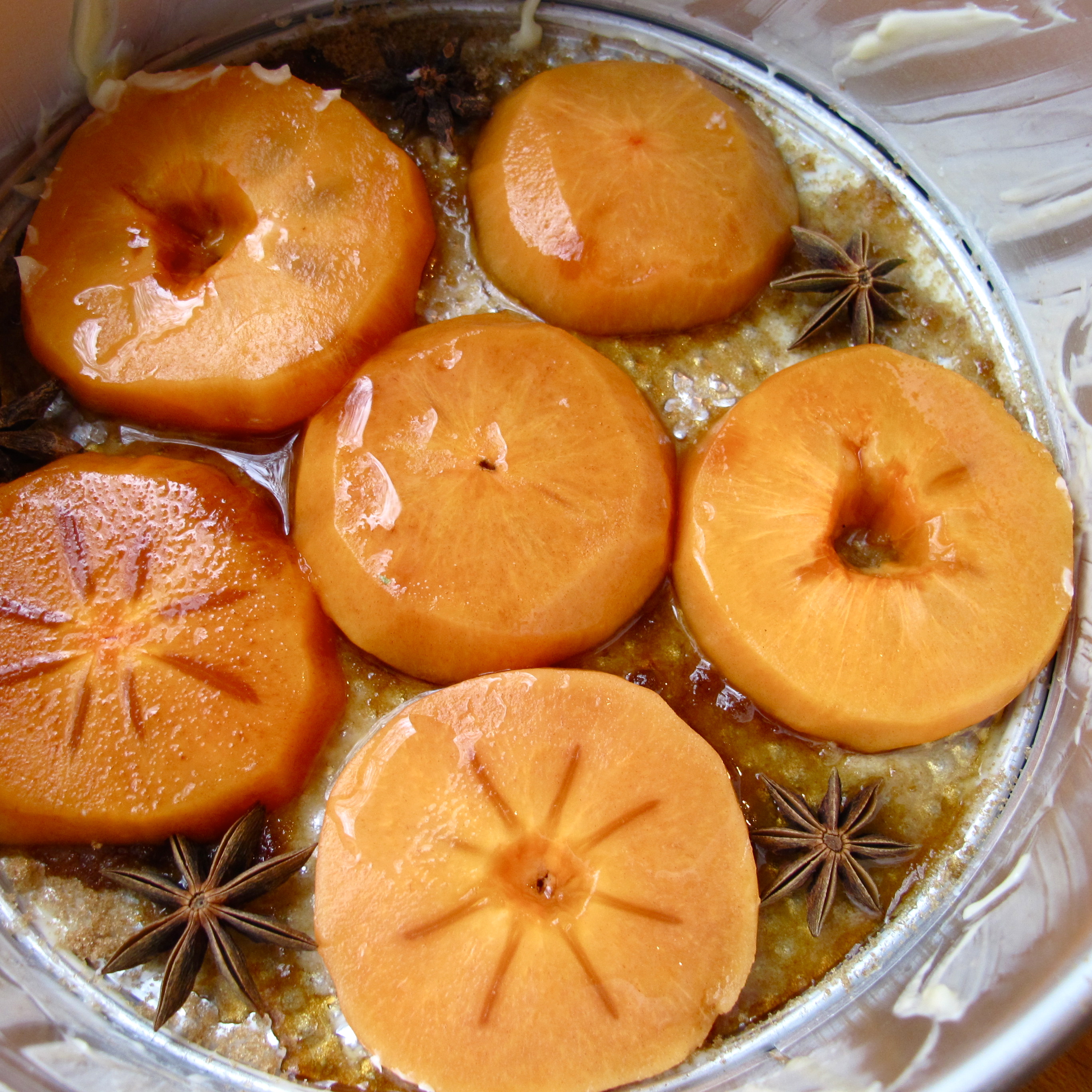
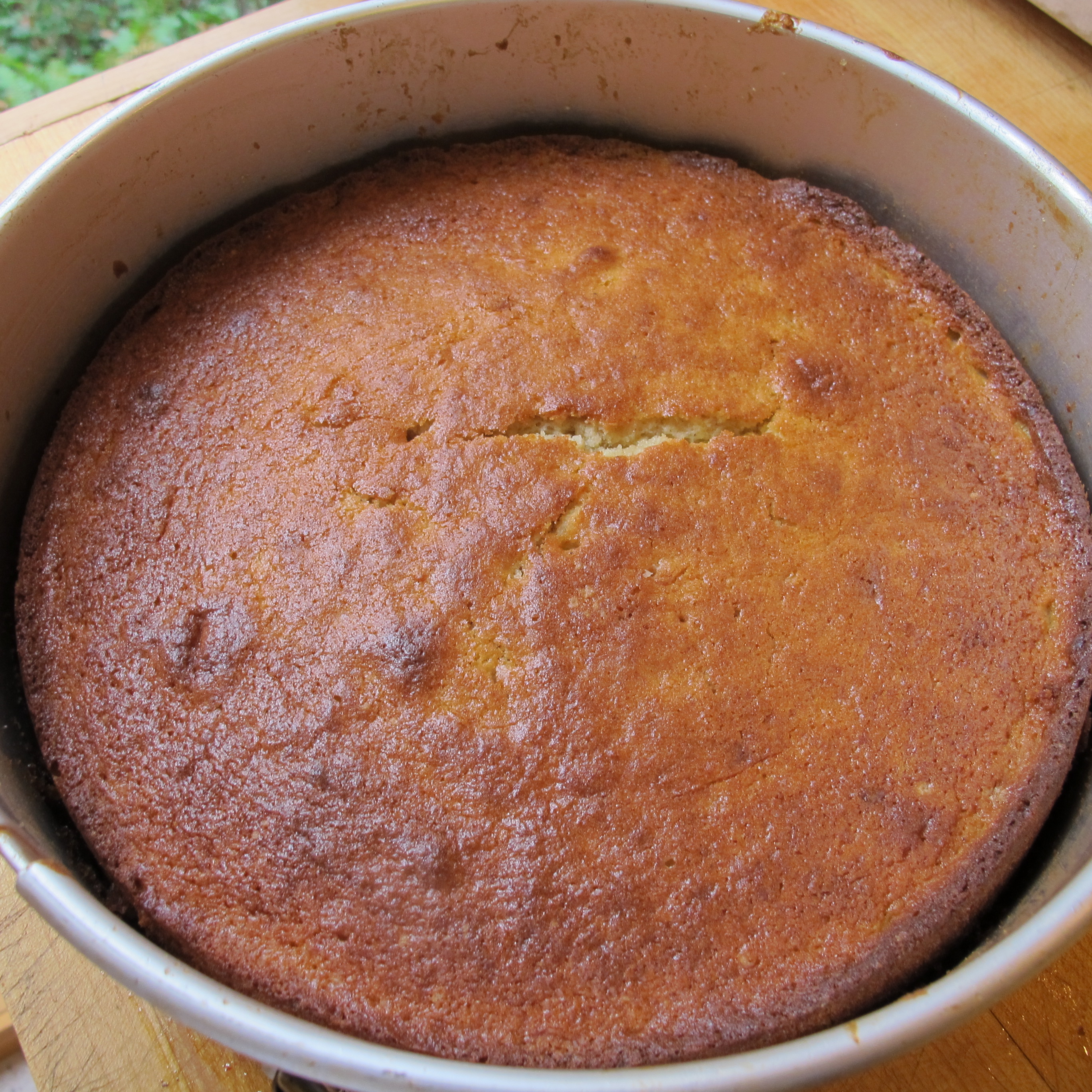
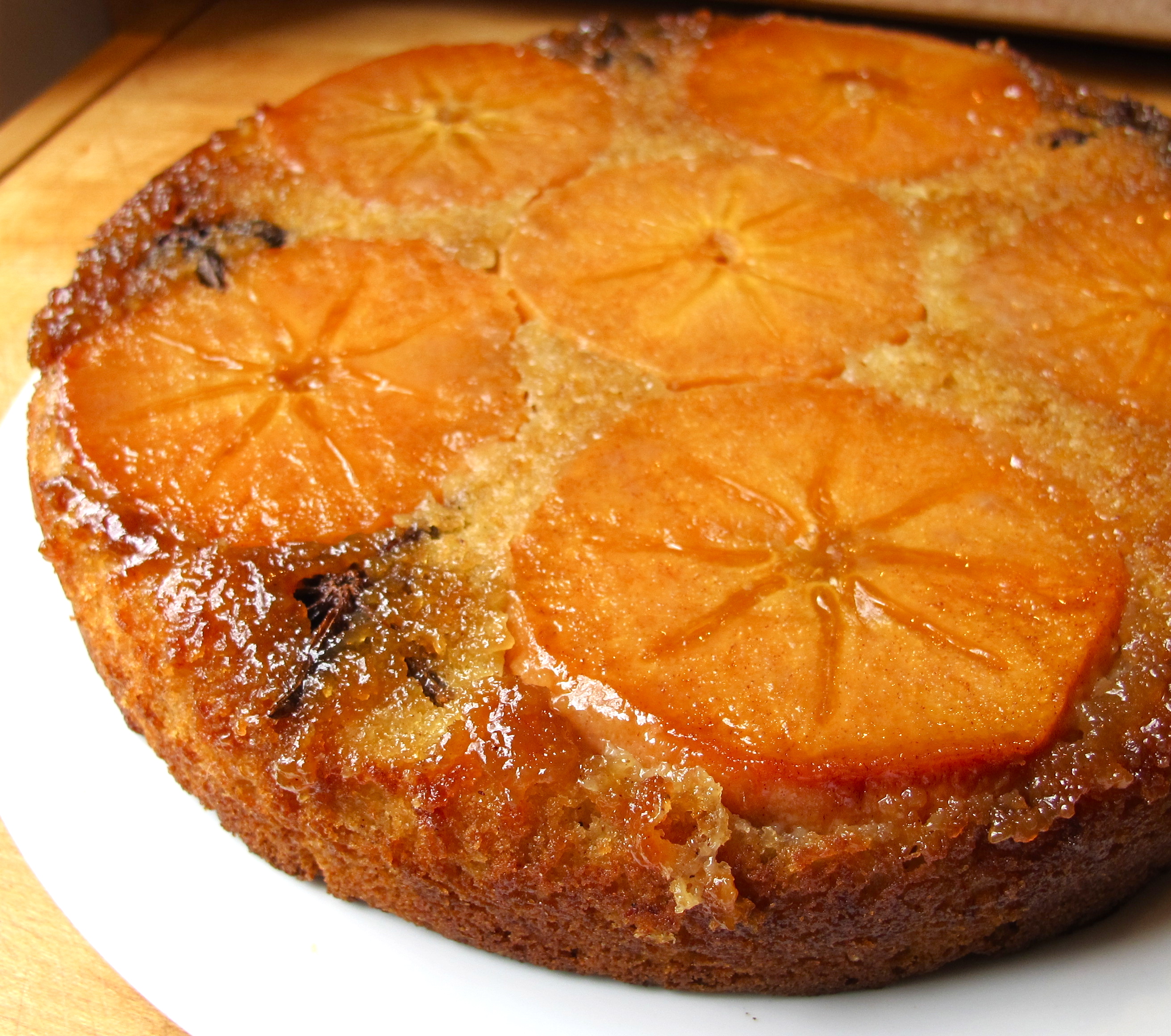





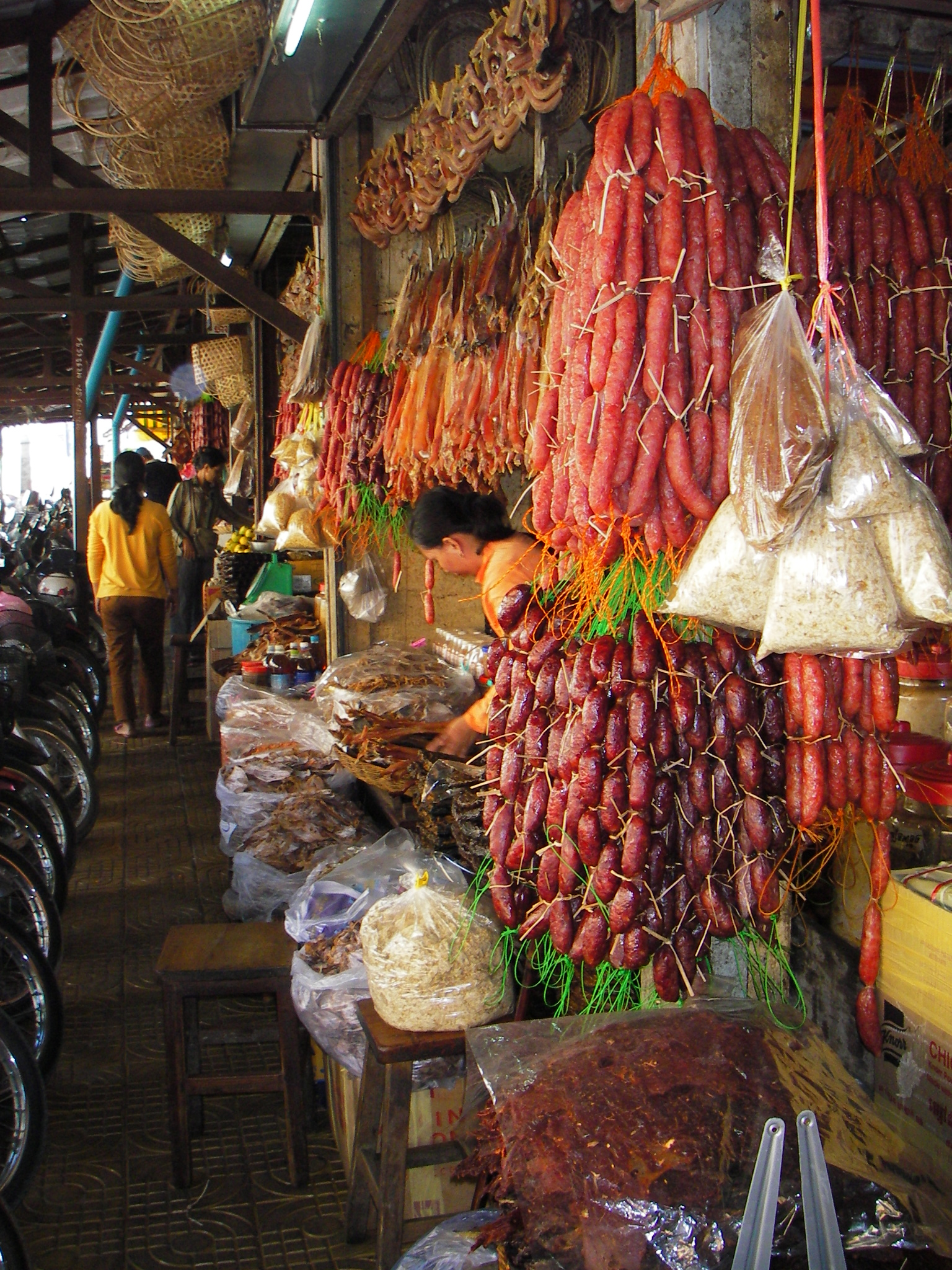

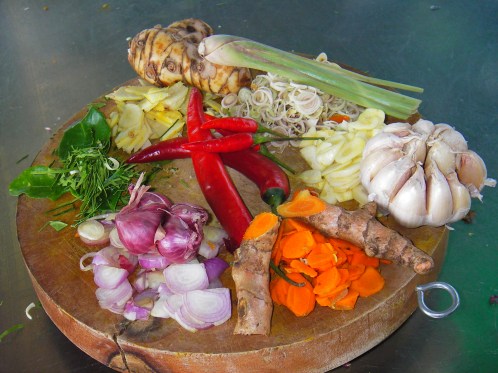

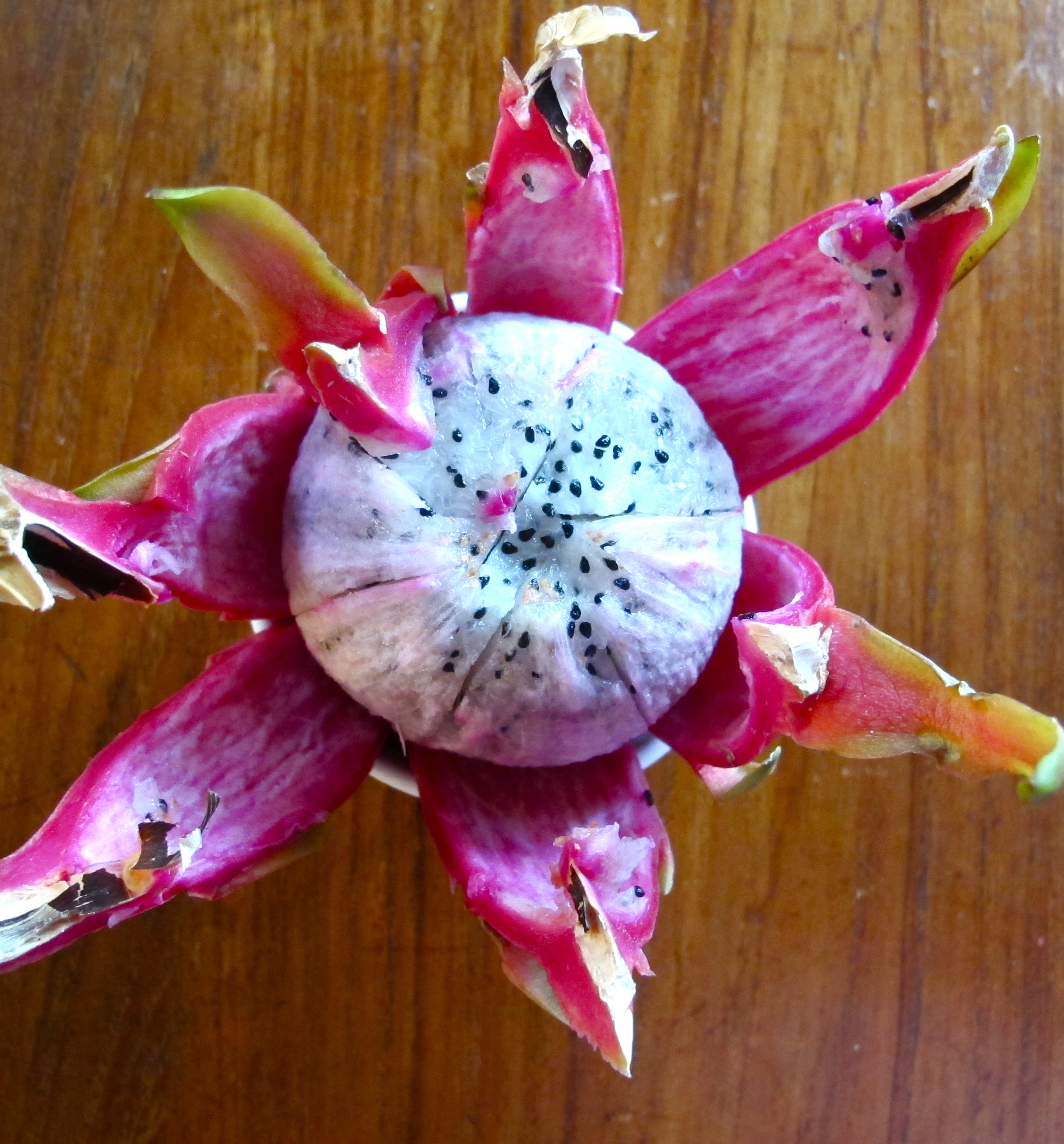
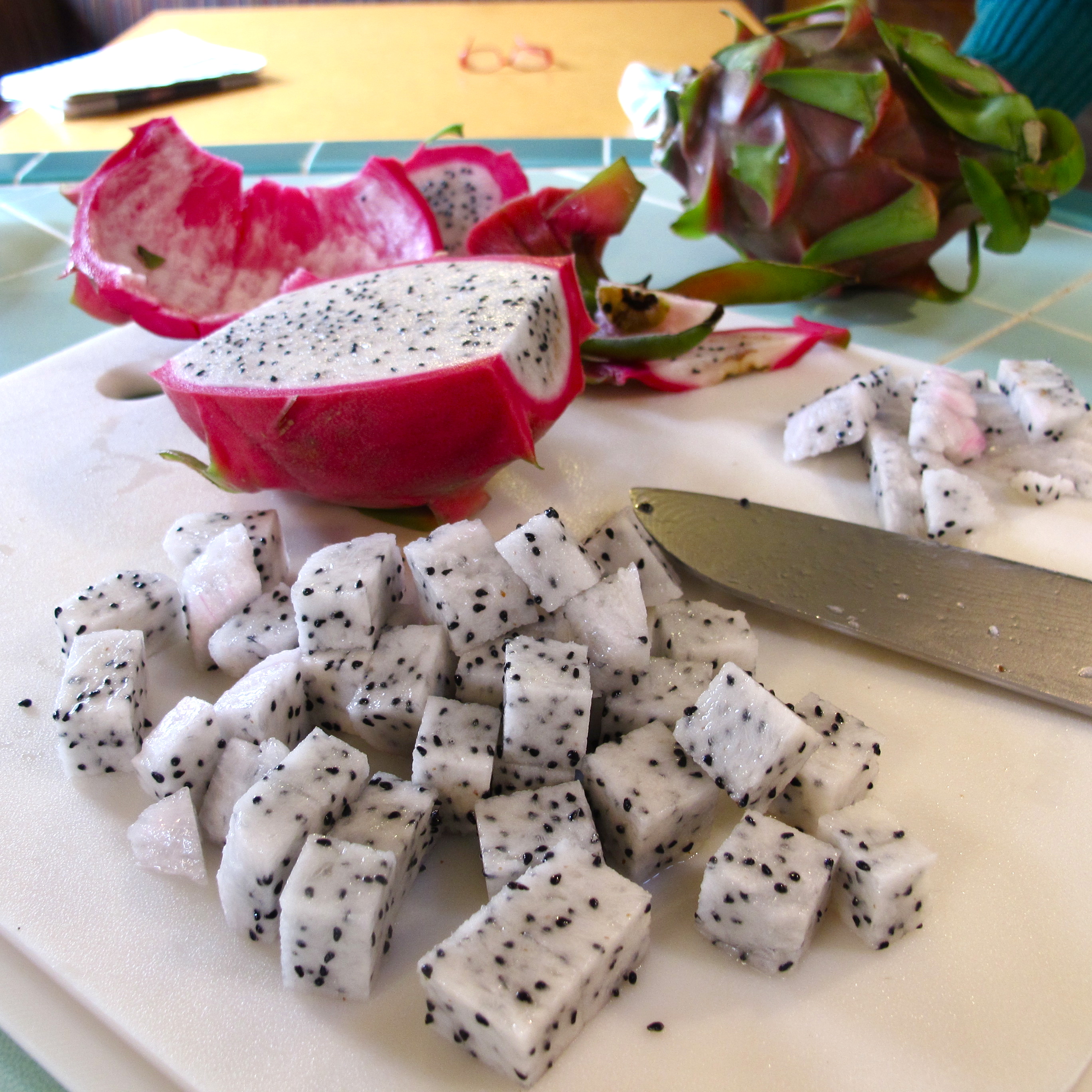


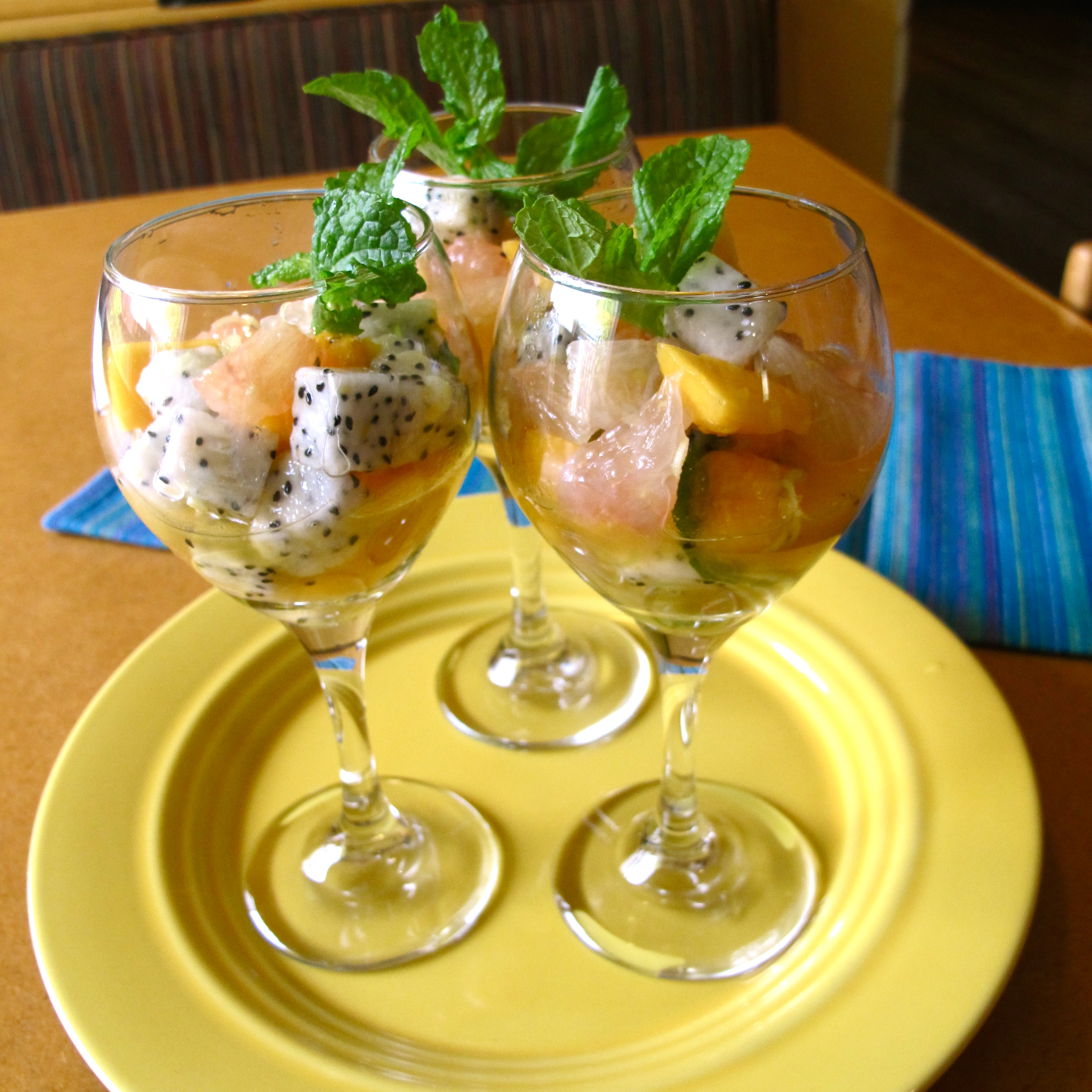


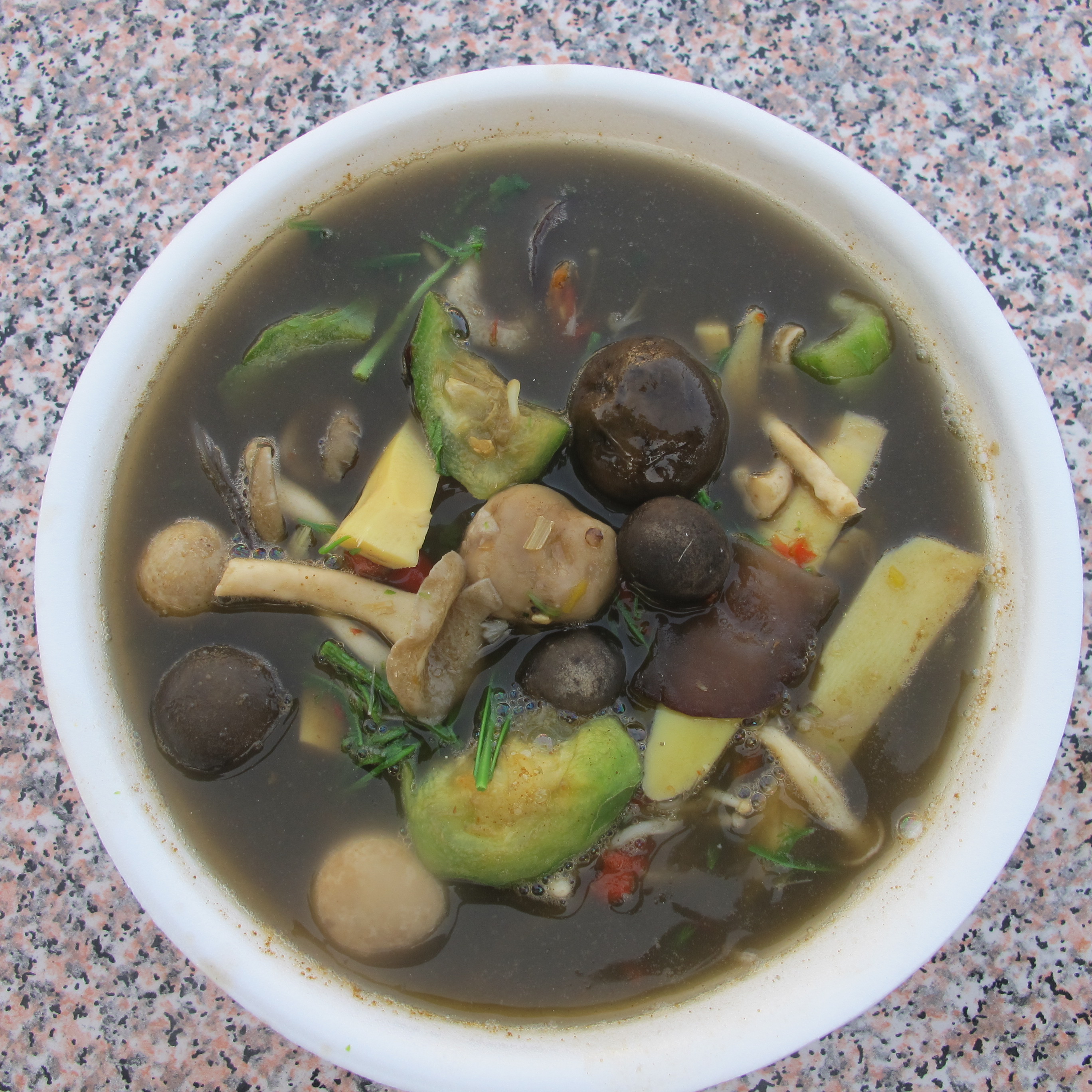


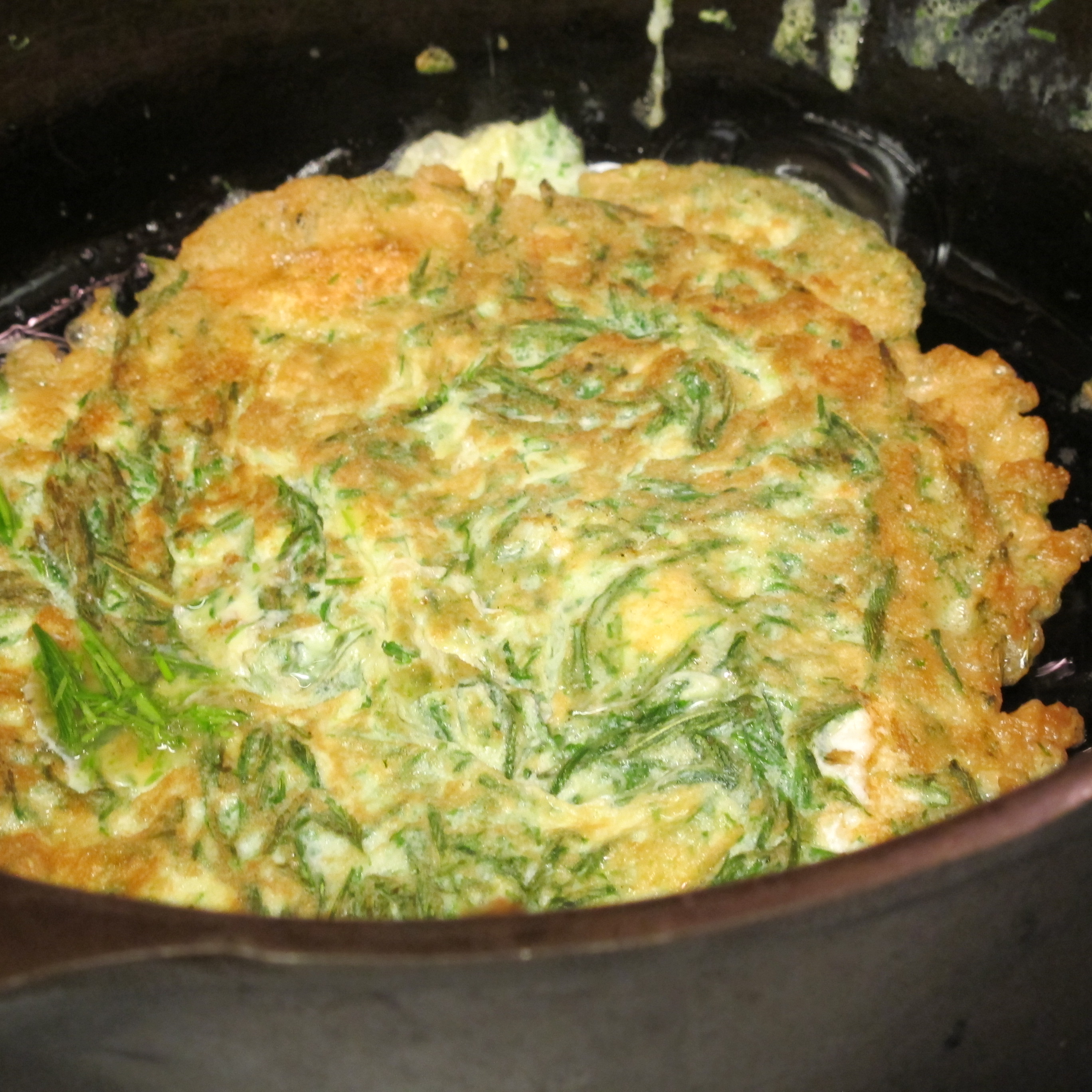

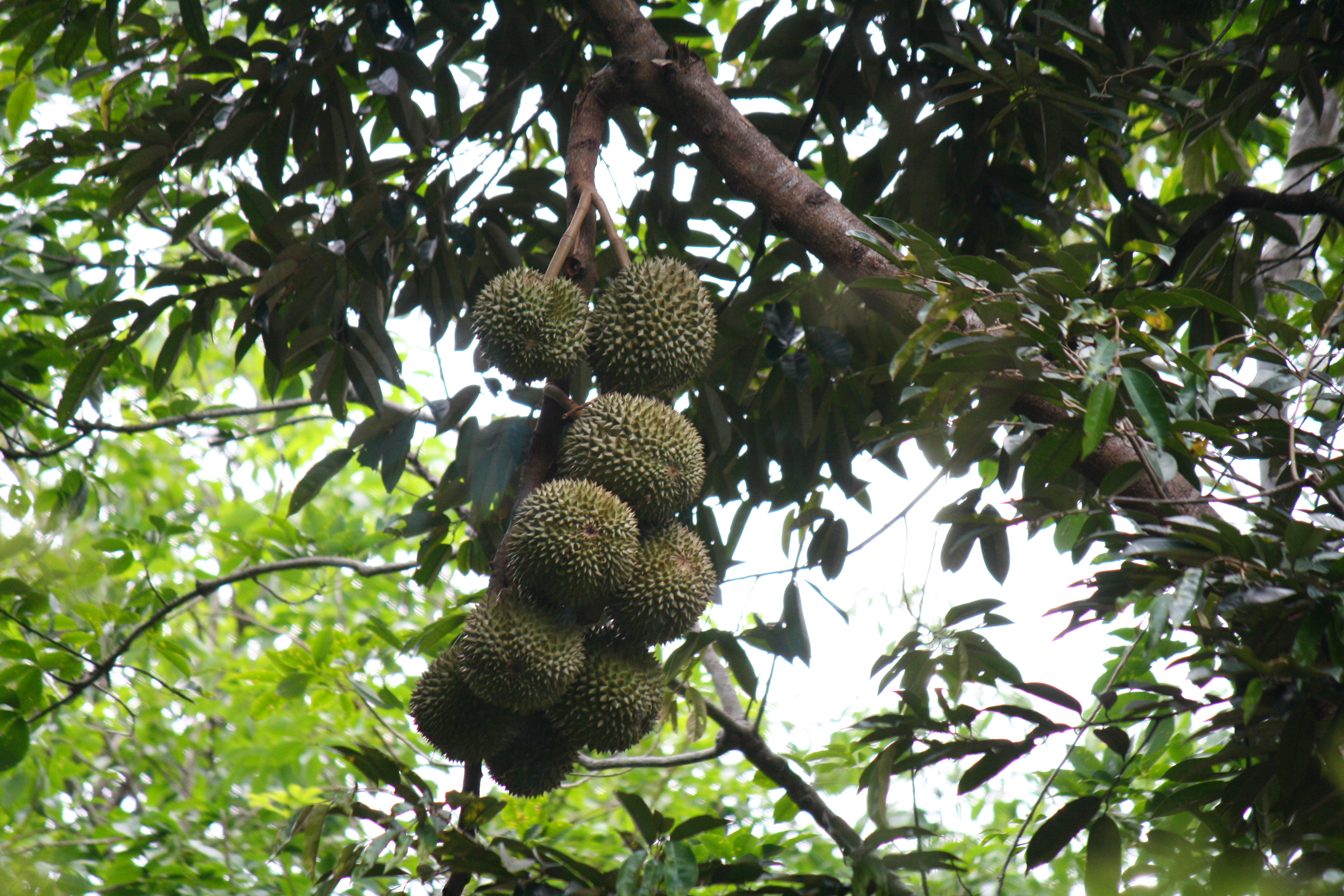
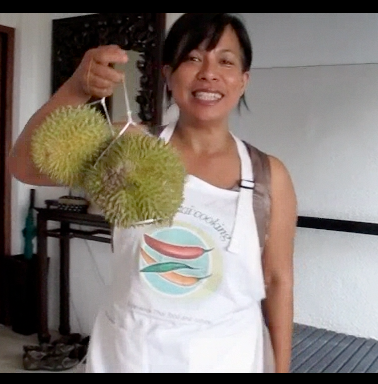

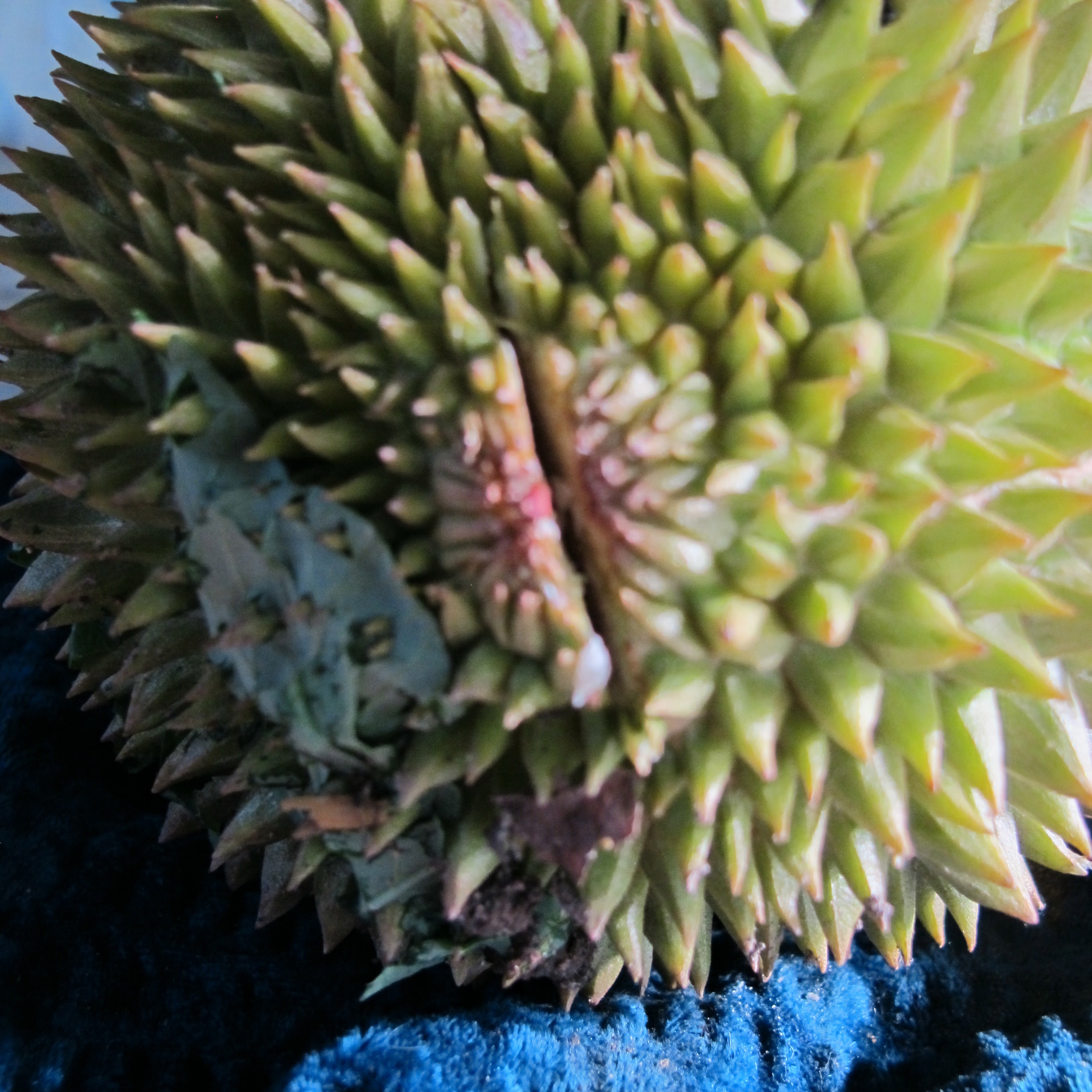

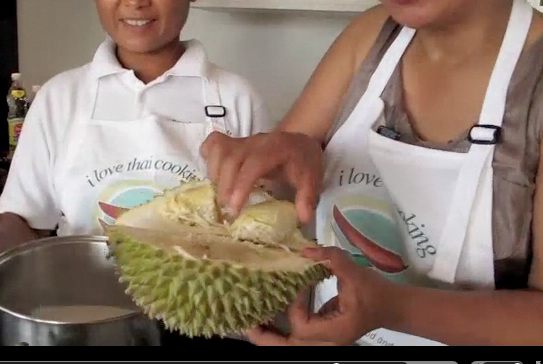


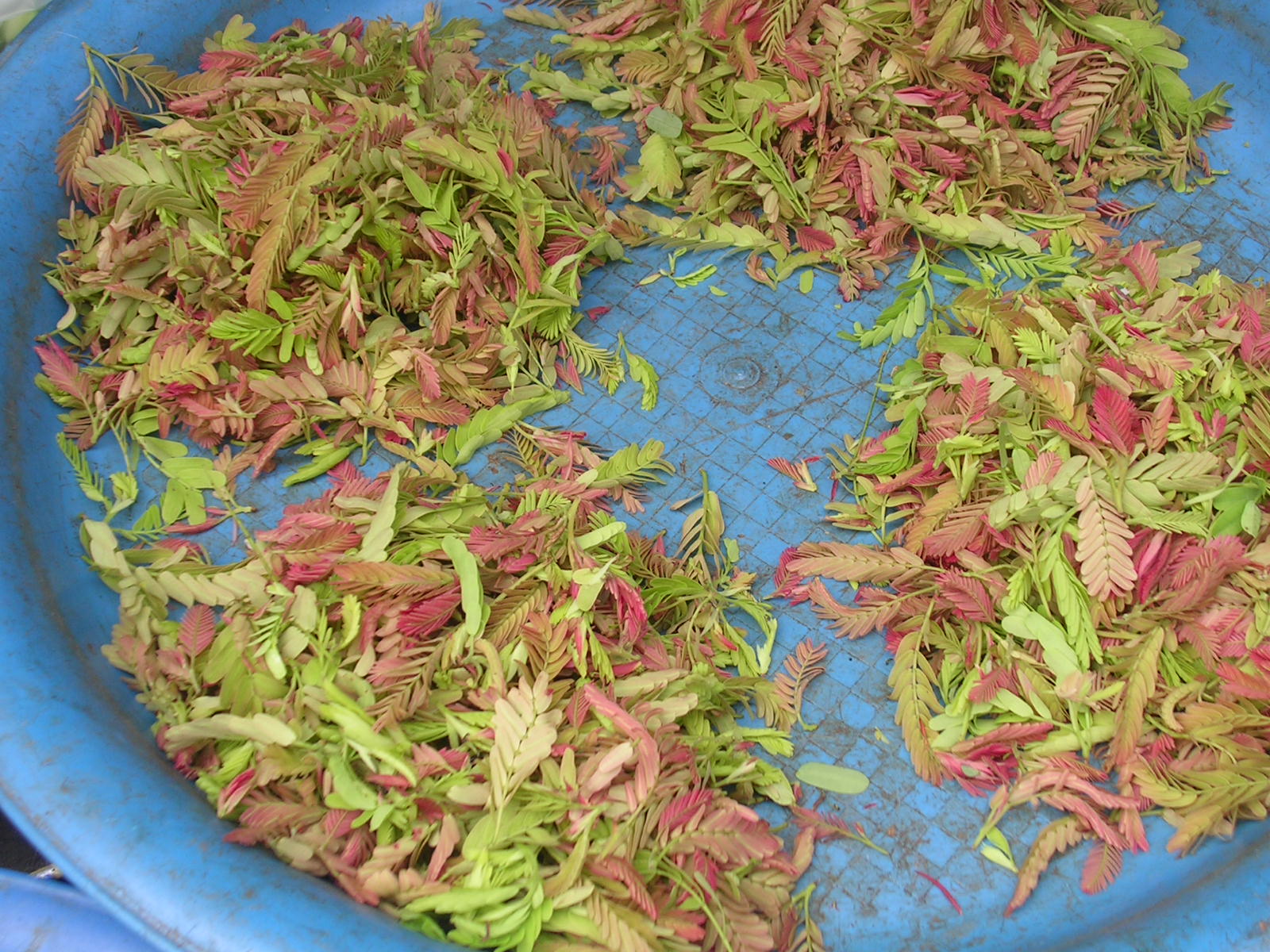

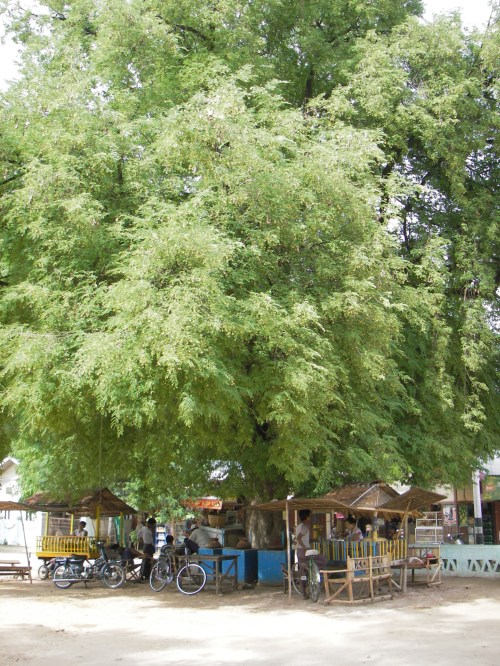
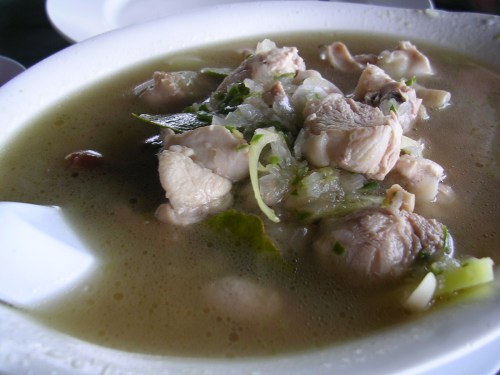
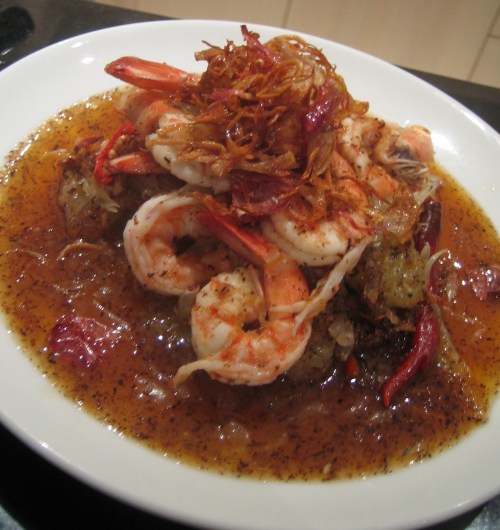

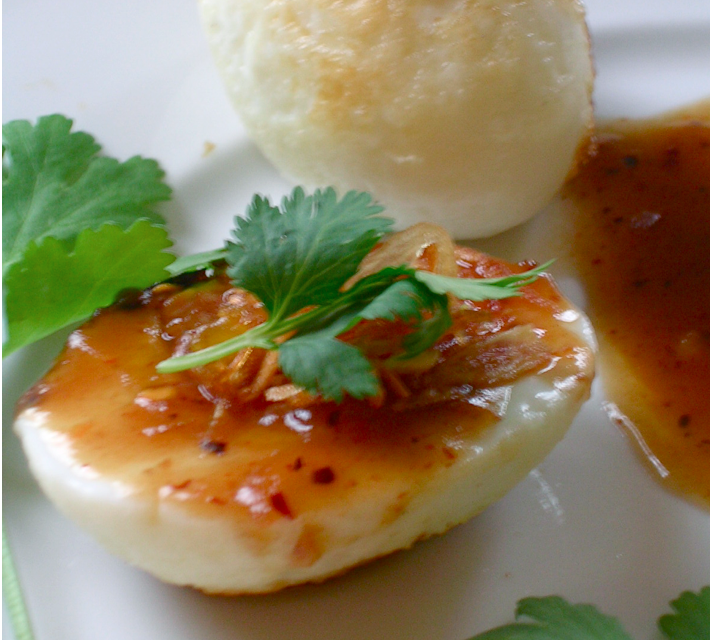
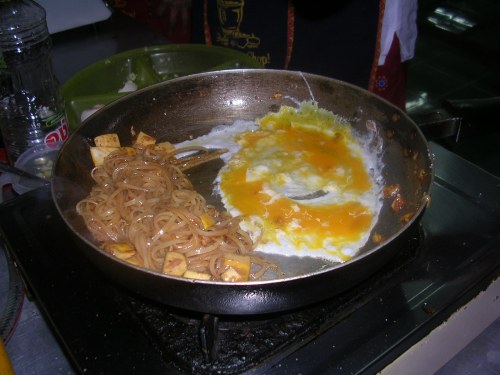

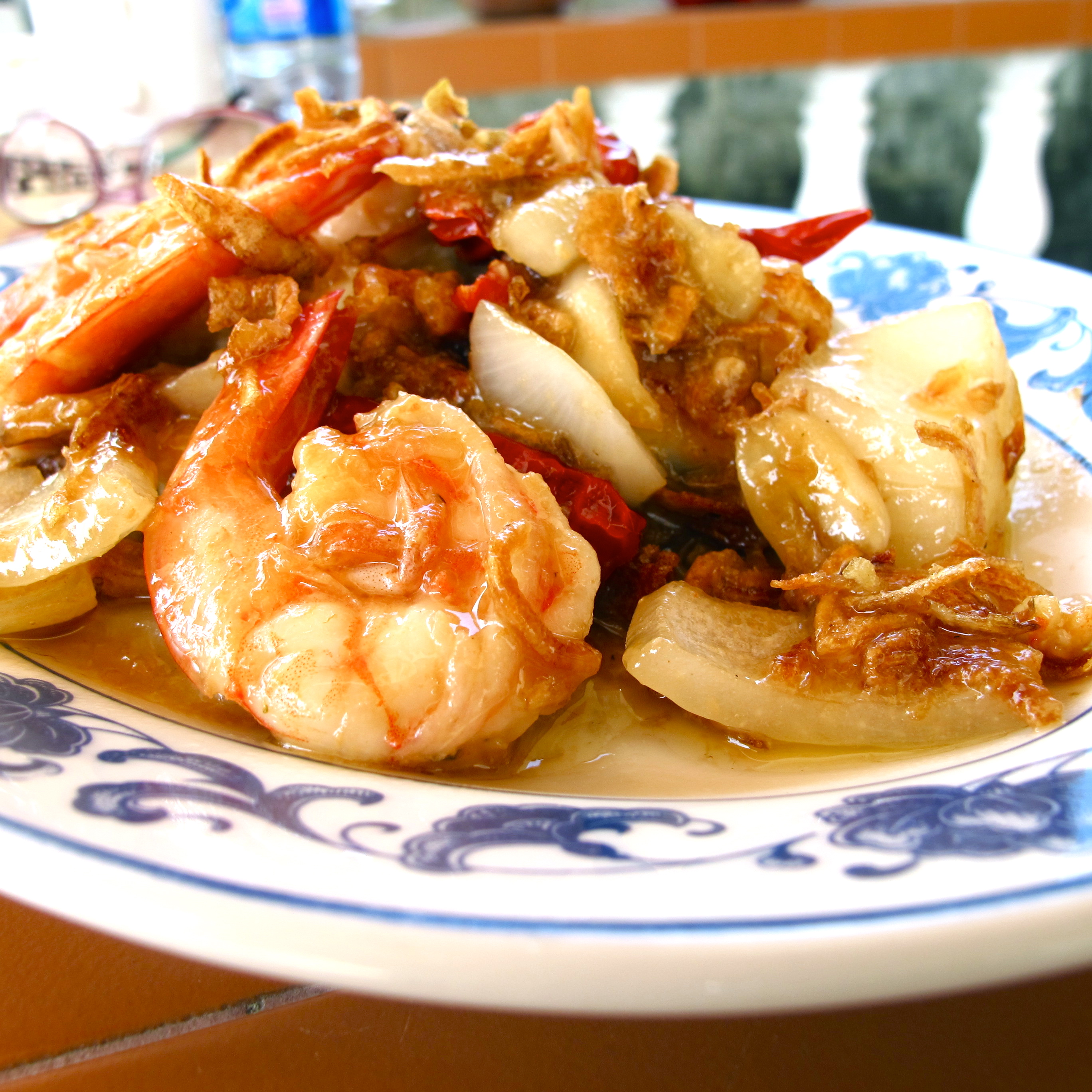

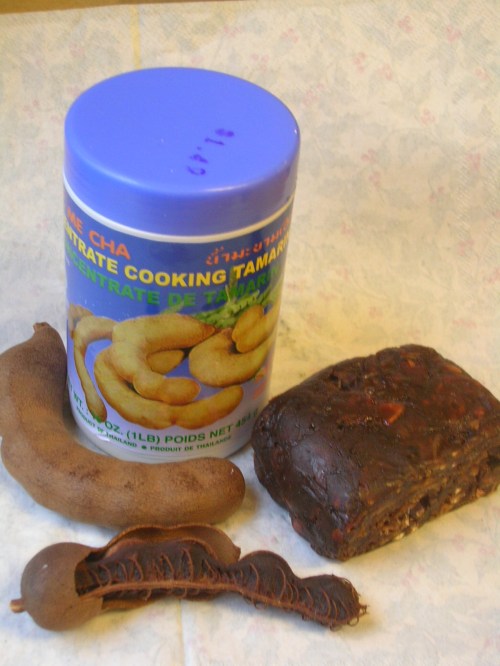


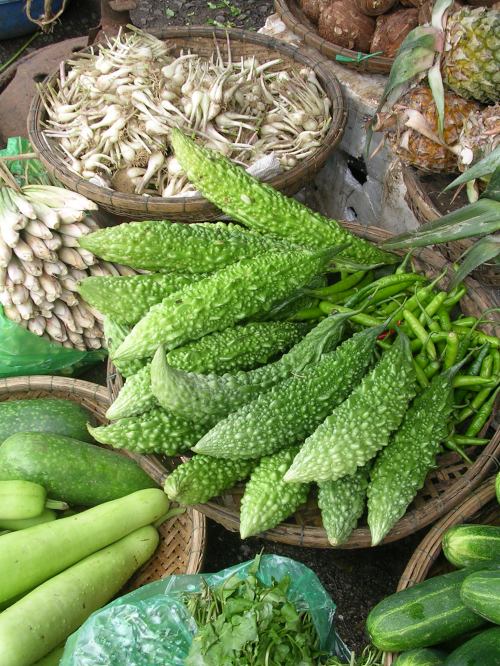
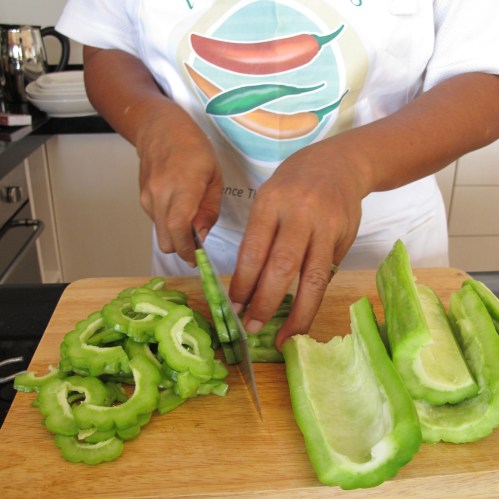


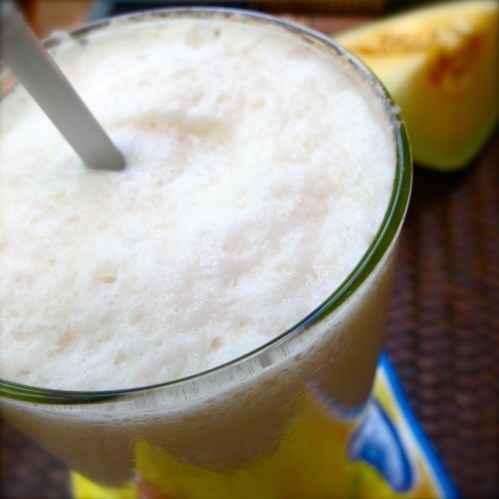









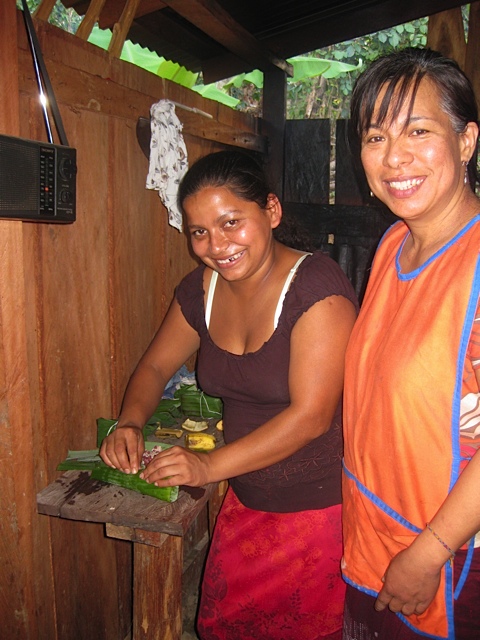








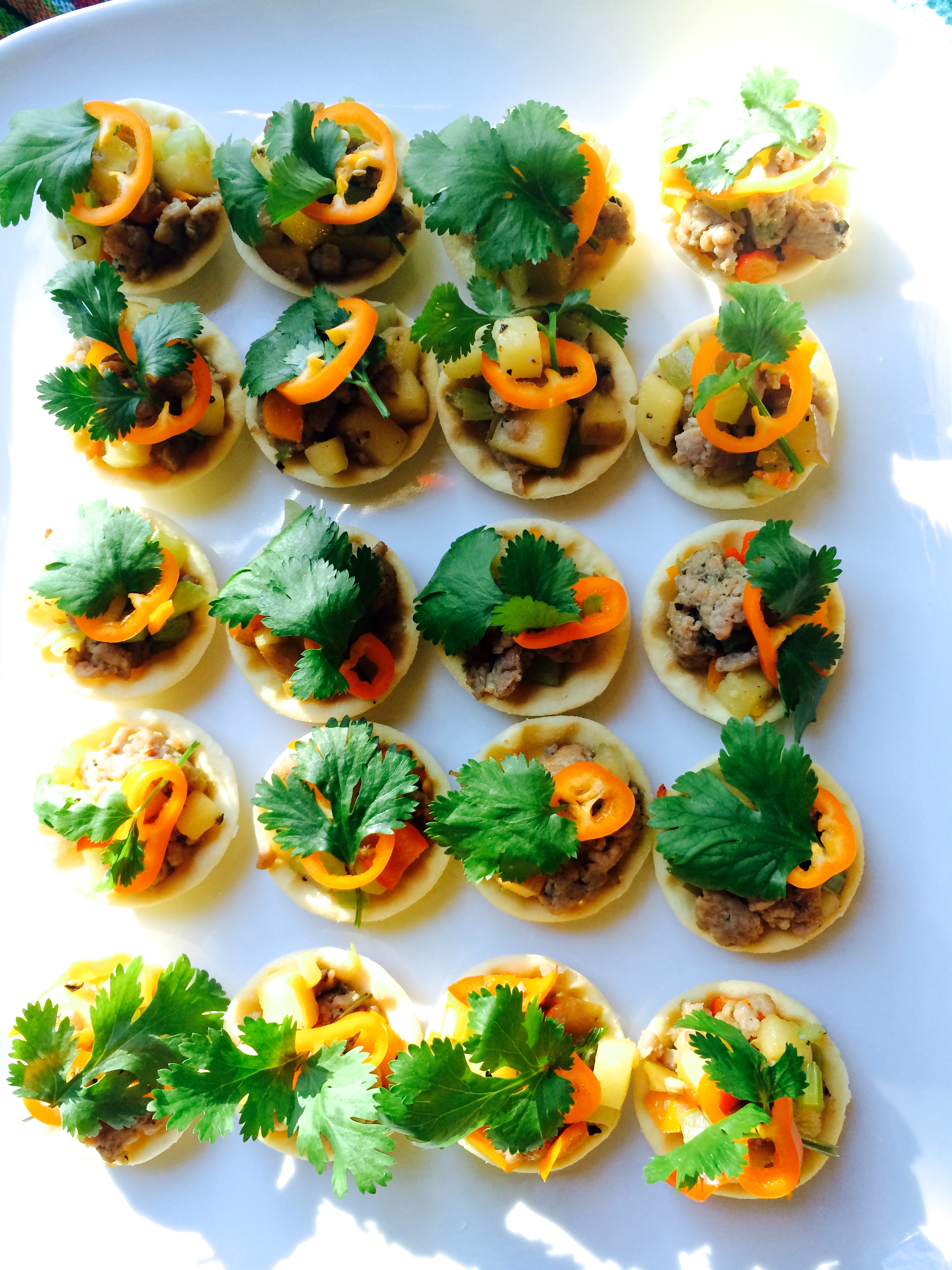
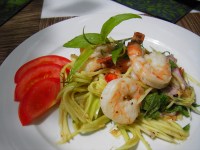
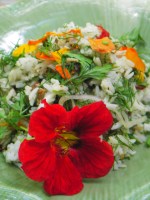
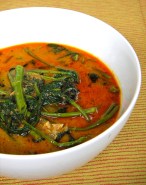

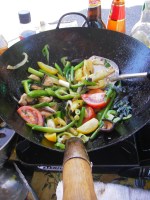


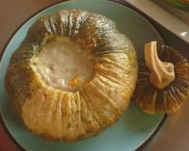
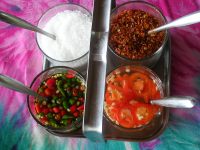














 Pranee's Thai Kitchen