Feeds:
Posts
Comments

Archive for the ‘Thai Gluten Free Recipe’ Category

Dark Soy Sauce, an Essential in Thai Cooking  

Two years ago my friend Pom arranged for me to visit the Junsaeng soy sauce factory in Thalang, Phuket. I was fortunate to learn firsthand about their establishment and how soy sauce is made. Out of four soy sauce factories in Phuket, it is the only one still in business. I hope the video below will help you understand how soy sauce is made.

There are two types of soy sauce: light and dark. The dark soy sauce is a little-known but very important ingredient in many dishes, such as Phad See Ew, Kee Meo and Lahd Nah Noodles. After Phad Thai, these are the best known Thai noodle dishes for Americans. The secret ingredient in these dishes is a good dark soy sauce. For me personally, I love the flavor of dark soy sauce in Singaporean Noodles and Hainan Chicken. The challenge is that most of my students know how to use light soy sauce, but few have had a chance to experience cooking with dark soy sauce. Moreover, a good dark soy sauce is hard to find in America. My favorite brand is from Indonesia.

Before teaching my Thai Comfort Foods class for PCC Cooks, I decided to create a homemade, gluten-free, dark soy sauce. I didn’t want students to have to turn the world upside down to find dark soy sauce, but even more importantly, is almost impossible to find one that is gluten-free.  After a few experiments at home, I was happy with the results. My dark soy sauce recipe below was a success when I used it in stir-frying the noodles for my class. I hope that this recipe made it easier for you to cook Thai noodles at home. A few drops of dark soy sauce go a long way.

Dark Sauce 

See Ew Dam

In America, good dark soy sauce is hard to find. I created this recipe to make it available for students as a substitute for store-bought dark soy sauce. It is an important ingredient for stir-fried noodles and rice dishes that require a sweet molasses-like soy sauce. 

Yield: ¾ cup 

 ¼ cup water
1 cup dark brown sugar
½ cup wheat-free soy sauce

Place water and brown sugar in a heavy-bottom sauce pan and bring to a boil over a high heat. Stir until the sugar and water mix well together, then stop stirring completely. Let the sugar mixture cook on medium-low heat. Stand and watch the bubble. When it gets dark like coffee or molasses, pour in the soy sauce—be careful as there will be an eruption of bubbling liquid. Keep stirring until it becomes the consistency of molasses. Store in the refrigerator.

© 2010  Pranee Khruasanit Halvorsen 
 I Love Thai cooking   
Pranee teaches Thai Cooking classes in the Seattle area. Her website is: I Love Thai cooking.com .
Read Full Post »

Spiced Up Cranberry Sauce with Thai Herbs

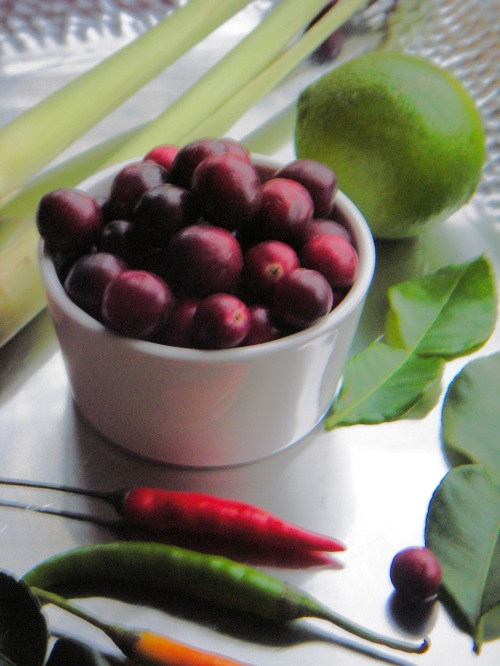
Cranberry Sauce with a Touch of Thai Herbs

Spiced Up Cranberry Sauce with Thai Herbs

Many years ago, when I cooked my very first cranberry sauce, I just followed the recipe on the back of the cranberry package. Now that I have lived in America for almost twenty years, I know the ingredients in the sauce quite well and have done some experimenting. For the past few years, I have enjoyed adding Thai flavors to the sauce, but now I have settled on this flavor profile. The sweet from the evaporated cane juice organic sugar (Wholesome Sweeteners Brand) goes well with the hint of caramel from the rum. Thai herbs and a unique sea salt balance out the flavors. This recipe has the sweet, sour, salty and spicy elements that add the Thai accent to my family’s Thanksgiving traditions. I hope you will enjoy cooking this recipe. Have a great Thanksgiving.

Pranee's Cranberry Sauce with Spiced Rum and Thai Herbs

Pranee’s Cranberry Sauce with Spiced Rum and Thai Herbs

Yield: 4½ cups

2 (12 ounce) packages fresh cranberries, washed and drained
2 cups organic evaporated cane sugar, or regular white sugar
1 ½ teaspoons Hawaiian Kine Seasoning Salt – Lemon Grass, or regular sea salt
1/2 cup water
2 tablespoons Sailor Jerry Spiced Rum
2 tablespoons Triple Sec orange-flavored liqueur
3 tablespoons lime juice, about 1 lime
1 stalk lemongrass, trimmed (cut off the lower bulb and remove tough, outer leaves) and smashed
1 to 2 fresh Thai chilies, smashed
3 Kaffir lime leaves
1 shallot, peeled and minced
2 tablespoons minced cilantro roots or stems

Place cranberries, sugar, salt, water, rum, triple sec, lime juice, chilies, shallot and cilantro root in a large pot, stir well and bring to a boil. Then stir as needed while cooking on medium heat until it reaches a jam-like texture, about 15 to 20 minutes. Remove lemongrass, chilies, and Kaffir lime leaves. Pour cooked cranberry sauce into sterilized jars. Keep in the refrigerator for up to two weeks, or freeze.

Pranee’s note:

Sailor Jerry Spiced Rum is a Caribbean rum with spice, caramel and other natural flavors.

Hawaiian Kine Seasoning Salt – Lemongrass is made from rock salt, pepper, garlic, ginger and lemongrass. You may use any sea salt.

Cilantro roots (rahk pak chee) are an important Thai flavoring ingredient. Unfortunately, cilantro usually comes with its roots already cut off. Look for whole cilantro plants with roots at farmer’s markets, grow your own, or substitute the bottom stems. If you do find cilantro with roots, rinse them well and use the roots along with about an inch of the bottom stems to which they are attached. You may also find frozen cilantro root in Asian markets.

© 2010  Pranee Khruasanit Halvorsen
I Love Thai cooking
Pranee teaches Thai Cooking classes in the Seattle area.   Her website is: I Love Thai cooking.com .

Read Full Post »

Inle Lake Green Tomato Salad, a Recipe from Shan StateMyanmar

Green Tomato, Red Tomato and Somewhere in Between

Today, on my way back from the University District Farmers Market, I visited a friend and saw her tomatoes in various shades of colors on her windowsill. Then I remembered that I wanted to share this recipe with you.

When I see green tomatoes, I think of my family’s visit to Inle Lake, Myanmar in June 2008. Our two-hour boat ride was enchanting, and we saw a fisherman using his foot to row his canoe. At the shallow edge of the lake were floating gardens with rows and rows of tomato plants. We had a chance to see the hydroponic farms and miles of tomatoes growing on floating gardens.

Inle Lake Fisherman

When we stopped for lunch and a cooking class at the View Point Restaurant, the chef surprised us with a green tomato salad along with many famous Shan State dishes. The menu reflected the local abundance of tomatoes from local farming, as Inle lake is the largest source of tomatoes and vegetables in Myanmar.

If you are planning to visit Myanmar anytime soon, please do make sure that the View Point Restaurant & Cooking School is in your itinerary. I love the people who work there, and the views of rice fields, the river, and the bridge—a great place to observe locals going about their daily lives.

This slideshow requires JavaScript.

I had never eaten green tomatoes before but I am familiar with the concepts of fried green tomatoes, pickled green tomatoes, and green tomato relish. So what else can you do with green tomatoes? Inle Lake Green Tomato Salad is an answer here.

Before cooking and eating green tomatoes, this is what you should know.

Thisis an excerpt about Tomatoes & Health that I copied from About.com:.“Although green tomatoes are wonderful when cooked or pickled, they should be avoided in large amounts when raw. Green tomatoes contain large amounts of tomatine, a toxin in the same alkaloid family as solanine which may be found in green potatoes, another member of the nightshade family. ”

I ate a few pieces of green tomato slices and felt fine but didn’t like the taste; it was too tart and bitter.  My friend Deb had mentioned that green tomatoes shouldn’t be eaten fresh, so I  decided to bake the green tomato slices for 15 to 20 minutes at 350 degrees Fahrenheit. The cooked tomatoes  tasted great, but the color was dark green.  I bake my green tomatoes or simply use firm ripe tomatoes instead.

Inle Lake Green Tomato Salad

This green tomato salad is very simple to make. You start by making  Lemongrass Vinegar.  I would recommend making a lot of it and storing it in the refrigerator.  It can be added to any recipe that calls for vinegar.

Inle LakeGreen Tomato Salad

Yum Makruatad Keow

4 large green or ripe tomatoes, sliced
1 shallot, peeled and minced
1 tablespoon chopped  peanuts, dry roasted and unsalted peanut
1 tablespoon fried minced garlic plus 1 teaspoon garlic oil ( this the oil that the garlic was fried in)
1 to 2 tablespoons lemongrass vinegar 
1 teaspoon toasted dark or light  sesame oil
½ teaspoon black sesame seeds
Salt to taste

Place green tomato slices on a large platter.

To make salad dressing, combine the shallot, peanuts, fried garlic, garlic oil, lemongrass vinegar, and sesame oil in a small bowl and whisk until combined. Pour over green tomatoes and garnish with black sesame seeds.

© 2010  Pranee Khruasanit Halvorsen 

 I Love Thai cooking   
Pranee teaches Thai Cooking classes in the Seattle area. Her website is: I Love Thai cooking.com .

Read Full Post »

Pranee’s Thai Lime-Green Chili Jam   


Thai Lime-Green Chili Jam

I have three different kinds of chili jam in my kitchen cabinet: Plum-Ginger Thai Pepper Jelly, Mango Madness, and Sweet Pepper Jalapeño Jam. These were precious gifts from good friends and they inspired me to create my own jam recipes. When my friend Ron gave me a bag of fresh green Star Fire Chilies from his favorite farm, “Krueger Family Peppers and Produce, Inc.” in Wapato, Washington, a journey began.

I wanted to create a Thai Lime-Green Chili Jam with a fun flavor from Kaffir lime leaf. First I explored the jam-making process and daydreamed about the flavor combinations, then I got a hands-on lesson on canning from my friend Kaia. She recommended a few books, and I purchased one, the “Ball Complete Book of Home Preserving.” A week later, I found the best price for canning jars, and in the past few weeks, I have created three combinations of chili jam. Honestly, I love all of them: Sweet Red, Lime-Green and Pineapple-Orange.

I have also learned my lessons on the do’s and don’ts of using powdered pectin. If the jam doesn’t set, follow the Sure-Jell instructions on how to remake the jam. After a few experiences, I became comfortable with the process. The most important part was that I had so much fun making close to one hundred jars of jam, and so did my friends. All I have to do now is to listen to their creative ways of using the chili jam.

I would like to share my Thai Lime-Green Chili Jam with you. It would be fun to serve side-by-side with cranberry sauce at Thanksgiving. You can learn to use it creatively during the holidays, and it makes a great gift for families and friends.

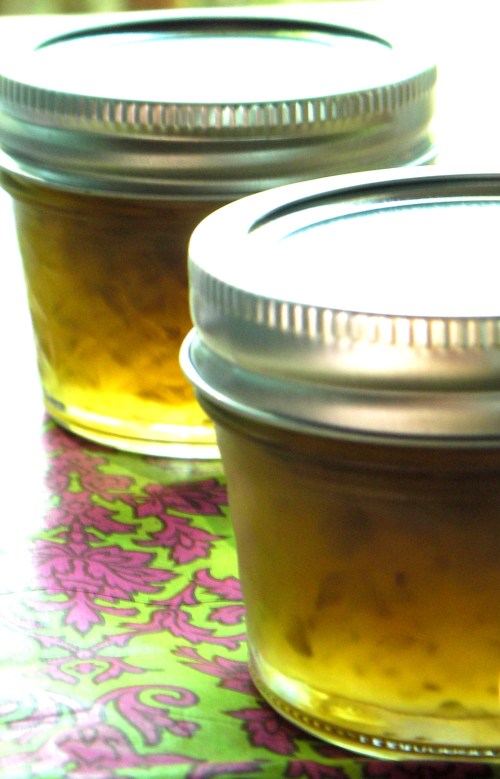
Thai Lime-Green Chili Jam with Citrus Flavors

Like green curry paste, the green color in this jam comes from fresh Thai green chilies. I also use green-colored peppers, herbs, lime juice, and all the Thai herbs to give it a real Thai flavor.

Thai Lime-Green Chili Jam  

Yam Prik Keow  

Yield: 5 1/2 cups or 14 (4-ounce) jars or 6 (8-ounce) jars

4 green bell peppers, cored and diced
30-40 fresh Thai green chilies, stems removed (I used Star Fire chilies)
1/2 cup diced red onion, about 1/2 medium-size onion
1 package Sure-Jell fruit pectin
2 cups cane vinegar (a vinegar made from cane sugar, available in most Asian markets)
2 to 4 tablespoons lime juice
4 cups sugar
1 1/2 teaspoons salt
10 Kaffir lime leaves
1 stalk lemongrass, trimmed and smashed
1 tablespoon butter
1 drop green food coloring, optional

Place bell pepper, fresh Thai green chilies, and onion in a food processor;  pulse to make a fine chunk (about 3 cups). Combine the  mixture with Sure-Jell, vinegar, lime juice and salt in a large, deep, stainless steel saucepan. Mix well until the pectin is dissolved. Bring to a boil over high heat. Stir in Kaffir lime, lemongrass and butter. Bring to a boil and cook for 3 minutes, stirring constantly. Stir in sugar all at once and return to a full rolling boil; stir constantly for 4 minutes. 

Remove from heat and ladle into jars filling to within 1/8 inch of the top. Wipe jar rims and threads. Cover tightly and store in refrigerator.

Note:  If you want a jam that can be stored (unopened) at room temperature, visit the Sure Jell website for instructions on how to process the jars.

 © 2010  Pranee Khruasanit Halvorsen 
 I Love Thai cooking   
Pranee teaches Thai Cooking classes in the Seattle area. Her website is: I Love Thai cooking.com .
 

Read Full Post »

Everything Goes in Rice Pilaf

Kao Op

Today,  I looked for some leftovers in the fridge, but there weren’t any ready to heat up. Instead I found odds and ends of leftover ingredients.

 I had stewed tomatoes, sliced Jimmy Nardello Peppers (Sweet Italian Frying Peppers from Tahoma Farm), a halved onion and chorizo. In my cabinet I had Bomba rice (a Spanish rice used in paella) from The Spanish Table and Harissa spice mix, a hot chili spice blend from Northern Africa that I had purchased from World Spice Merchants. Right on the spot, I decided to cook rice pilaf. I didn’t want to open any cookbooks or Google for ideas, and because it was a busy day I could just put it in the oven and go back to work in my home office. I just wanted to have fun and rice pilaf is a very easy recipe for anyone to come up with unique flavors. The ingredients I had were mainly Spanish so I went with that as my theme.

This slideshow requires JavaScript.

To cook any rice pilaf,  the important part to remember is the liquid to rice ratio. For example, for basmati and jasmine rice you will need 1½ cups of liquid to a cup of rice, but for Bomba rice the ratio is 1½ to 2 cups of water to 1 cup of rice.  

Spanish Rice Pilaf with Chorizo and Italian Frying Peppers

Kao Op Spain

Yield: 7 cups

Servings: 6

3 tablespoons canola oil
½ cup diced onion, about ½ onion
2 cups Bomba, calrose, or basmati rice
1 ½ teaspoons salt
6 links chorizo sausage, sliced
1 cup diced sweet peppers, about 4 sweet pepper
1 cup stewed tomato chunks or stewed tomatoes from a can
2 tablespoons Harisssa spicy mix powder
3 cups chicken or vegetable broth, or water (use 4 cups if you are using Bomba rice)

Preheat the oven to 350 degree Fahrenheit

Heat the oil in a Dutch oven  or heavy-bottom pot on medium heat, then stir in onion until it is fragrant and translucent. Add Bomba rice and salt and stir until it is well coated with oil. Stir in chorizo sausage, sweet peppers, tomatoes, Harissa mix and water; combine and bring to a boil for 1 minute, stirring well. Cover the pot with the lid and place on the rack in the center of the oven. Set the timer for 30 minutes, then remove the pot from the oven and leave it on the cook top to sit for at least 15 minutes without opening the lid. Before serving, stir well to combine all ingredients together.

Pranee’s note: Bomba rice (Arroz de paella) is a product of Spain and costs about $6 a pound. Thai and basmati rice are usually less than a $1 a pound. Bomba rice is short grain rice that expands in width, while most rice varieties expand in length. It absorbs more liquid than other types of rice, but remains firm when cooked and has a great texture.

See also Pranee’s Thai Kao Mok Gai Recipe, a form of rice pilaf from Thailand.

This history of rice pilaf and definition from Wikipedia

“Depending on the local cuisine, it may also contain a variety of meat and vegetables. . Pilaf and similar dishes are common to Middle Eastern, Central and South Asian, East African, Latin American, and Caribbean cuisines…….The English term pilaf is borrowed directly from Turkish, which in turn comes from (Classical) Persian پلو and Hindi pulav (पुलाव), and ultimately derives from Sanskrit pulaka (पुलाक)[2″

© 2010  Pranee Khruasanit Halvorsen 

 I Love Thai cooking   

Pranee teaches Thai Cooking classes in the Seattle area. Her website is: I Love Thai cooking.com .

Read Full Post »

Northern Thai Cuisine with the Kantok Diner

When planning a trip to Chiang Mai, the largest city in northern Thailand, one must see all of the cultural aspects that Northern Thai culture or Lanna culture has to offer. That is why I took my tour members to the Old Chiangmai Cultural Center. It is my favorite place for eating Northern Thai cuisine, listening to Thai music, and watching the dances. This may seem like a tourist trap, but for a short visit to Chang Mail, I recommend this experience before returning home. My visits with tour members in February 2007 and 2008 were memorable. We sat under the moonlight in a courtyard surrounded by old Thai teak buildings, ate, and watched the dance show. And of course the visitors had a chance to dance at the end.

Kantok Dinner at the Old Chiangmai Cultural Center

A typical Kontok dinner menu consists of Pork-Tomato Chili Dip (Nam Prik Ong), Green Chili Pepper Dip (Nam Prik Num), Fried Chicken (Gai Tod ), Chaingmai Curry Pork (Geang Hungley), Fried Banana (Kleuy Tod) and all of the vegetable condiments that go with chili dip, plus steamed sticky rice and steamed jasmine rice. All of these dishes were placed in bowls (kan) and set on a small round teak or rattan table (tok) that was only about 10 inches tall. We sat around the table and ate the food with our fingers, or with forks and spoons.

Tomato-Pork Chili Dip, Nam Prk Ong

Inspired Recipe from Our Chiang Mai Kantok Dinner

Nam Prik Ong

Tomato-Pork Chili Dip

Nam Prk Ong

น้ำพริกอ่อง

This dish is easy to make, and among Thai chili dips, pork-tomato chili dip is easy to love. It has a tomato base and is spicy hot with chili pepper, but does not have too strong a taste of shrimp paste. The secret is to use the ripest, reddest and sweetest tomatoes you can find. I recommend multiplying the recipe so you will have enough to keep some in the freezer. In Seattle I keep some Nam Prik Ong in the fridge to use as a condiment when I serve a meal with one main protein dish. I also love to use it as a condiment with steamed jasmine rice or to accompany other savory dishes or an array of fresh vegetables.

Yield: 1 cup

2 cilantro roots, or 1 tablespoon chopped cilantro stems
1 stalk lemongrass, trimmed and sliced, about 3 tablespoons
3 Chile Guajillo, or New Mexico chili pods, sliced and soaked in warm water for 30 minutes
5 whole dried Thai chilies, soaked in warm water for 30 minutes
10 cloves garlic, peeled
5 shallots, peeled and sliced
1 to 2 teaspoons shrimp paste placed on a piece of parchment paper and roasted in a 350BF oven for 10 minutes, (or substitute 1 tablespoon Napoleon anchovy paste)
1 teaspoon salt, or more as needed
3 tablespoons canola or peanut oil
¼ cup ground pork
1 cup sweet cherry tomatoes or any sweet tomato variety, chopped
1 tablespoon palm sugar or brown sugar
1 tablespoon fish sauce
¼ cup chopped cilantro to garnish

Make a curry paste by placing the cilantro roots, lemongrass, chili Guajillo, Thai chilies, garlic, shallots, shrimp paste and salt in the food processor. Turn on the machine and while it runs, pour cooking oil into the spout in a stream (like making pesto). Let the processor run for 3 minutes, stopping it occasionally to use a spatula to scrape down the sides of the machine.

Place the curry paste in a frying pan with the pork and cook over medium heat until the pork is no longer pink. Stir in tomato, palm sugar, and fish sauce and let it simmer until the tomato is softened. Nam Prik Ong should have the consistency of tomato sauce (not watery). When it is done, stir in chopped cilantro and serve with jasmine rice and vegetable condiments, or serve it Kantok Dinner Style with sticky rice and other traditional dishes.

Vegetable Condiments: Sliced cucumbers, long beans, wing beans, Thai eggplants, banana blossoms, steamed Kabocha pumpkin.

© 2010  Pranee Khruasanit Halvorsen
I Love Thai cooking
Pranee teaches Thai Cooking classes in the Seattle area. Her website is: I Love Thai cooking.com .
Read Full Post »

Amazing Thai & Vietnamese Flavors with Local Organic Farm Produce from Orting

Last Saturday, October 1st, was my first visit to the town of Orting, which is only one hour from Seattle. It was a beautiful fall day and I had a beautiful drive. I love the town. I was doing a cooking demo for PCC Cooks and PCC Farmland Trust at the Orting Valley Farms. It is PCC Culinary Trust’s latest preserved farm to save local organic farmland forever! It was also Pierce Country Harvest Fest and there were many people visiting, including young kids who decided on the spot that they love Thai and Vietnamese flavors.

At Tahoma Farms, Dan, the owner of the farm, grilled corn and served warm apple cider, while I cooked and  handed out samples of my Northwest Salad with Thai Chili-Lime Vinaigrette and Vietnamese Lemongrass-Scented Eggplant Stew. Groups of visitors came by either before or after taking a hayride,  and live country music was playing in the barn.

It was fun to meet so many people, including many families with young kids. It was great to learn that they all enjoyed my cooking. Therefore, I would like to share one of the recipes with you: Northwest Salad with Thai Chili-Lime Vinaigrette. At the farm I used dinosaur kale, sweet basil, Johnny Nardello peppers, and heirloom tomatoes for the salad. A Roy Dee Kha!

This slideshow requires JavaScript.

Northwest Salad with Thai Chili-Lime Vinaigrette

Yum Pak

Northwest salad with Thai chili-Lime vinaigrette Recipe, Yum Pak

I created this simple recipe this summer using fresh Northwest produce. The Thai-flavored vinaigrette uses olive oil, chili, lime and fish sauce. It makes a bright salad with interesting flavors.
 
 Serves 8 
 
4 tablespoons extra-virgin olive oil or garlic oil
1 teaspoon sea salt or 4 teaspoons fish sauce
1 teaspoon evaporated cane sugar
1/2 teaspoon black pepper
1/2 teaspoon chili powder
2 tablespoons lime juice or lemon juice
2 shallots, peeled and sliced
24 cherry tomatoes, whole, or  2 heirloom tomatoes, sliced
1 cup sweet basil leaves, washed and drained
1 cup kale, washed and chopped
1 cup mixed sweet pepper varieties, julienned
1 cup dill or cilantro leaves (or any Asian herbs such as basil, lemon basil)
2 tablespoons toasted sunflower or pumpkin seeds

Whisk olive oil, sea salt or fish sauce, sugar, pepper, chili powder and lime or lemon juice until well mixed. Fold in shallots, tomatoes, arugula, kale, sweet peppers, dill or cilantro and mix gently. Sprinkle with sunflower seeds and serve immediately.

© 2010  Pranee Khruasanit Halvorsen
I Love Thai cooking
Pranee teaches Thai Cooking classes in the Seattle area. Her website is: I Love Thai cooking.com
 

Read Full Post »

Seattle Feast with Friends, 2010

I created this recipe for Seattle Feast with Friends event (http://futurewise.org/action/SeattleParticipants) held on Thursday, September 30th, 2010. This celebration brings together local food producers, winemakers, and guest chefs.

I hope to see you there. If you cannot attend, then enjoy cooking this recipe. Cheers, Pranee


Thai Mussel Curry with Tomato and Lemongrass

Thai Mussel Curry with Tomato and Lemongrass

Gaeng Hoi Nang Rom

This recipe uses red curry paste, coconut milk and just enough lemongrass to create a flavorful soup. The sweet and sour from the tomato and the tamarind juice heighten the flavor of the mussels. It is a very well balanced dish that you can enjoy by itself as a soup, or served it with steamed jasmine rice as a mild curry dish. Dill and cilantro are the perfect herbs for a finishing touch.

Serves: 2 as a main dish

1 tablespoon canola oil
1 tablespoon red curry paste
2 tablespoons chopped lemongrass
3 tablespoons coconut milk, or more as needed
2 medium size ripe tomatoes, cut into large chunks
15 mussels, de-bearded and halved (about a pound)
2 tablespoons tamarind juice, or 1 teaspoon tamarind concentrate plus 1 teaspoon sugar
2 tablespoons chopped dill
2 tablespoon chopped cilantro

Stir canola oil, red curry paste, and lemongrass together in a pan on high heat until fragrant. Then stir in coconut milk and let it cook until the oil separates out from the rest of the mixture. Stir in the tomatoes and mussels and stir well. Cover with lid and cook until the mussels open up, about 5 minutes. Stir in tamarind juice; stir well and cook until the mussels are done (see below). Stir in dill and cilantro and serve right away.

Recipe by Pranee Khruasanit Halvorsen http://ilovethaicooking.com/

Mediterranean Mussels by Taylor Shellfish Farm http://www.taylorshellfishfarms.com/

Wine Pairing: http://www.skyriverbrewing.com/

Sky River Semi-Sweet Mead

$14.99 per bottle

“Sky River Semi-Sweet Mead, although drier, enjoys a similar depth and character to the Sweet Mead. With hints of pear and a crisper finish Sky River Semi-Sweet Mead, served well-chilled, delicately offsets the exotic notes of sesame and ginger in Pan-Asian cuisine, and the rich herbal textures of the Mediterranean.”


Cooking Tips from the Expert, Jon Rowley

The Mediterranean mussels, which are just now coming into season and will be very plump, aren’t done when they open. They need to continue cooking after they open until you see the meat contract. This makes a BIG difference in the flavor. If the mussels are not cooked enough, they have an unpleasant fleshy taste. If cooked properly they are gloriously sweet. These mussels are so fat,  you don’t have to worry about overcooking.

Also if some mussels don’t open and the others are done, the ones that are closed will also be done. They just need to be pried open. Bum mussels will be open before cooking and should be discarded. Mediterranean mussels that are closed after cooking, if you have any, are fine.

© 2010  Pranee Khruasanit Halvorsen
I Love Thai cooking
Pranee teaches Thai Cooking classes in the Seattle area.Her website is: I Love Thai cooking.com

Read Full Post »

Thai Cooking with Mussels

Steamed Mediterranean Mussels with Sweet Chili Sauce

I love mussels, and Thai cuisine has so many great mussel recipes. Unfortunately, cooking classes with mussels don’t sell well in Seattle. But you can enjoy my recipe without being in my class. This delightful, easy recipe uses fresh Mediterranean mussels that are at their peak season right now. The Taylor Shellfish Farm stall at many Seattle Farmers Markets is a good place to get them.

Cooking Tips from the Expert, Jon Rowley

The Mediterranean mussels, which are just now coming into season and will be very plump, aren’t done when they open. They need to continue cooking after they open until you see the meat contract. This makes a BIG difference in the flavor. If the mussels are not cooked enough, they have an unpleasant, fleshy taste. If cooked properly they are gloriously sweet. These mussels are so fat, you don’t have to worry about overcooking.

Also if some mussels don’t open and the others are done, the ones that are closed will also be done, they just need to be pried open. Bum mussels will be open before cooking and should be discarded. Mediterranean mussels that are still closed after cooking (if you have any) are fine.

This slideshow requires JavaScript.

Steamed Mediterranean Mussels with Lemon Basil and Shallot, and Homemade Chili Sauce

Hoy Nueng Bai Meang Luck

Servings: 8 as appetizer


30 Mediterranean mussels, about 2 pounds
2 tablespoons grape seed oil
3 shallots, peeled and sliced
1 cup lemon basil leaves, or any type of basil
1 Serrano pepper, halved
1 cup sweet chili sauce (see recipe below)

De-beard mussels and clean under running water to remove sand and grit. Discard any mussels that open before cooking.

Heat canola oil in a pan and stir in shallots and basil for 30 seconds on high heat. Add mussels, cover the pan, and shake it back and forth without opening the lid until the mussels start to open, about 2 minutes. Keep cooking until the mussels contract and look plump and round, about 1 more minute.

Serve with sweet chili sauce as a dipping sauce or place ½ teaspoon sweet chili sauce on each mussel. Garnish with lemon basil leaves.

Wine Pairing: Washington Pinot Gris

© 2010  Pranee Khruasanit Halvorsen
I Love Thai cooking
 
 
Pranee teaches Thai Cooking classes in the Seattle area. Her website is: I Love Thai cooking.com

Read Full Post »

Three Kinds of Pepper Leaves in Southeast Asia

There are three kinds of pepper leaves in the black pepper (Piperaceae) family. They can be easily confused by the inexperienced. This is how I explain the three types to my students when the lesson comes to the use of wild pepper leaf.

Wild Pepper Leaf - Chapoo - La Lot

A wild pepper leaf, or Piper Sarmentosum Roxb, is a common name for cha plu in Thai, Kaduk in Malaysian and la lot in Vietnamese. It is a ground cover in my garden in Phuket. Thais use it in Hua Mok, Miang Kam and tidbits. My favorite of all is when it is put in a stink ray curry.

Black Pepper Plant

A black pepper plant, Piper Nigrum, is in the same family as chapoo and la lot but it is a climbing plant. Only the fruit is edible. Thais love to cook green peppercorns with hot pungent curry dishes. When the pepper corn matures and is sun dried, it can be used to make black peppercorn.

This slideshow requires JavaScript.

Last in the family are betel leaves, or Piper Betle. When I was young, I always picked a fresh betel leaf for my grandmother, who enjoyed chewing the leaf when it was painted with pink limestone and wrapped around a sliced betel nut. Afterwards she would enjoy her afternoon siesta. Betel leaves and betel nut are also used for worship and are special symbols in ritual events.

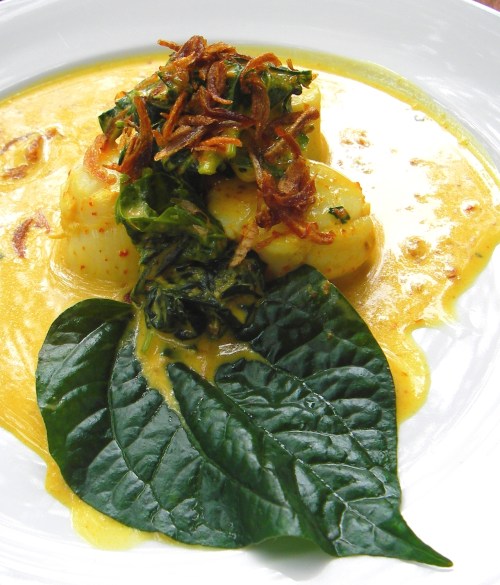
Curried Scallop with Wild Pepper Leaf — Gaeng Hoy Shell Bai Chapoo

I cook professionally during the week but at home on the weekend I cook like any home cook. Sunday is an iron chef day – I use whatever is in my refrigerator. I had some wild pepper leaf, a leftover from a Miang Kam dish during the week, and some Alaskan scallops in the freezer. I like to cook chapoo leaf in a curry with a strong flavored fish or meat; a hint of black pepper from the leaf gives a very interesting flavor to the dish, and coconut milk sweetens the bitter edge. This recipe is very quick. All you have to do is write down the word “la lot” and go to a Vietnamese market.

Curried Scallop with Wild Pepper Leaf

Gaeng Hoy Shell Bai Chapoo

Serves: 2

2 tablespoons canola oil
2 tablespoons red curry paste
2/3 cup coconut milk
1/3 cup water
6 large scallops
30 wild pepper leaves, AKA chapoo in Thai and La Lot in Vietnamese
1 teaspoon sugar
1 teaspoon fish sauce
2 teaspoons fried shallots

Heat canola oil in a medium-size pot on medium-high heat. Stir in red curry paste and fried until fragrant. Stir in 1/3 cup coconut milk and let it cook until oil is separated and fragrant; add the rest of the coconut milk and water and bring to a boil. Stir in scallops and wild pepper leaves and cook until scallops are opaque in color, about 5 minutes. Season with sugar and fish sauce and serve hot. Garnish with fried shallots. Serve warm with steamed jasmine rice.

© 2010  Pranee Khruasanit Halvorsen
I Love Thai cooking
Pranee teaches Thai Cooking classes in the Seattle area. Her website is: I Love Thai cooking.com

Read Full Post »

Ramadan 2010

Follow the Tradition of Thai Muslim Cooking on Phuket Island during the Ramadan

Now

Phuket Chicken Biryani Rice, also known as Kao Mok Gai, is a well known Thai-Muslim rice dish. Southern Thai cuisine gets its distinguished flavor from the neighboring countries of Malaysia and Indonesia. Growing up in Phuket I loved the diversity of our local cuisines. Our family cooked Thai and Chinese cuisines and at the market I enjoyed Thai Muslim cooking. After Persian Muslims settled in Phuket, their descendants took their traditional Biryani Rice and created a Thai variation, Koa Mok Gai. It is cooked for special occasions like weddings or during Ramadan. It is not a common dish to cook at home but most of the time we can purchase it from Kao Mok Gai vendors. If you want to try it when you visit Phuket, stop by an open air market in Bangtao or Kamala.

Phuket Chicken Biryani Rice—Kao Mok Gai Phuket

Over the past 10 years I have stayed in contact with a few chefs from Bangtao and Kamala Village. I learned to cook Kao Mok Gai from Varunee, my Thai chef for the culinary tour in Phuket. Her mom is a renowned caterer among the Muslim population in the Bangtao area. Over the years, I have written down many versions of her Kao Mok Gai.

Kao Mok Gai with Fresh Vegetable, Chile Sauce and Chicken Soup

The other day I wanted an easy lunch, which led to the creation of a quick and easy version of Kao Mok Gai. It took me 10 minutes to make, since I already had the ingredients in the house. It may take you 15 to 20 minutes to prepare the ingredients.

If you have an old-style rice cooker that is easy to clean, I recommend using that. Otherwise place everything in a Pyrex 9″x13″ pan and cover neatly with foil, bake in an oven at 350F for 25 minutes and let rest for 10 minutes before removing the foil and serving.

Phuket Chicken Baryani Rice

Kao Mok Gai

Serves: 4 to 6

Active Time: 10 minutes

2 cups jasmine rice, basmati rice, or any long grain rice
2 1/2 cups water or chicken broth
1 tablespoon fried garlic or shallot, plus 1 tablespoon for garnish
1 tablespoon canola oil, garlic oil or shallot oil
2 tablespoons Madras curry powder
1 tablespoon lemongrass powder
1/2 teaspoon galangal or ginger powder, optional
1 bay leaf
6 pieces fried or baked chicken
 
Rinse the rice and drain, put in a rice cooker with water, fried garlic, canola oil, curry powder, lemongrass powder, galangal powder and bay leaf. Mix well and place cooked chicken in the center of the rice cooker, cover, turn on rice cooker. It takes about 30 minutes to cook and then let it sit for 15 more minutes before serving.
 
Serving suggestions:

Buffet Style: Place rice and chicken on a nice platter and garnish the top with fried garlic or shallot. Served with condiments suggested below (please also see photo).

Individual serving: One cup rice, 1 piece chicken, garnish with fried garlic served with condiment and sauce.

Condiments: Sweet chili sauce, sliced cucumber, sliced tomato, cilantro and green onion.

Thai Vegetarian Option: Saute shiitake mushroom, fried firm tofu, raisin and cashew nut. Thai Cooking for Kids Gluten-Free Recipe


Then

Here is a famous Kao Mok Gai prepared by Varunee’s mom for 250 children. I hosted this event for school children at the Kamala Beach School 6 month after the Tsunami. We served the food at the temporary kitchen in July 2005.


Pranee with Mama Boo, July 2005


Kao Mok Gai, Lunch for Kamala School Students July 2005

© 2010  Pranee Khruasanit Halvorsen I Love Thai cooking

Pranee teaches Thai Cooking classes in the Seattle, Edmonds, Redmond, Issaquah, Lynwood and Olympia areas. Her website is:  I Love Thai cooking.com 
 
To learn more on the history of Biryani Rice: http://en.wikipedia.org/wiki/Biryani

Read Full Post »

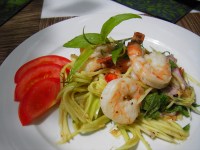
Som Tum, a Green Papaya POK POK 

Som Tum - Thai Green Papaya Salad

Pok Pok is the sound made when a wooden pestle hits a clay mortar. This is a classic sound in the green papaya making process and it is a familiar sound for Thais and tourists alike because Som Tum vendors are everywhere in Thailand. When I teach papaya salad recipes, I make sure to carry my clay mortar and wooden pestle with me to my cooking classes in Seattle, Lynwood, Edmonds and even Portland. I feel that it is important for students to understand the cultural and traditional aspects of  Thai cuisineFor me, making and eating green papaya salad is a cure for homesickness. But is not easy to find green papayas outside of Thailand, so sometimes we have to improvise.

Shredded Green Papaya and Carrot for Som Tum

Carrots are always a great substitute when fresh green papaya is not available. My first experience eating Som Tum made from other vegetables besides green papaya was when I was traveling in Switzerland and France visiting friends and relatives.

In Seattle you can find green papaya everyday at the Asian markets, but at farmers market events in Washington I always enjoy making Som Tum with various farm fresh vegetables. And I am always delighted that it still makes a great impression on everyone. First the Pok, Pok sound, then the flavors of chili-lime and peanuts dressing that make all fresh salad tastes so good. My favorite vegetables and fruits for this recipe are carrots, kale, green apples, green mangos, green beans and cucumbers.

Som Tum – Thai Green Papaya Pok Pok

Yesterday I was making special version of Som Tum for a Pike Place Market Sunday Event. I combined Som Tum made from local carrots and kale with cooked rice noodles and smoked local King salmon. Combining Thai and northwest flavors together using a mortar and pestle produced a delicious dish.  Let’s cook with the Thai rhythms!

Please also see Pranee’s Somtum Recipe featured in Seattle Times, Pacific Northwest Sunday Magazine

SOM TUM PLA SALMON

Green Papaya Salad with Smoked Salmon and Rice Vermicelli

Servings: 4
 
3-6 garlic cloves, peeled
5 Thai chilies, whole
2-3 tablespoons palm sugar or brown sugar
6 tablespoons dry roasted peanuts
3 tablespoons fish sauce
3 tablespoons lime juice
¼ lime, cut into 4 small wedges
8 cherry tomatoes, halved, or 2 large tomatoes cut into wedges
½ cup green beans, cut into 1 inch lengths
2 ounce smoked salmon, sliced, about ¼ cup, divided
2 cups shredded green papaya, carrot, cabbage, kale or any fresh vegetable
1 cup rice noodles or rice vermicelli, cooked using the instruction on the package

To make a dressing, use a wooden pestle to crush garlic, chilies, palm sugar and 1 tablespoon roasted peanuts in a clay mortar until it forms a paste. Stir in fish sauce and lime juice with pestle in circular motion until blended.  With pestle, gently mix in lime wedges, tomatoes, string beans, half of the smoked salmon and shredded papaya by pushing down the ingredients against one side of the mortar and using a large spoon to lift up on the opposite side. Repeat a few times until well incorporated.  Serve right away with rice noodles and topped with the rest of the smoked salmon.

Cook’s note: If you don’t have a mortar and pestle, here is an easy way to make a salad dressing. Blend garlic, Thai chilies, palm sugar, 1 tablespoon roasted peanuts, fish sauce and lime juice in a blender until smooth. Mix the rest of peanuts, string beans, dried shrimps, tomatoes and green papaya in a salad bowl. Pour the dressing over the salad and gently mix them together by hand until salad is well coated with the dressing.

© 2010  Pranee Khruasanit Halvorsen
I Love Thai cooking

Pranee teaches Thai Cooking classes in the Seattle area. Her website is: I Love Thai cooking.com

Read Full Post »

Corn and Scallion, a perfect pair

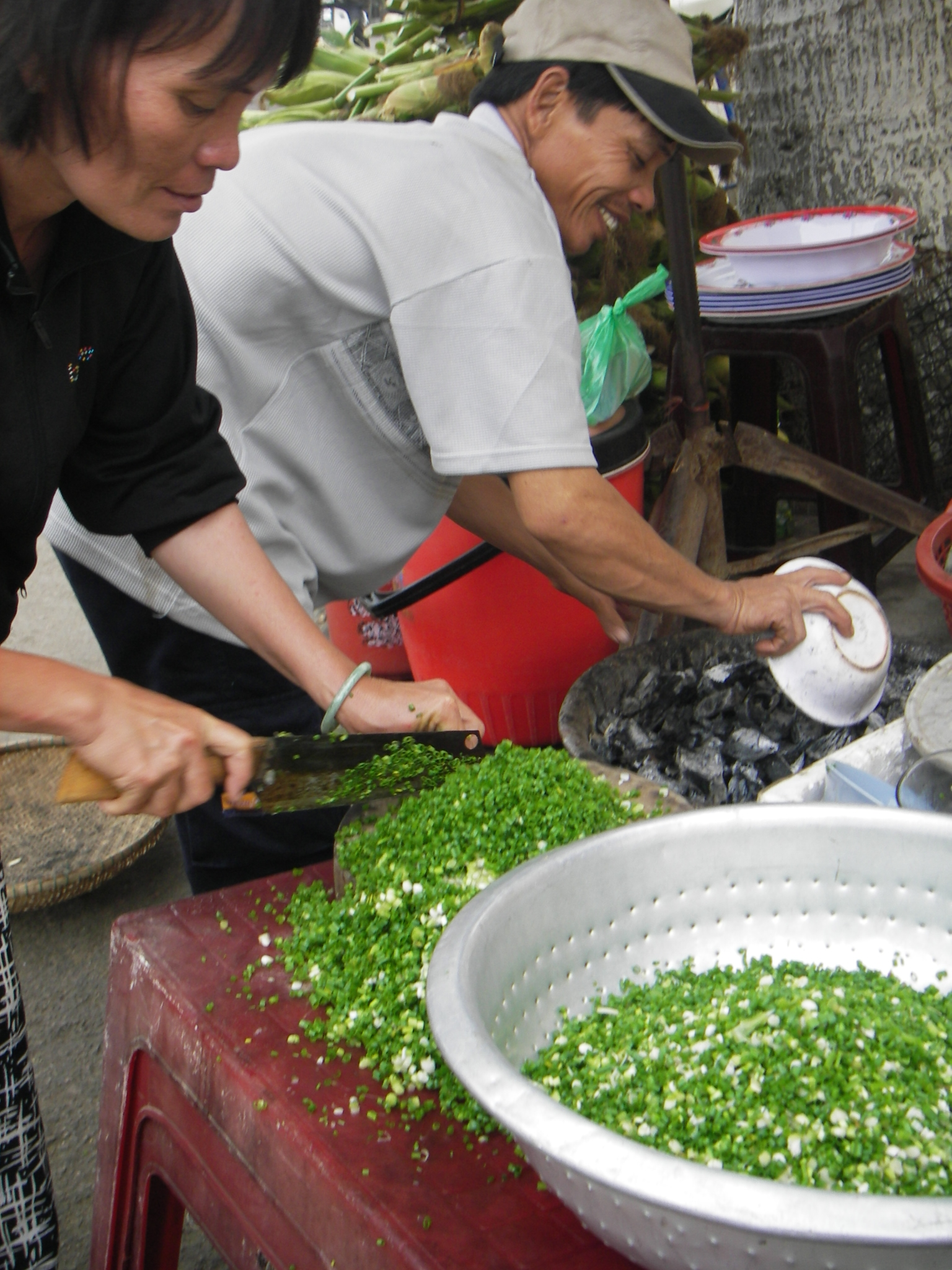
On the street corner of Hoi An, sliced scallion is soon ready for making into scallion oil.

The most memorable time for me in Hoi An was getting up to see the sunrise over the Bon River while drinking Vietnamese coffee shortly before heading for the market.  Then I walked along the street, and the scenery was very beautiful. The aromas and sounds were so enlivening and the taste of the food was phenomenal. I tasted many street foods along the streets and took a lot of it back to the hotel so that I could taste more during the day. This is part of the learning, culture and cuisine. Now, as I look at all my photos, I am getting hungry from the taste of foods that I still remember and long for.

I came to love one particularly famous grilled corn dish in Hoi An, Mo Hanh. It is made of grilled corn with scallion oil. You will see pictures of why the Vietnamese are so fond of this dish by the amount of corn on the street of Hoi An.

This slideshow requires JavaScript.

Yesterday, I was grilling corn for a special event at Magnuson Park in Seattle. About 500 people were there. I have 3 flavors for them to choose from: with spicy coconut sauce, jalapeno sweet and sour sauce and scallion oil. They were all a big hit at the event. I am delighted to share grilled corn with scallion oil recipe with you and hope that you will get a chance to enjoy until the last harvest of local fresh corn.

Grilled Corn with Scallion Oil

Serves: 8

1 cup thin sliced green onion, only green part–about 4 green onions
¼ cup canola oil
1 teaspoon sea salt
1 teaspoon sugar
8 ears of corn, peeled

 Pre-heat the grill to medium-high heat.

To make scallion oil or  Mo Hanh, heat canola oil until very hot and drop in green and let it cook for 40 seconds. Stir in salt. Let it sit until cool. Keep well in refrigerator for a week.

Grill corns over high heat 6 to 8 minutes, until some pope with nice brown cornel. When serve, dip each ear in scallion oil. Enjoy while it is warm.

© 2010  Pranee Khruasanit Halvorsen  
I Love Thai cooking

Read Full Post »

February 2010, Old Quarter in Hanoi

Hanoi Confetti Corn from the street of Hanoi Old Quarter

I love writing recipes from my culinary trip in my kitchen because it is like traveling through time.  And I love to travel, so when the journey ended then I was in pain with nostalgia. I missed the places I have been and the friends I have made. Then I decided to revisit the experience by recreating the food of that land. Like what I did last week with this Hanoi confetti Corn here in my kitchen.

This slideshow requires JavaScript.

This year my culinary trip to Southeast Asia started in Hanoi. After the long flight from Seattle and we arrived in the middle of the day.  After checking into the hotel, we headed off to the famous old quarter of Hanoi. No time for jet-lag, and old quarter is a best to start with exciting sight and sound. I already knew which street we wanted to walk, eat and shop. No time to waste we only have two days in Hanoi.

We came across the mobile foods just before Cha Ca Street, and the aroma of scallion oil and corn that caught our attention and find the confetti corn was cooking. Three of us tried to remember the all of the ingredients: cooking oil, corn, green onion, dried small shrimps, fish sauce and sugar. We ordered one and shared it on the street, it was delicious. Every day in Vietnam, the foods we loved consisted of a few simple ingredients put together in a stunningly simple way but the use of fresh ingredients made all the difference. This was a great welcome to the next world leading culinary destination.

Hanoi Confetti Corn with Shrimp Powder

I purchased the freshest local white corn from PCC Natural Market (in Hanoi, it was glutinous corn), shrimp powder is always in my freezer ready to use, I used chives from my garden instead of green onions and the rest of ingredients were staple foods.  I know how to revisit Hanoi again until the fresh corn runs out.

From Hanoi to your kitchen! Bon Appetite.

Hanoi Confetti Corn    

Serves: 4 

3 tablespoons butter 

2 cups corn kernels cut from 3 ears yellow or white corn 

1/4 cup chopped green onion, from 2 green onions or chives 

3 teaspoons shrimp powder, plus 1 teaspoon for garnish 

1 teaspoon sugar, optional –omit when use freshest corn 

1/2 teaspoon chili powder 

1 to 2 teaspoons fish sauce

Heat the butter over medium heat in a large skillet. Allow the butter to melt, add the corn and cook for 5 minutes. Stir in green onion and shrimp powder and chili powder and let it cook for 1 or 2 more minutes. When the corn loses its starch and  stir in fish sauce and serve right away.

© 2010  Pranee Khruasanit Halvorsen 
I Love Thai cooking  Pranee teaches Thai Cooking class in Seattle areas, her website is: I Love Thai cooking.com  
 

Read Full Post »

Drink for Our Complexion 

I grew up in Phuket, an Island off of Southern Thailand, where I never saw tomatoes until I was a teenager.  We learned to like tomatoes because there was a saying that it was great for our complexion. People from the Northern part of Thailand had the most beautiful complexions due to the fact that they grew and ate a lot of tomatoes. And of course at that time, tomatoes were only known in Northern cuisines such as Nam Prik Ong, Nam Prik Nom and green papaya salad. Howevery, today tomatoes are available at the markets every day in Thailand. And it is a well loved and acquired taste to all Thais.

Tomato-Celery Drink

The Europeans brought tomatoes to Thailand around the 16th century. It is true that ” tomatoes contain lycopene, a powerful antioxidant, which improves the skins ability to protect against harmful UV rays”

Now seeing fresh sweet tomatoes everywhere including from my garden and at the local farmer market. It is appropriate to blend my childhood smoothie that I used to have from Phuket Smoothie Stand.

Now that so many variety of local tomatoes available in the market, I hope that you will enjoy this recipe as much as I do. Cheers to our complexions!  

Tomato & Chinese Celery Smoothie
Nam Makruatade Punt
 

Serve: 1 

1 cup crushed ice
1 cup tomato, diced–sweet variety
1/4 cup chopped Chinese celery or any celery, plus one stem for garnish
1 tablespoon simple syrup
A pinch of  salt
A pinch of chili powder
1 teaspoon of Worcestershire sauce

Place ice, tomato, celery, simple syrup, salt, chili powder and Worcestershire sauce in a blender and blend until smooth. Place in a chilled-tall 12-ounce glass, garnish with a celery stem. Serve cool. 

 © 2010  Pranee Khruasanit Halvorsen
 I Love Thai cooking
 
Pranee teaches Thai Cooking class in Seattle areas, her website is: I Love Thai cooking.com

Read Full Post »

The Rustic Style Cooking of Thailand  

Unlike the morning  glory found elsewhere, in Thailand, this morning glory is a vegetable and it is called Pak Bung in Thai. It is also known to all Asian cuisines as Kangkung in Malaysia and Ong Choy in Chinese. It’s scientific name is Ipomoea aquatica. You may know it as Chinese Spinach or Swamp Cabbage. I want to call it morning glory because it is a beautiful name and it belongs in the same family with its leaf and flower. I remember having morning glory in my garden here in Seattle. 

 Thais love to eat Pak Boong fresh, stir-fried in the famous dish “Pak Boong Fai Daeng” and often in a curry as a classic Gaeng Tapo dish. In Seattle, I often teach students the stir-fry dish. Then the other day, I walked down the aisles and saw three dried salted croaker and right away, I was just craving for this dish that my grandma used to cook during the monsoon time when fresh fish and other proteins such as meat were hard to find and morning glory were abundant. That was because it is an aquatic plant that grows on the edges of swamps canals or any damp soil. I wrote this recipe to honor both of my grandmas.

Red Curry Morning Glory and salted Croaker — Gaeng Tapo Pla Kem

This recipe is easy to adapt. You may use pork, beef, or salted cod. I love the fact that this recipe require less coconut milk than most curry to reflect my grandma style of cooking. And it is truly delicious. I ate every drop of the curry broth.

Red Curry with Morning Glory and Salted Croaker   

Gaeng Pla Tapo Pla Kem   

Serves: 4

2 tablespoons canola oil
2 tablespoons red curry paste
1/2 cup coconut milk, divided
1 dried salted croaker, cut into a steak of 1/2 inch long, or 5 pieces salt anchovies
2 cups water
3 cups morning glory, tough stems removed and cut into 3 inches long, see note
1/2 tablespoon sugar

Heat canola oil and curry paste in a large pot on medium-high heat and stir constantly until fragrant, about 1 minute. Stir in 3 tablespoons coconut milk, and let it cook for 30 seconds. Pour in water in the pot and place in croaker and let it cook for 8 minutes on medium heat. Then you may strain to remove the bone and pour back into the same pot, add the rest of coconut milk; and then bring back to a boil. Stir in morning glory and sugar and cook for only 1 minute, just to cook morning glory.  Serve hot with steamed jasmine rice.  

This slideshow requires JavaScript.

© 2010  Pranee Khruasanit Halvorsen  
I Love Thai cooking 
  
Pranee teaches Thai Cooking class in Seattle areas, her website is: I Love Thai cooking.com  

Read Full Post »

Sunflower Sprouts Salad with Chili-Lime vinaigrette

Yum Med Tan Tawan Ngawk

Sunflower Sprouts by the Alm Hill Gardens Stall – The Columbia City Farmer Market

July 15, 2010 – Yesterday I was at the Columbia Farmers Market. While waiting for my friend, I visited the Alm Hill Gardens stall, and was introduced to sunflower sprouts. I have tasted it before, but these fresh sprouts from the farm I will never forget. It was fresh, buttery and nutty. I brought some home and made a salad for a side dish to accompany my Thai chicken Baryani rice, Kao Mok Gai.

Chili-Lime Vinaigrette, tomato and dill

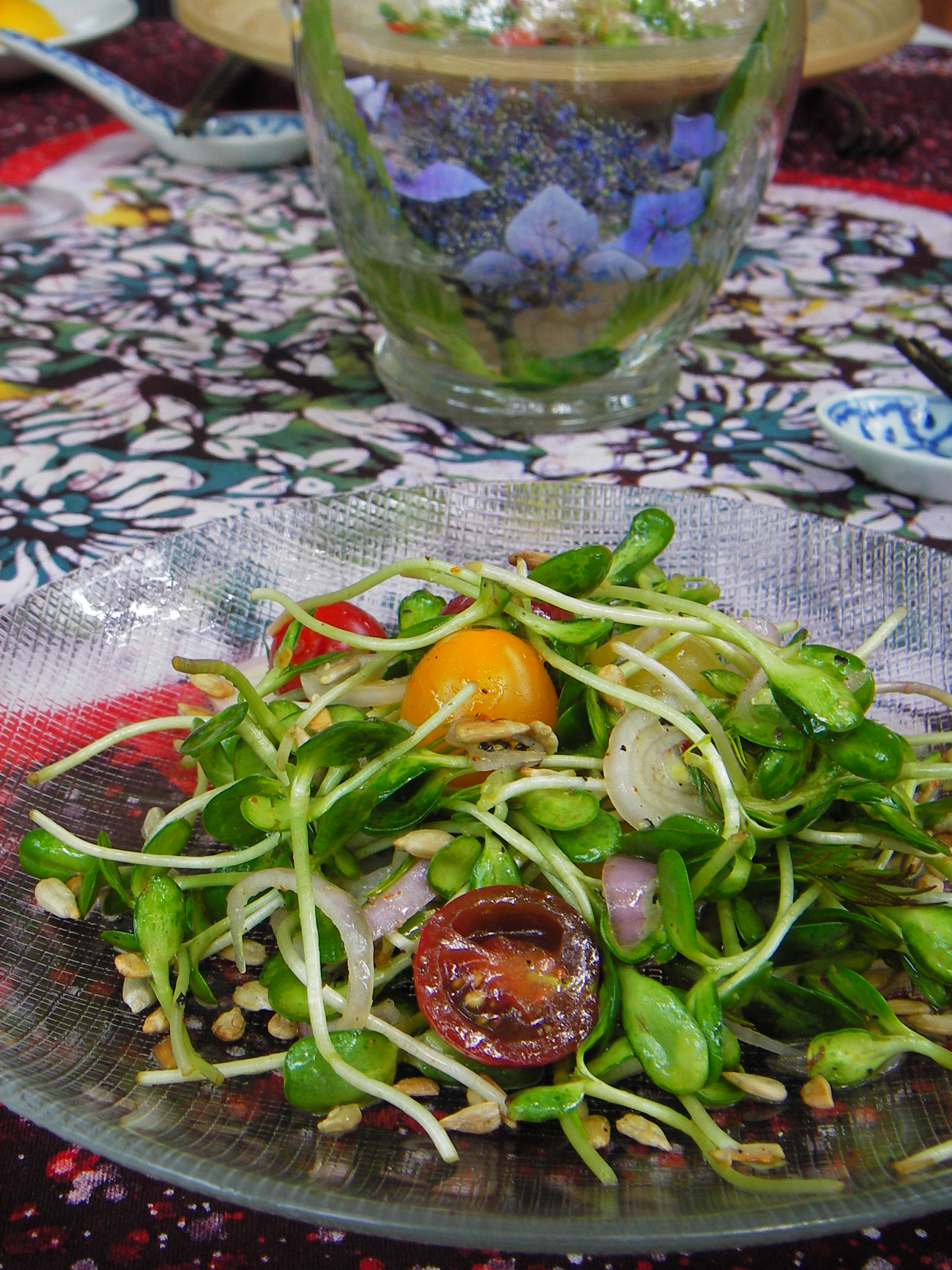
August 4, 2010- My friend Annette came over for lunch today and it is a perfect day for me to perfect my Sunflower Sprout Salad Recipe and do some photos for the blog. As I envisioned to add some texture, and sunflower seed is a perfect theme for salad. I have no reservations about adding the abundant and flavorful mixed heirloom cherry tomatoes. The rest is simple. I hope you like my chili-lime vinaigrette. Interesting and freshest  ingredients in an easy recipe is a way to go.

Sunflower Sprouts S

Sunflower Sprout Salad with Chili-Lime Vinaigrette

alad with Chili-Lime vinaigrette

Yum Dork Tan Tawan Ngawk 

Serves: 4

2 tablespoons extra virgin olive oil or garlic oil
1/2 teaspoon sea salt or 2 teaspoons fish sauce
1/2 teaspoon evaporated cane sugar
1/4 teaspoon black pepper flake
1/4 teaspoon chili powder
1 tablespoon lime juice or lemon juice
1 shallot, peeled and sliced
12 cherry tomatoes, whole or halved
2 cups sunflower sprouts, washed and drained
1/4 dill or cilantro leaves
2 tablespoons toasted sunflower seeds

Whisk olive oil, sea salt, sugar, black pepper, chili powder, lime juice until it is well mixed. Fold in shallot, tomatoes, sunflower sprouts and dill, and mix gently. Sprinkle sunflower seeds  before serving. Serve immediately.

 © 2010  Pranee Khruasanit Halvorsen  

 I Love Thai cooking 

 Pranee teaches Thai Cooking class in Seattle areas, her website is: I Love Thai cooking.com

Read Full Post »

Tamarind Drinks – All Natural Thai Drinks  

During the day, I often open a fridge and look for a drink. My eye was on tamarind concentrate – a leftover from Thai cooking class another day. I spent three minutes making a syrup. Now I have syrup ready for making a tea and soda.

Tamarind syrup is a good recipe to have. I always make one recipe to keep in refrigerator or more if I plan to freeze them. Mostly for the cocktail and soda but in the emergency situation –  it can be a cold remedy – it can be use in Phad Thai or curry. It has a hint of sweet, fruity but not as tart when add sugar. In Thai village we use tamarind and honey as a tea for a cold remedy. It is high in Vitamin C and also good for digestion.      


 Tamarind Syrup  

 Nam Chuem Makham

น้ำเชื่อมมะขาม 

 Yield: 3/4 cup

1/2 cup tamarind concentrate, freshly made or from the can 
1/4 cup brown sugar or honey

Combine tamarind concentrate, brown sugar and water in a pot and bring to a boil on high heat. Stir and let it cook for 2 minutes. Strain into a clean jar, when it is cool then store in the fridge for a week or keep in the freezer for 3 months.

 Tamarind-Honey Tea 

Cha Nampung Makam 

ชาน้ำผึ้งมะขาม

3 tablespoons tamarind syrup, from recipe above 

To make a tamarind tea,  combine 3 tablespoons tamarind syrup (make syrup with honey instead of brown sugar) with 5 tablespoons boiling water in a tea-cup and serve warm.

Tamarind Soda 

 Nam Kham Soda 

น้ำโซดามะขาม

 Serves: 1

 1 cup ice cube
3/4 cup sparking mineral water
3 tablespoons tamarind syrup, from recipe above
1 mint sprig

Place ice cube in a glass, follow by sparking mineral water and tamarind syrup. Stir lightly and serve. Garnish with mint sprig.  

© 2013  Pranee Khruasanit Halvorsen
I Love Thai cooking
Pranee teaches Thai Cooking classes in the Seattle area.
Her website is: I Love Thai cooking.com 
 
Follow Me on Pinterest

Read Full Post »

Thai Village Style Cooking    

Fried fish recipe from the Southern region of Thailand 

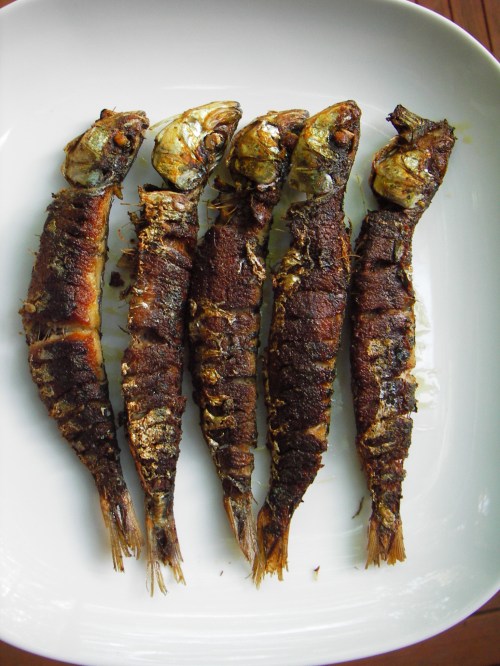
The other day, when I was at Pike Place Market, wandering around almost aimlessly like a tourist. I purchased a pound of sardines, I hadn’t tasted fresh sardines for the longest time perhaps since my grandma’s kitchen. I want to rediscover more Thai village style cooking with local ingredients here in Seattle. This was a good start.  

Thai Fried Sardines--Very Rustic Thai Cooking

The sardines are fresh from the Gulf of California and there is no need to worry about mercury because it is known to be very low. There are many good reasons to eat sardines, they are rich with Omega-3 fatty acids, Vitamin D, calcium and B 12. Perhaps that’s why both of my grandmother hardly saw any doctors in their life time. Every single day growing up, fried fish with turmeric and salt was on the table, besides other fish dishes. It was my grandma’s rule. The fish was the cheapest and healthiest protein that Phuket villagers could provide for their family way back then. I love fried sardines, they have a mouthful flavor and the aroma is unique.

If you are trying this for the first time, the challenge is how you will cook them, so you can eat everything including the soft bone and when crunchy enough, the back bone. It is a calcium intake time. As my rule goes, if it is chewable then it is edible! But trust your judgment and comfort zone also.


This slideshow requires JavaScript.

First I removed the fish guts. That was not fun. The problem is the sardines were so small and the belly was so relatively big. I tried the best I can to make sardines look good in the photos. After I gutted, cleaned and dried the fish, I followed my grandma’s old advice. I cut the flesh through the skin into tiny strips (the knife is perpendicular to the fish back bone) just enough to hit the backbone (please see the slide show). I repeated on the other side. I salted them and seasoned with turmeric. I placed 8 sardines in a food container and kept in the refrigerator for a day. I had something else planned for dinner that evening. When you want to keep the fish for a day in fridge, be generous with salt and turmeric. It is a way that we use to keep the fish fresh for the next day, back when we didn’t have electricity.

You may use the recipe below and cook sardines on the grill on medium heat on both sides until crispy. The problem with frying in your kitchen is the smell of the fish lingers for a day. I just want you to know that, but it tastes divine with hot steamed jasmine rice. Especially good if you eat it with your fingers, and easy way to remove the backbone then mix the fish by hand against the warm jasmine rice before eating,  just like Thais in the Thai village do.

 Thai Fried Sardines  

 Pla Sardine Tod

ปลาซาร์ดีนทอด 

 Serves: 4

 1 pound sardine, about 8 sardines, gutted and cleaned and dried with towels
2  teaspoons sea salt
1/2 teaspoon turmeric
3 to 5 tablespoons canola oil

 Lay the fish perpendicular to you on the cutting board, cut the flesh through the skin into tiny strips (the knife is perpendicular to the fish back bone) just enough to hit the backbone (please see the slide show), Repeated on the other side. Follow the same steps with the rest of the fish. Sprinkle salt all over the fish and follow by turmeric until the fish is evenly cover.

Heat the frying pan on medium heat, when the pan is hot add canola oil. Fry on both sides until they are crispy by the touch and a light brown color. Serve with warm jasmine rice.


 © 2010  Pranee Khruasanit Halvorsen  
I Love Thai cooking 
 Pranee teaches Thai Cooking class in Seattle areas, her website is: I Love Thai cooking.com  

Read Full Post »

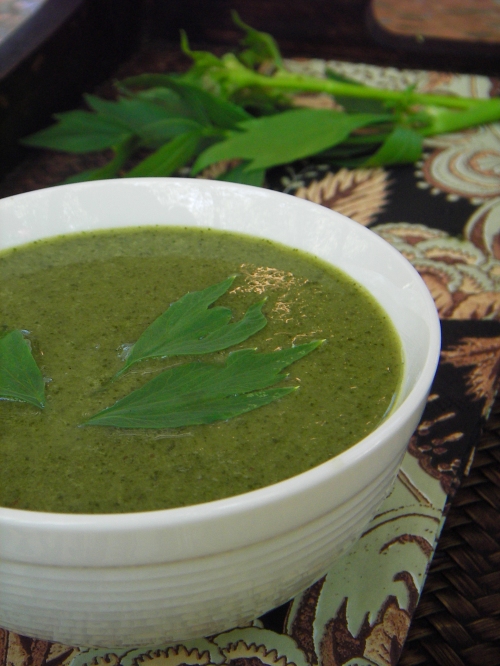
Lovage and Snap Pea Soup

Kaeng Jued Pak

There is no real Thai name for this soup, but I started the process by stir-frying, adding broth and cooking until the vegetables are soft. It’s like a Thai soup that is called Kaeng Jued Pak. I pureed it down like western soup. It is best to enjoy lovage that way. It’s not a typical Thai dish but my grandma would have done the same — a dish from the garden or the nearest farm to the table. The freshness and simplicity were key. I don’t make it a habit to call for take-out or frozen food. I prefer to enjoy real food. When there is nothing else, steamed rice and fried eggs with some soy sauce and cucumber on top is enough. This is a kind of lunch; I enjoy it when I am at home by myself.

Lovage-Snap Pea Soup

Lovage and Snap Pea Soup

This morning while working in the garden, I trimmed overgrown lovage. Some was young and tender; so I decided not to throw it away. Then around lunch break, I made a soup with some snap peas that I got from the farmers market the day before. All I had to do is find the right spice to go with it. I had some freshly ground coriander powder–seeds that I brought from Thailand. I gave it a try, and it was right on. It was a quick and easy summer soup. With a lovage plant, you will receive an annual return every summer with flavorful soup–the best tasting soup that no other restaurants can compete with because you have got the freshest one a few steps from your kitchen. 

Serves: 4

Yield: 2 cups

3 tablespoons canola oil or extra light olive oil
2 cloves garlic, minced
1/2 cup chopped onion
1 cup chopped lovage
1 cup whole snap peas, end trimmed — about 20 snap peas
1 teaspoon sea salt
1 teaspoon freshly ground-toasted coriander powder
2 cups chicken brother or 2 cups water plus 2 teaspoons chicken powder

Heat a frying pan on medium-high heat and when it is hot add canola oil. Stir in garlic and onion until fragrant and onion become translucent. Stir in lovage for 30 seconds before adding snap pea, sea salt and coriander. Pour into a large pot and add chicken broth and bring to a boil. Lets it cook on medium heat until snap peas is cooked. About 8 minutes. Serve as is or use a blend in the blender. Garnish with chopped lovage or lovage leaf.

Vegetarian option: substitute chicken broth with vegetable or mushroom broth.

© 2010  Pranee Khruasanit Halvorsen
 I Love Thai cooking
 
Pranee teaches Thai Cooking class in Seattle areas, her website is: I Love Thai cooking.com

Read Full Post »

« Newer Posts - Older Posts »