Feeds:
Posts
Comments

Archive for December, 2010

Pranee’s Curried Crab Filo for Holiday Entertaining

It is not a fusion and there is no confusion, they’re just for fun. Enjoy crab rangoon for a festive time.
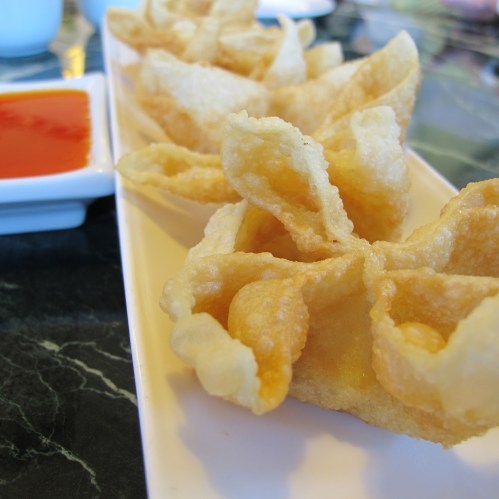
Crab Wonton from a Chinese Restaurant

I first tasted crab wonton, or crab rangoon, in a Thai restaurant many years ago. It tasted great, but I was confused because it was not related to any Thai food in Thailand, which left me wondering about its origin. When my assistant suggested that my Thai green chili jam would be great with crab wonton, I started exploring this dish and came up with the following fun version.

I rarely do deep-frying at home, so using filo dough was the way to go for me. It provides the texture of a fried wonton, but it is a crunch with less guilt. I always heighten the flavor of a crab dish with curry powder and green onion, but this time I used pineapple chunks as well to add an interesting sweet experience to a savory dish.

Last week I attended a Girls’ Holiday Appetizer Party. As we all surrounded a dining table filled with many kinds of appetizers, I was happy to see everyone’s expressions when they tried the Curried Crab Filo. It is amazing what flavors can be experienced in just one bite!

I like to make the stuffing the day before and chill it in the refrigerator. It is a good idea to thaw your filo dough then as well. Both will be ready for you the next day. The rest is easy. Just preheat the oven, wrap and bake.

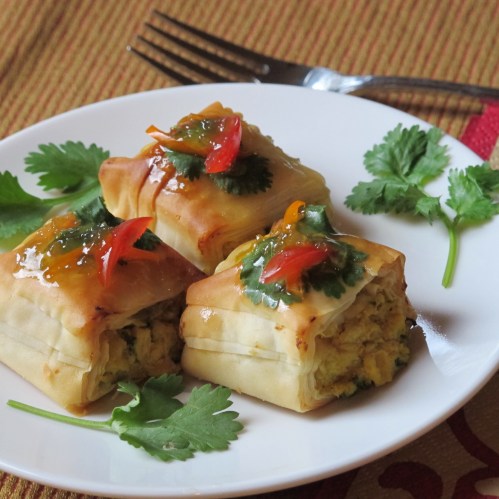
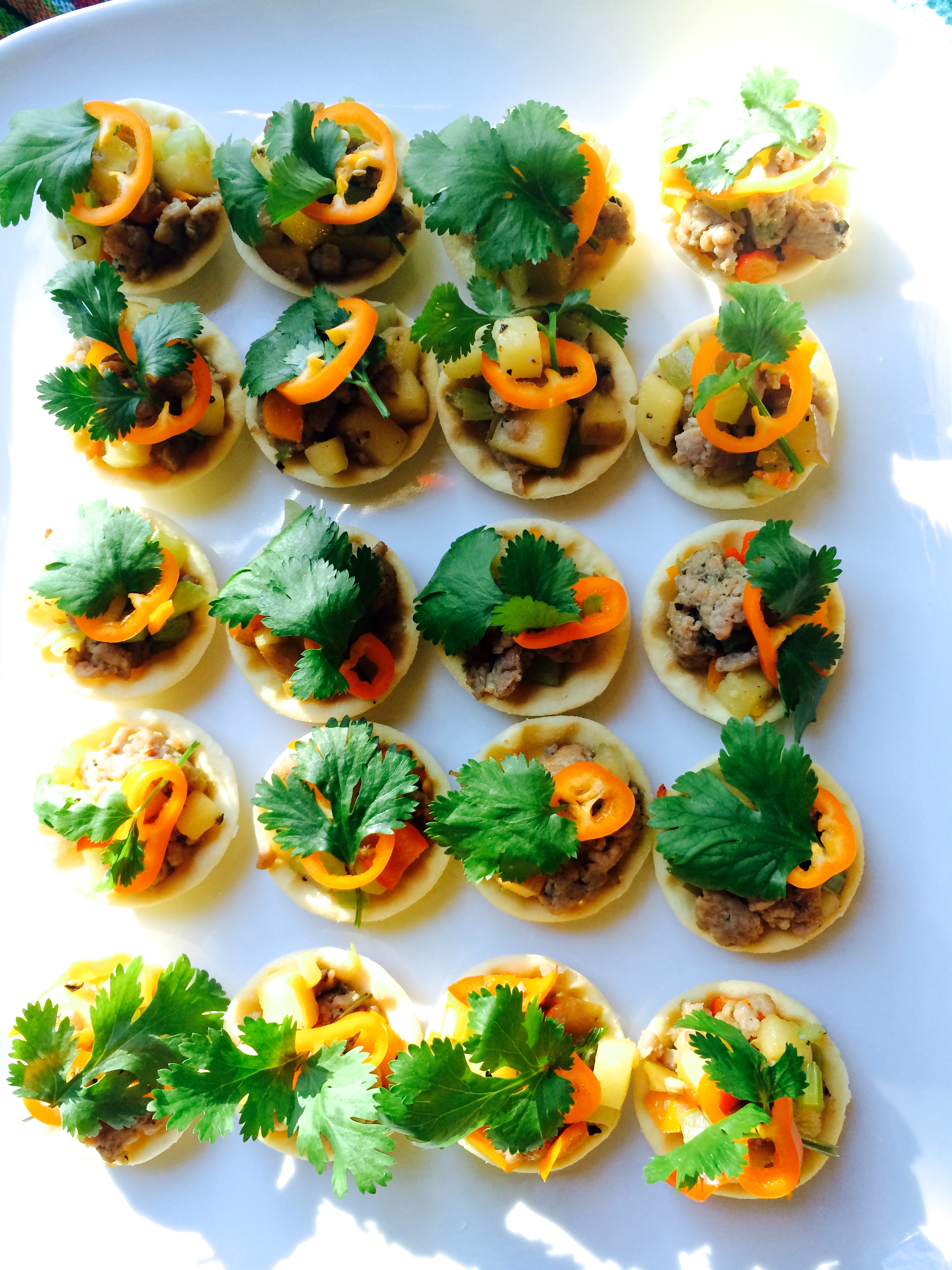
Curried Crab Filo at Home Party

Curried Crab Filo with Thai Lime-Green Chili Jam

Yield: 36 pieces

Preparation Time: 20 minutes

Baking time: 10 minutes

1 cup cream cheese
1 cup chopped fresh or canned pineapple, squeeze out excess liquid to get about ⅔ cup of pineapple
⅓ cup sliced green onions (about 5 green onions)
4 teaspoons Madras curry powder
A dash of Thai chili powder
8-ounces crab meat (about 1 cup), squeezed lightly to drain out excess water
9 (17 by 12-inch) sheets filo dough, thawed if frozen
½ cup cooking oil
3 tablespoons Thai Lime-Green Chili Jam (see blog recipe)
36 cilantro leaves
36 sliced red peppers or red loganberries

Preheat oven to 375°F.

To make the filling, combine cream cheese, pineapple, green onion, Madras curry powder, and chili powder in a medium size bowl; mix well. Gently fold in crabmeat until combined. Yield: about 2 cups filling.

Take one filo sheet from the stack and lay it out on a work surface. Brush well with oil to cover the entire surface. Lay another layer on top and brush with oil again. Add a third layer and brush with oil again.

With the length facing you, place one-third of the cream cheese filling along the edge lengthwise from left to right to make a line of filling 1 inch by 17 inches. Fold the edge forward to make a roll. As you continue to roll, brush the dry surface of filo dough with oil. The finished roll should be about 1 inch in diameter. Using a knife, cut the roll into 12 pieces and place them on a greased baking sheet.

Repeat these steps to make two more rolls, for a total of 36 pieces. Place on the same baking sheet and bake until golden, about 10 minutes.

Transfer to a platter and place a ¼ teaspoon Thai lime-green chili jam on each curried crab filo and garnish with cilantro leaves and sliced red pepper or loganberries.

Enjoy warm or at room temperature.

© 2010 Pranee Khruasanit Halvorsen
I Love Thai cooking
Pranee teaches Thai Cooking class in Seattle areas, her website is: I Love Thai cooking.com
Read Full Post »

Sticky Rice in a Bamboo Tube, Kao Lam

I have fond memories of sticky rice in a bamboo tube—it looks so cool! At every festival in my village when I was growing up, there was a man who made and sold this Kao Lam. We would eat some at the festival then bring home a few for family members who couldn’t go. It is a perfect take-home food, since it is already packaged in a bamboo tube.

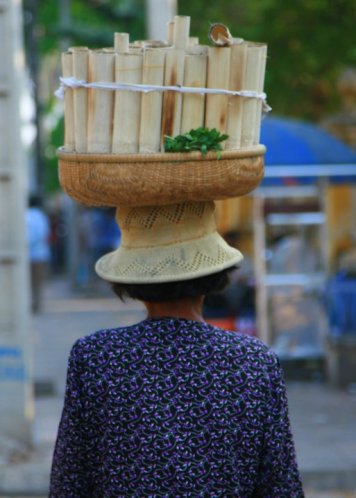
Sticky Rice in a Bamboo Tube, Cambodia

The sticky rice is cooked in a segment of bamboo, the kind that has a thin wall so the heat can penetrate to cook the rice inside the tube. After it is filled with the sticky rice ingredients, the bamboo is plugged with a piece of coconut husk wrapped with banana leaf to keep in the steam for cooking the rice. Then the bamboo tubes are placed over charcoal. When it is done, the outer skin of bamboo is removed and a thin wall left behind to protect the rice inside. All Southeast Asian countries have some version of this, and they are all cooked in a similar way. The photo below is from Cambodia. In Thailand this dish is called Kao Lam; in Malaysia it’s Lemang.

Thai Sticky Rice in Bamboo Sticks in Cambodia

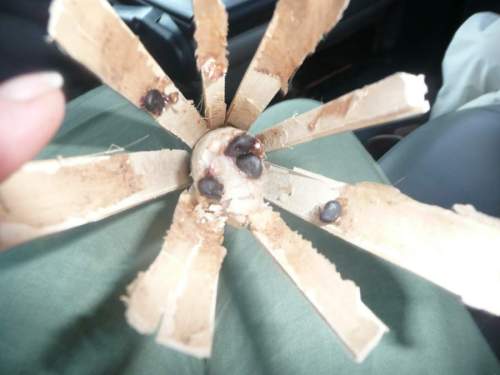
If you like sticky rice with mango, you will like Kao Lam, too. I love the fact that when you peel the bamboo away (see photo below), the powdery fiber in the bamboo tube leaves a sheen. The rice comes out shaped like a stick and looks like it was wrapped in edible paper. The vendor in my village usually made three varieties: white sticky rice, black sticky rice, and white sticky rice with black beans.

How to open the bamboo tube

In America you can find cooked sticky rice that comes straight from Thailand in the frozen food section in Asian markets. But I would rather you try my sticky rice recipe below. I wrap it up in parchment paper, roll it into a cylinder, and bake it. It is delicious, has a very nice texture, and is as satisfying as the original.

During the summer of 2010, I taught Grilled Sticky Rice with Black Bean and Banana Stuffing in a Banana Leaf (Kao Neow Mad) in my Thai Grill class. Organizing my photos from my recent trip to Cambodia led me to this project, a Kao Lam version baked in the oven. It is not easy to cook sticky rice in a bamboo tube—only a few experts from each Thai village know how. Last August I created this adaptation, wrapping and rolling the sticky rice in pieces of parchment paper and then baking them. The results were good. It was easy, and the flavor and texture were satisfying. Then I made a lot of them in small packages and even put some in the freezer. I microwave them or reheat them in the oven and eat them for a protein snack before teaching my classes. In Thailand, most farmers eat sticky rice before working in the rice field.

Baked Sticky Rice and Black Bean Wrapped in Banana Leaf

Kao Neow Yang

Serveings: 8

2 cups Thai sticky rice, soaked in water for 3 hours or overnight, then drained (see note)
¾ cup coconut milk
¼ cup water
2 tablespoons granulated sugar, optional
1 teaspoon salt
1 cup canned black beans, drained
8 (8×8) inch pieces of banana leaves or parchment paper

Preheat oven to 350°F.

Stir sticky rice, coconut milk, water, sugar and salt in a large pan over medium heat. Stir until all coconut milk is absorbed. Stir in black beans and fold gently to mix.

Put equal amounts of the sticky rice mixture onto 8 banana leaves. Form the rice into a cylinder about 6″ long and lay it in the center of the leaf so that you have about 1 inch left on either end. Fold the banana leaf in half around the rice, then roll it around the cylinder; fold in both ends and secure them with a toothpick, poking down and then up, or you can twist the ends and tie them. When you are done, each bundle will make a round tube about 6 inches long and 1 to 1 1/2 inches in diameter. Grill for 5 minutes on each side until the sticky rice is translucent and cooked, or bake in the oven for 10 minutes.

Pranee’s note:

In Thailand, recipes generally use one of two types of rice: jasmine rice or Thai sticky rice. The starch in rice is made up of two components, amylose and amylopectin. Jasmine rice has more amylose than amylopectin, giving it a puffy appearance, whereas Thai sticky rice has more amylopectin than amylose, creating its sticky texture. Both white and purple Thai sticky rice are long-grain rices with a firm grain and become sticky when cooked. They are tropical rices, and different from Japanese, Chinese or Mediterranean (Arborio and Valencia) rices, which have a medium or short grain and grow in temperate climates.

© 2010 Pranee Khruasanit Halvorsen
I Love Thai cooking
Pranee teaches Thai Cooking class in Seattle areas, her website is: I Love Thai cooking.com



Outer layer of bamboo tube is removed


Read Full Post »

Rice Soup for breakfast

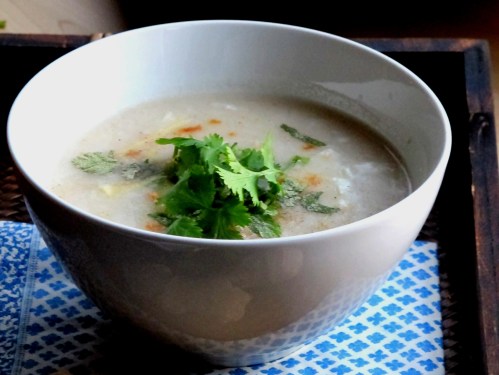
My grandmother loved rice soup for breakfast. And I can recall a memory– I often joined her savoring this soul food before our day began. To this day when I visit Thailand, in my village, I still love having this rice soup but instead of our kitchen, I join local at the breakfast stall.

Rice Soup for Breakfast

I like rice soup in another occasion too, in the winter for lunch or dinner, as it is a real comfort food for every occasion and nothing is as good and satisfying as rice soup on a cold day and when one’s body needs gentle food. Just like American enjoys the chicken noodle soup.

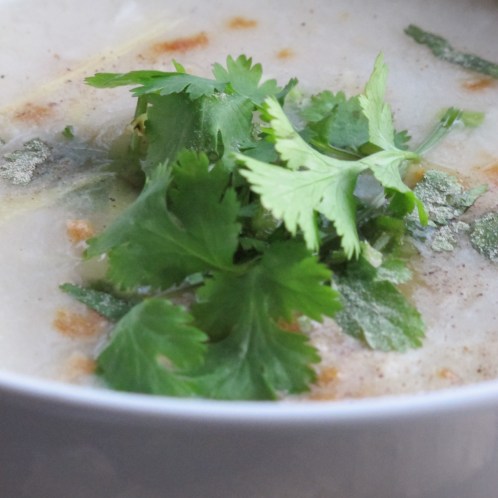
Kao Tom, Thai Rice Soup for Breakfast

It is easy to make with either from scratch or use leftover rice. But when one has an extra time, I would recommend to make the rice soup from scratch, please follow the recipe below to make rice porridge. It has a nice softer texture. I never think rice soup as a pot luck dish, however my student once told me that she brought to her office potluck party and it was a hit.

Thai Rice Soup with Chicken & Egg

Kao Tom Gai Sai Kai

Serves: 1 about 2 cups

Cooking Time: 5 to 8 minutes

1 ½ tablespoons canola oil
1 tablespoon minced garlic, about from 3 cloves
¼ cup ground chicken or pork (from chicken thigh or breast)
½ teaspoon salt
2 teaspoons soy sauce
1 ½ cups chicken broth
1 cup steamed jasmine rice or rice porridge (see note)
1 egg
1 tablespoon thinly shredded fresh ginger
1 green onion, thinly sliced
1 tablespoon coarsely chopped cilantro
A dash white pepper powder

Heat canola oil in a medium size pot on medium-high heat and stir in garlic. Stir constantly and when garlic is yellow, remove a half portion of fried garlic for garnish. Stir in chicken and cook with remaining oil and garlic, then season with salt and soy sauce. Pour in chicken broth and jasmine rice and let it cook on medium-high heat for 3 to 5 minutes.

When it reaches the desire texture of soup or porridge like, it is cooked and almost ready to serve. On high heat, crack the egg open and drop in the center of rice soup. You may stir or poach the egg in the hot rice soup; it can take from 30 seconds or 1 minute depending on your preference to cook the egg.

Pour the hot rice soup in a bowl and top with fried garlic, ginger, green onion, cilantro and white pepper powder.

© Pranee Khruasanit Halvorsen

Rice Soup, Kao Tom ideally taste best when made from rice porridge specially prepare for rice soup. For this recipe you may use cold leftover rice or cooked warm rice but the texture will be different. Below is how to make rice porridge for a rice soup. The amount is enough to make 4 rice soups from the recipe above.

Kao Tom Buey

Plain Rice Porridge

Yield: 4 cups

Cooking Time: 20 minutes

1 cup jasmine rice

Bring jasmine rice and 2 cups water to a boil on high heat, and stir often while cooking for 5 minutes. Add 4 cups water and bring to a boil and let it cook on medium heat for 15 more minute. Then cook until it yields 4 cups.

Thai Rice


© 2010  Pranee Khruasanit Halvorsen
I Love Thai cooking
Pranee teaches Thai Cooking classes in the Seattle area.
Her website is: I Love Thai cooking.com .
 

Read Full Post »