Feeds:
Posts
Comments

Archive for October, 2011

A Cough Remedy

Honey-Lime Tea, a cough remedy

I have had this Honey-Lime Tea recipe written since last year when my son was sick and missed a week of school with a fever and annoying cough. When it comes to home remedies for coughing, my grandma’s honey-lime tea, which I have had countless times for coughs, that stands out in my memory. It was my son’s tired face on a rainy day in September 2011 that took me to the kitchen here in Seattle to prepare some. It had been a long while since I had made it, but there is nothing difficult at all about this simple three-ingredient recipe made from lime, honey and salt. All that’s needed is the right balance of salty, sweet and sour to sooth the aching and irritated throat.

kişisel resim

Honey image via Wikipedia

Lime is a great source of Vitamin C and “Honey has also been used for centuries as a treatment for sore throats and coughs and, according to recent research, may be an effective soothing agent for coughs” (from Wikipedia). The risk for honey is only in children under a year of age because of a rare occurrence of infantile botulism, otherwise it is a well-established natural cough remedy in many cultures.

Lime มะนาว - plenty of lime in Thailand

In my kitchen, with the honey, limes and salt in front of me, I recalled standing side by side with my grandma in her kitchen, watching her stirring, tasting and adjusting the sour, sweet and salty. The sour from lime would make my eyes squint, but adding enough honey to cut the sharp edge of the lime would allow my eyes to open once again with sweet delight and the mixture to comfort my sore throat. Then she would add enough salt to pronounce its existence and make the honey and lime dance together in  harmony. The warmth of the tea also soothed the sore throat. I would sip this tea slowly as if to allow each sip of honey-lime tea to absorb and sooth and melt away all the discomfort. It is not often I get a credit for my home remedies, but my son did find a tremendous comfort from this tea last year. As I tested this recipe one more time, he took part and enjoyed this tea once again, as both of us had mild colds this week. As we sipped, we both agreed that we appreciated this recipe before and now.
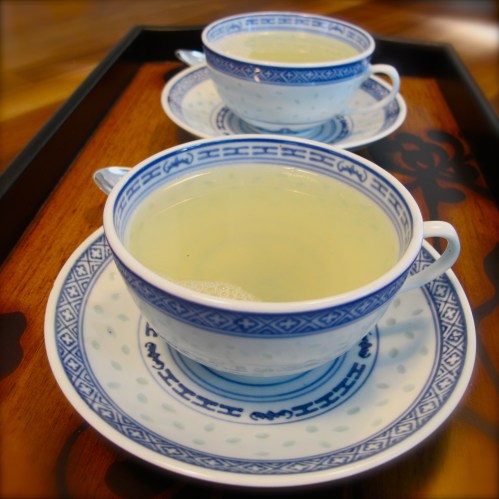
Honey-Lime Tea

Honey-Lime Tea

Cha Nam Pung Manao

ชามะนาวน้ำผึ้ง

Don’t judge this recipe by the amount of lime and honey. It is not a tea for daily drinking, but more of a cough remedy for those times that we need all that vitamin C from the lime and the medicinal qualities of the honey. I would recommend that you prepare it according to the recipe and taste it before making any changes or adjustments. Take a good sip and swallow it slowly to allow the warm, well-balanced tea to linger in your throat.

This tea also good for drinking warm just for pleasure, in which case I would reduce the lime juice to 4 tablespoons. I recommend using the full 6 tablespoons of lime juice for use as a cough remedy.

Serves: 1

¼ teaspoon salt plus 2 pinches
2 tablespoons honey
6 tablespoons hot water
4 to 6 tablespoons lime juice
 
Put the water on to heat then prepare the ingredients as follows.

Place salt and honey into a tea-cup and pour boiling water or warm water over it, stirring until the salt and honey dissolve. Add lime juice, stir one more time and serve. For use as a cough remedy, use the whole 6 tablespoons of lime juice and sip it slowly. For tea, use just 4 tablespoons lime juice. This is also an ideal summer drink poured over ice. 

 
© 2011 Pranee Khruasanit Halvorsen
I Love Thai cooking
Pranee teaches Thai Cooking classes in the Seattle area.
Her website is: I Love Thai cooking.com .
 
 Related articles

Read Full Post »

Early Bird

A Magical Sunrise Over Angkor Wat

In 2010, I took a short but memorable expedition into Siem Reap, a city and province in northwestern Cambodia. The night before it began I arranged for a motor-tricycle to take two friends and me to Angkor Wat, the temple complex built for King Suryavarman II in the early 12th century. We left our hotel around 5am while it was still pitch black. We arrived at Angkor Wat and with a flashlight found a perfect spot, facing east, with the giant shadow of Angkor Wat in front of us. Hundreds of tourists were there to witness the magical sunrise that arises from behind the complex. All eyes were focused on the silhouette of Angkor Wat where the warm, changing shades of sunrise were at play until the sun was completely up.

Early morning scene around Angkor Wat

Early morning life in the countryside around Angkor Wat and the town of Siem Reap is beautiful and serene. For visitors there is no better way to learn about the country than to watch the locals go about their day. A herd of birds flew out from their nests and the locals accomplished a great deal between dawn and noon. The woman in the picture above had bundled dried branches into brushes which she carried by bicycle to sell at the local market.

A friendly local sells mudfish for Amok Curry and Prahok, both national dishes

A lively place to visit early in the morning is the local market. The Psah Chas (Old Market) is not to be missed by visitors to Siem Reap. I found a place in the market that served coffee and joined the locals for the Khmer national breakfast—a fish curry with fresh herbs and rice noodles. I used sign language and a smile to order the dish. This curried noodle dish is identical to a Thai dish called Khanom Jean, though milder. Giant mudfish are a popular fish for all fish dishes including Amok, Khmer fish curry stew, and prahok, a fermented fish paste. The Psah Chas Old Market is a great place to learn Khmer Cuisine Ingredients 101.

Psah Chas Old Market, Siem Reap

After admiring all the fresh vegetables, fruits and staple ingredients, I purchased many packages of Amok Curry Powder to take home for myself and my foodie friends. The powder is made for tourists, and can be bought at the Psah Chas Old Market or at the Siem Reap Airport. Most of the produce I found at the market was the same as in Thailand.

Pan-fried Sea-bass with Amok Curry Powder

At home in Seattle lately I have been pan-frying all kinds of fish, from salmon to catfish, and they’ve all turned out delicious. Above is the pan-fried sea bass with Amok Curry Powder that I prepared for my family the other day. They loved its instant flavor of Southeast Asia, so I felt it was time to share this recipe and story with you. No matter how much time passes, the flavor of Amok curry and my memories of Siem Reap will always be with me.

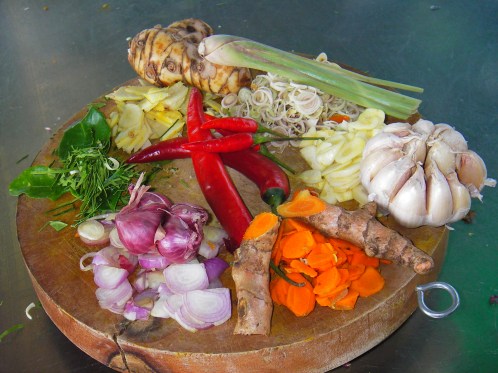
Kroeung, Khmer Curry Paste Ingredients

From 12 noon clockwise: lemongrass, garlic, turmeric, shallot, Kaffir lime leaf and galangal. Center: red spur and Thai chilies

Amok Curry Powder

This creation was inspired by my March 2010 trip to Cambodia when I purchased many bottles of Amok Curry Powder. I used the powder on salmon and sea bass and really loved the citrus and lemongrass flavors and the combustion caused by the combination of flavors. I spent over a year trying to come up with my own combination by simply following the structure of Khmer curry paste ingredients shown in the photo above. Now I would say that my Amok Curry Powder is quite good. It can be enjoyed as a spice rub over any fish or seafood for a quick and easy dish. Above is a photograph of my Amok Curry Powder sprinkled over sea bass, which was then pan-fried and served with stir-fried peas. The simplicity of this dish and the good fresh fish let the Siem Reap Amok flavor stand out. Together they go a long way in anyone’s kitchen.

¼ teaspoon black pepper flakes
½ teaspoon Thai chili powder
½ teaspoon garlic granules
1 teaspoon turmeric powder
1 teaspoon galangal powder
1 teaspoon sea salt
2 teaspoons lemongrass powder
1 teaspoon Kaffir lime leaf powder

Combine black pepper flakes, Thai Chili powder, garlic granules, turmeric powder, galangal powder, sea salt and lemongrass powder in a small bowl. Store in a spice jar for up to 2 weeks. For freshness, keep the mixture in the freezer, or mix just enough spices for a single use. Spices stay fresh longer if they are stored separately rather than combined.

Pranee’s note: To make galangal, Kaffir lime leaf and lemongrass powders, purchase these ingredients in the dry form—or make your own—and grind them n a spice grinder. Please look for Pranee’s future post on how to make dried lemongrass powder.

© 2011 Pranee Khruasanit Halvorsen
I Love Thai cooking
Pranee teaches Thai Cooking classes in the Seattle area.
Her website is: I Love Thai cooking.com .

Read Full Post »

Dragon Crystal Ball – แก้วมังกร

Last Tuesday a friend and I prepared a tropical fruit salad together in her kitchen to test a version of my versatile Thai mixed fruit salad recipe. It is a recipe that I have made countless times and the results are always good, though never the same due to seasonal inspirations. This time I focused on just three different kinds of fruit, each high in anti-oxidants and at their peak fresh in the market. Tropical fruits have so many potential healthy benefits, I loved creating a recipe of the moment for you to enjoy. This combination of dragon fruit, papaya and Thai grapefruit is unique; I hope that you enjoy the recipe. It works really well with all fruits, so let’s play with tropical fruits!

Dragon Fruit in a fruit tray at my family's Chinese New Year altar

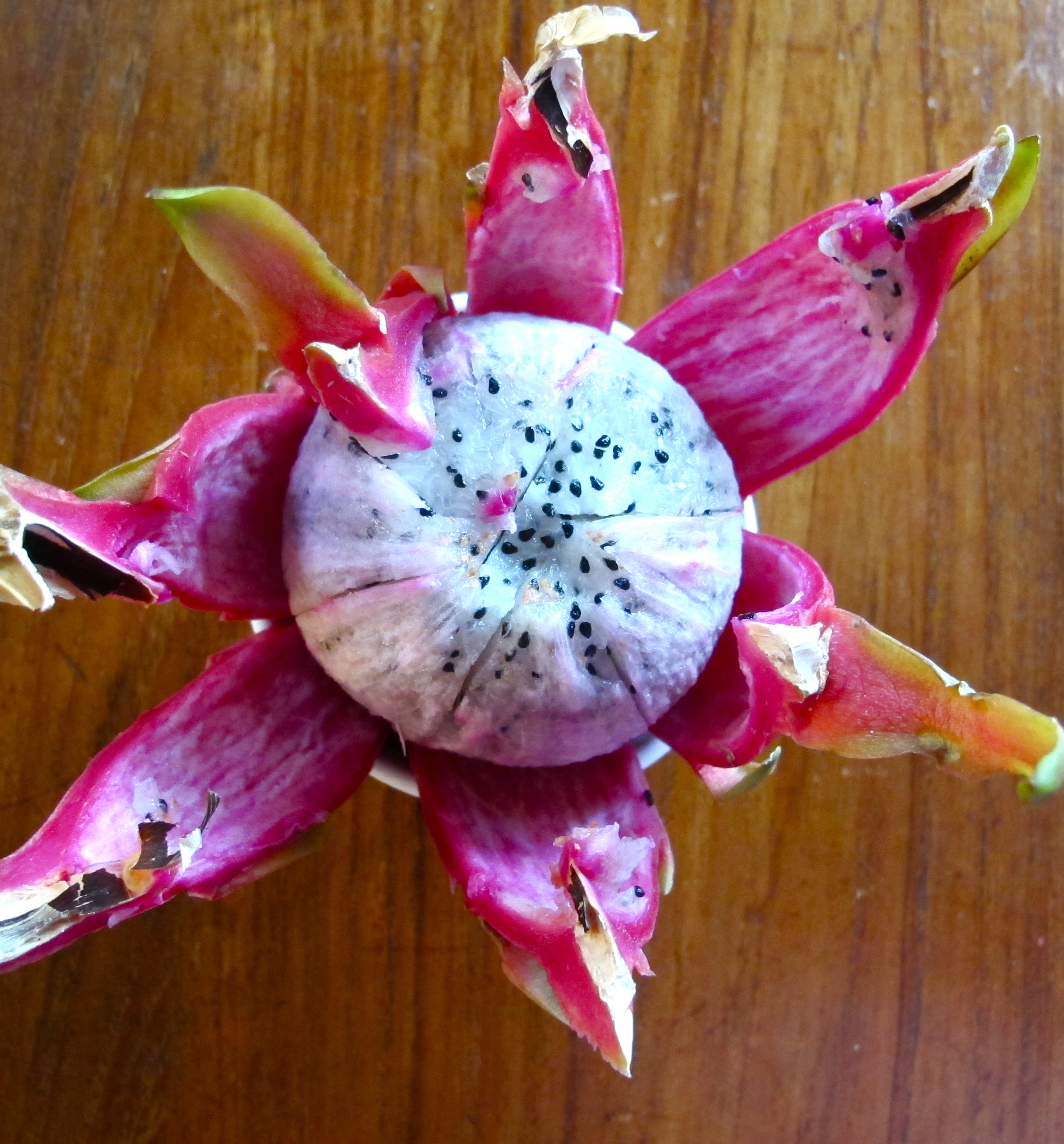
Dragon Fruit  (Hylocereus undatus) is also known as red Pitaya, or in Thailand we call it Kaeo Mangkon – แก้วมังกร. The most commonly-seen “dragon fruit” in the market is a red-skinned fruit with white flesh. There are two more varieties, one with red skin and red fruit and another with yellow skin and white fruit, but the red skin and white fruit with black seeds is the most common.

Dragon Fruit - Pitaya

Dragon Crystal Ball – แก้วมังกร

Dragon Fruit is native to Central American and its neighboring areas. It came to Southeast Asia about a century ago and is believed to have been brought to Vietnam by French missionaries. It is now very popular throughout Southeast Asia where there is an ideal tropical climate to grow this cactus-like green plant with its abundance of large flowers that become the red fruit. Because of its beautiful looks and auspicious name, dragon fruit is often seen in Thailand and Vietnam on ancestor altars or being presented to a friend as a gift. It is quite dramatic looking both inside and out.

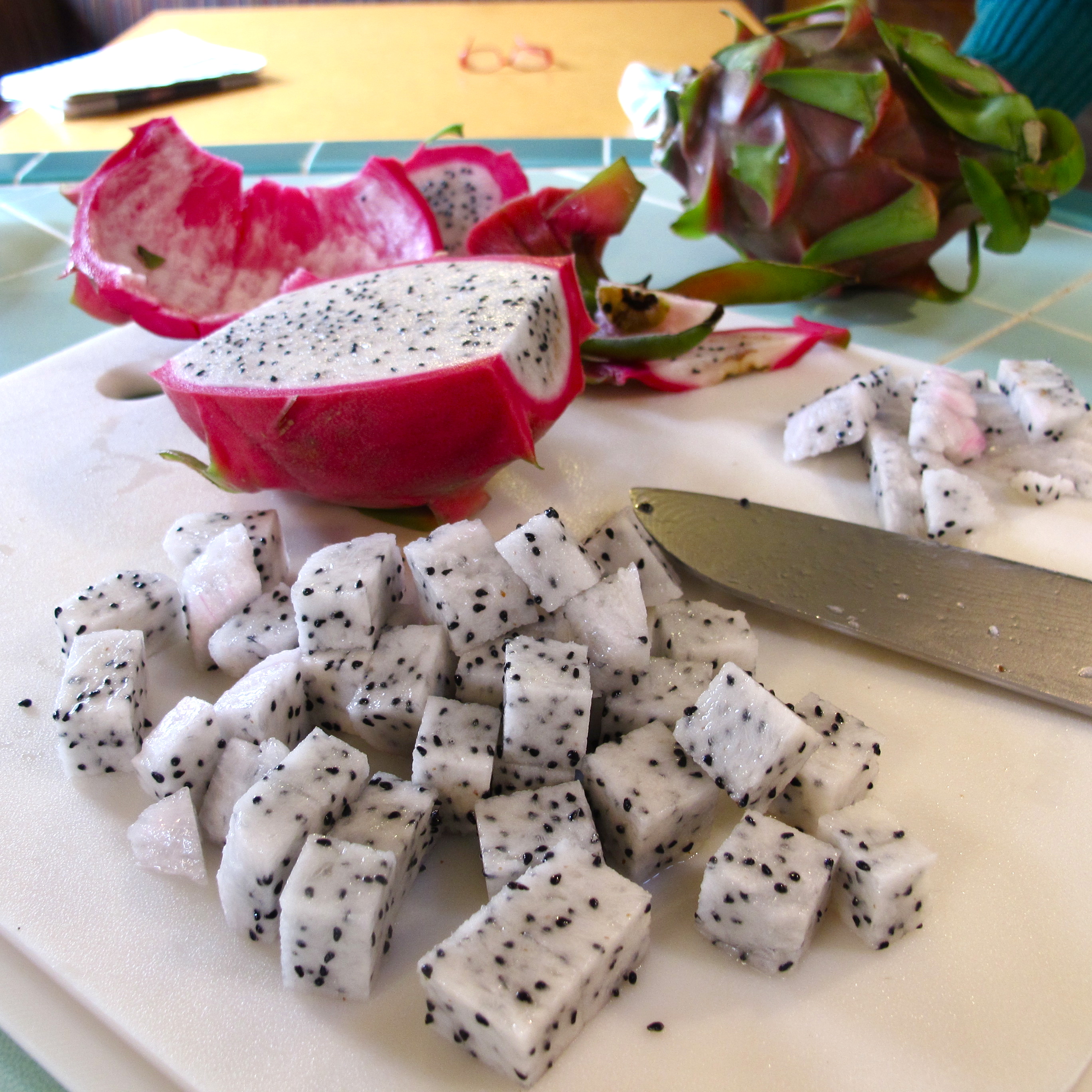
Dicing Dragon Fruit Flesh

Dragon fruit is easy to prepare. After trimming off the top and bottom, cut the fruit in half then use your thumb and pointer finger to press the skin away from the fruit; it will peel off easily. From there cut the fruit into the desired shape. The flavor is not dramatic compared to its appearance. The fruit is similar in someways to a kiwi fruit, but the texture is denser. It has a gentle sweet-sour taste and the seeds, which look like black sesame seeds, provide a fun texture. Dragon fruit’s texture, unique look, and unassertive taste combine to make it a star in this mixed-fruit salad.

Dicing Papaya

This deep rich yellow-orange papaya is so delicious and creamy. I was careful to add it gently into the salad, mixing just enough so that the papaya flavors become well combined with the dragon fruit and Thai grapefruit.

Som Oh - Thai Grapefruit

Pomelo, the third ingredient in my salad, is also known as Asian or Thai grapefruit. It adds a citrusy sweet and sour flavor to the salad. In America, pomelo is available in the markets for many months beginning in September. Please check my blog post on Pomelo Salad with Crab to learn about Thai grapefruit and how to open them.

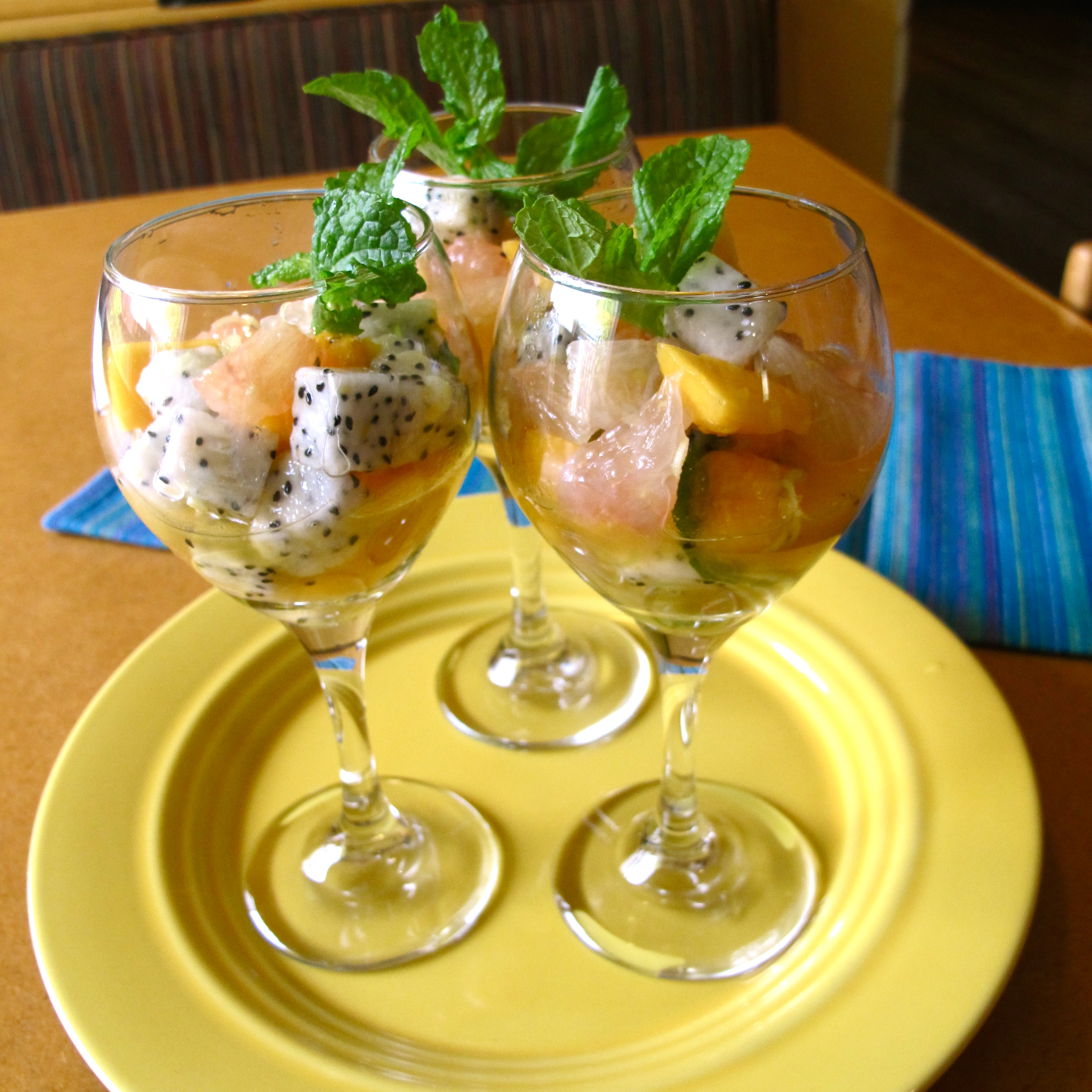
Dragon fruit, papaya and Thai grapefruit salad

Thai Mixed Fruit Salad with Dragon Fruit 

Som Tum Pollamai Kao Mangkon

ส้มตำผลไม้แก้วมังกร

Servings: 6    Preparation: 15 minutes     Cooking time: 5 minutes

Som Tum Pollamai has become a trendy dish in Thailand over the last few years, even though it has been known for centuries. It is simply a fruit salad with an accent of Thai herbal flavors and aromas. Dragon fruit, papaya and pomelo make a great combination because they give you a great anti-oxidant boost and much more. My friend commented that this would make a great fruit dish for a holiday brunch as well as being fun to serve at a poker party because the cubed dragon fruit look so much like dice. 

6 cups mixed seasonal fruits, peeled and cut into small bite-size cubes
4 tablespoons brown sugar or palm sugar
2-3 tablespoons lime juice
¼ teaspoon salt
3 tablespoons lemongrass, thinly sliced (see Pranee’s Youtube video demonstration how to prepare lemongrass)
3 Kaffir lime leaves whole, or 1 tablespoon lime peel
1 cup mint leaves

Mix sugar, lime juice and salt together in a small bowl and stir well. Place the mixed fruits in a large salad bowl, then sprinkle the liquid mixture over the fruit; toss gently but thoroughly until the dressing and fruits are well combined. Chill in the refrigerator for at least a half-hour to let it sit and develop flavor. Before serving, add lemongrass, Kaffir lime or lime peels and mint and mix gently. Garnish with mint leaves or short stalks of lemongrass as desired.

Cook note: Other fruits that go well together include apple, pear, guava, cantaloupe, pineapple, Som Oh (Thai grapefruit) or any citrus fruits, grapes, melon, honeydew melon, banana, strawberry and half grated green mango.

© 2011 Pranee Khruasanit Halvorsen
I Love Thai cooking
Pranee teaches Thai Cooking classes in the Seattle area.
Her website is: I Love Thai cooking.com .

Read Full Post »

Stinky Leaf Omelet

Last week I found fresh acacia leaf, or cha-om, for the first time in Seattle at the Makong Raineir Market. Without hesitation, I grabbed this rare opportunity to purchase some. Two days later the cha-om was still fresh in my refrigerator. There are many ways to prepare cha-om in rustic Thai cooking (see pictures below), but my heart was set on my favorite cha-om omelet—Khai Jeow Cha-Om—which is dense with a layer of cha-om leaf. It can be cut into 1-inch squares and served as a side dish or as an accompaniment to Shrimp Paste Chili Dip – Nam Prik Kapi (see the video of my sister and I preparing Nam Prik Kapi). I prepared a cha-om omelet last Sunday and packed it in a tiffin (a stainless steel food carrier), along with warmed jasmine rice and shrimp paste chili dip. Then I took it to a Thai community potluck party and I am happy to tell you that it was gone in the blink of an eye. We all love these stinky leaf omelets—a taste of our Thai villages.

A Package of Cha-Om at an Asian Market in Seattle

Fresh cha-om has a very strong, almost sulphur-like aroma that mellows when it is cooked. A little research led me to a link which mentions that cha-om is rich in Niacin (B-complex), just like most deep green leaf vegetables such as wild pepper leaf (chapoo), spinach and coccinia (tum lueng). One hundred grams of these vegetables yields more than 1.9 mg. of B-complex vitamins. This reminded me of the old Thai saying about bitter vegetables that I mentioned in a previous blog:  “The sweet is a faintness and the bitter is a medicine.”

Cha-Om Shrub Fence

Cha-Om (ชะอม ), or Acacia Pennata, is a shrub that is native to South and Southeast Asia. It can grow up to 5 meters tall, but in Thailand we usually let it grow to about 2 meters, then cut it down to promote young leaves. Most villagers love to grow a few cha-om plants in their backyard. I am glad to share with you photos of my friend Nongnut’s cha-om plants. I took them a few months ago while wandering in my village in Phuket.

Tender Shoots of Cha-Om

Every week Nongnut’s mom would cut off the young leaves and bundle them up to sell in the morning in front of their house. The bundles would lie alongside the many other edible vegetables from their plantation such as bamboo shoots and young banana trunk. This is a very common practice in Thai villages. It keeps her parents active, they share daily dialogs with friends in the village, and they earn some money selling these nutritious, organic vegetables to villagers.

Typically one bunch of cha-om leaves weighs about six ounces; after removing the hard stems, it will yield about two cups of leaves. Frozen cha-om leaf is available in Asian markets in the US all year round.

Sour Curry with Cha-Om Omelet and Prawns

Cha-Om omelet cut into square chunks adds a delicious layer of flavor to the traditional Thai sour curry Gaeng Som Goong Cha-Om. In Seattle, the only place I know that serves this dish is the Krua Thai Family Restaurant in University Village.

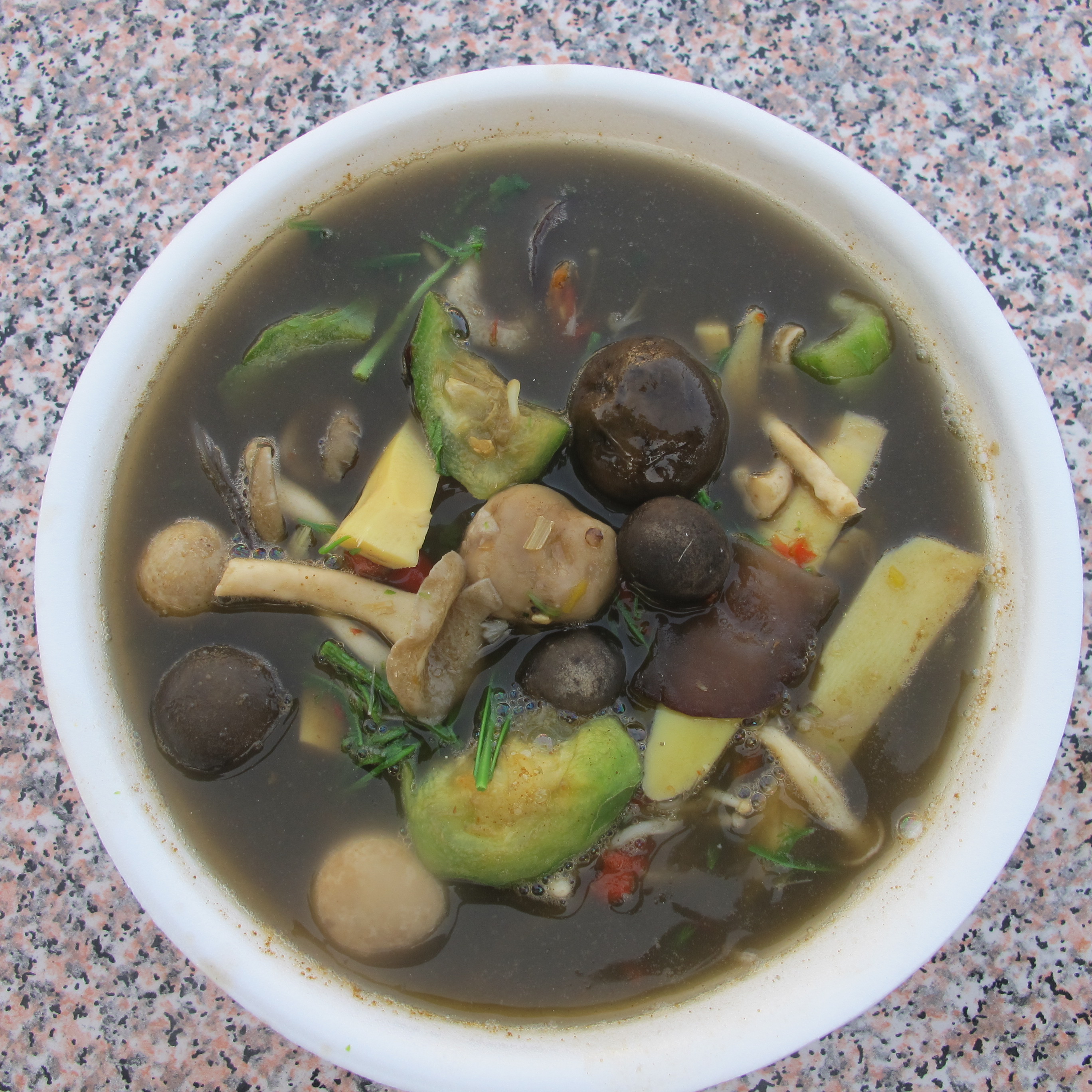
Tom Laos - Mixed Vegetable and Mushroom Soup with Cha-Om Leaf

In Northeastern Thailand, cha-om is used in the famous Tom Laos Soup.

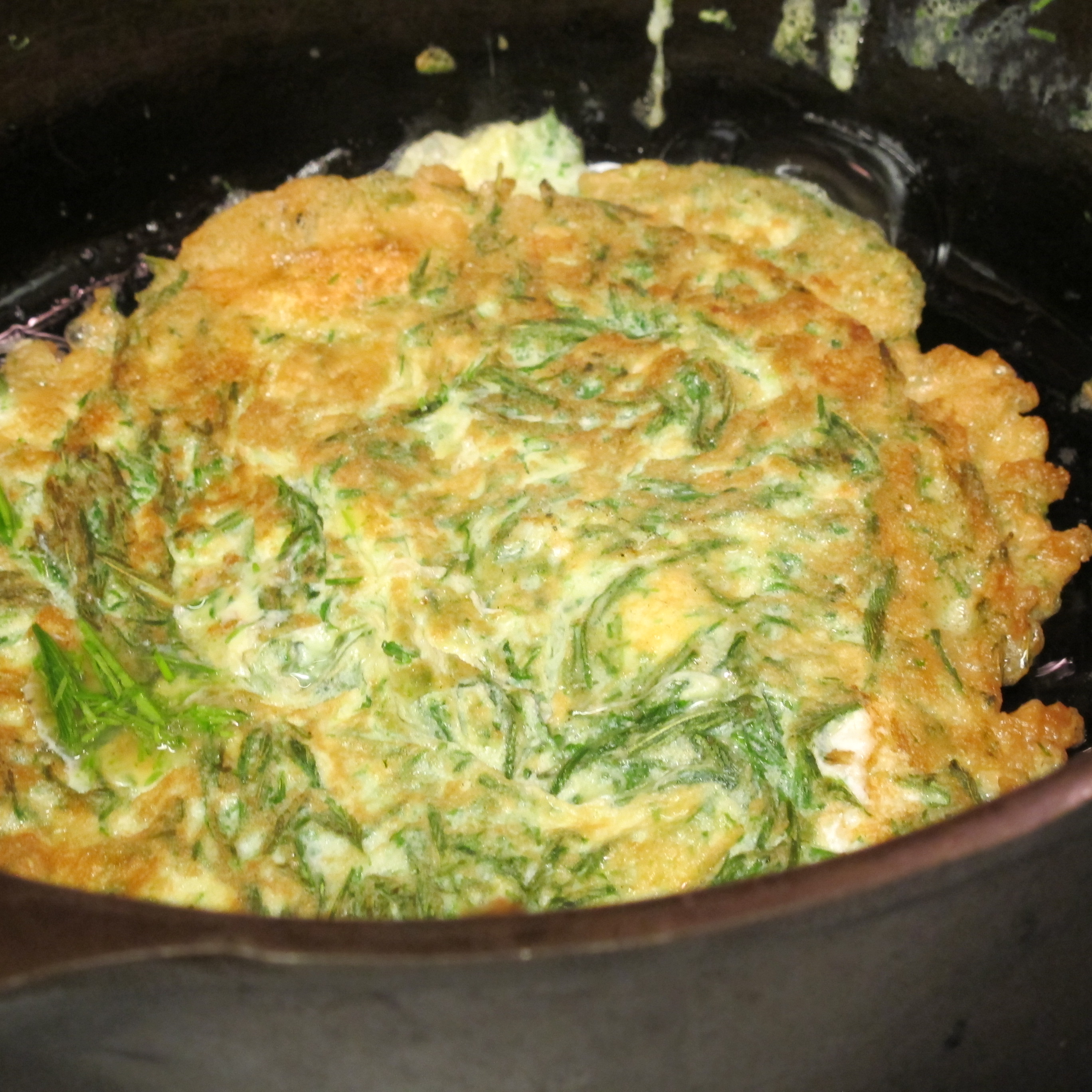
Acacia Omelet

Khai Jeow Cha-Om

ไข่เจียวชะอม

Whisk Cha-Om and Egg Together

Simply whisk cha-om  leaves, egg, salt and fish sauce together to create an egg mixture for Acacia Omelet, or Khai Jeow Cha-Om, a rustic dish of Thailand.

Cha-Om Omelet

There is no substitute for acacia or cha-om leaf, but this recipe can be adapted by using baby spinach for a quick, easy and healthy meal.

Serves: 2-4

2  cups (about 6 ounces ) chopped acacia leaves, stems removed
5 eggs
1/2 teaspoon salt
2 teaspoons fish sauce
6 tablespoons canola oil

Place acacia leaves, eggs, salt and fish sauce in a large bowl and whisk with folk until mixed, about 1 minute.

Heat a large pan on medium-high heat and cover the whole surface with half of the canola oil. Pour in half of the egg mixture and tilt the pan to make an even layer of omelet; let it cook until golden yellow on the bottom, about 3 minutes. Flip it and cook until the other side is also golden yellow, about 2 minutes. Remove with spatula to a serving plate. Repeat the same process with the remaining cooking oil and the rest of egg mixture. Cut the omelet into small squares about 1-inch by 1-inch and place in a serving plate to serve as a side dish with Thai chili dip or any curry.

This slideshow requires JavaScript.

In the Seattle area you can find cha-om in the freezer section at the Mekong Rainier Market or the Vietwah Market. Please click here to find the addresses for these stores.

© 2011 Pranee Khruasanit Halvorsen
I Love Thai cooking
Pranee teaches Thai Cooking classes in the Seattle area.
Her website is: I Love Thai cooking.com .

Read Full Post »