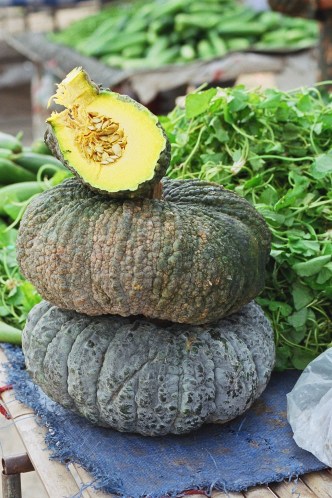
Kabocha
Kabocha Pumpkin
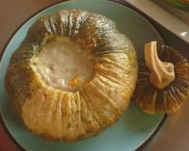
Kabocha is a hard skinned variety of Japanese pumpkin and winter squash. It has an amazingly sweetness, dense and silky texture and almost fibreless with dark green thick skin and bright yellow-orange flesh. This variety is preferred for Thai cooking and Thai people incorporate it in soup, curry, stir-fry and dessert dishes. Buttercup squash or Hubbard belongs to the same species and can be substituted for Kabocha. Pumpkin is a squash, but pumpkin is also a term that applies to almost all hard-skinned winter squash, not summer squash like zuchini. There are two known types of pumpkin that are used in Thai cooking – niho kabocha with a bumpy surface and kuri(seiyo) kabocha that has pale vertical stripes.
How to pick a good Kabocha squash
Kabocha should be fully ripe 45 days after it is harvested – when the starch has had a chance to convert to carbohydrate content. The flesh color then will change from yellow to a deeper color or orange. I choose a dark green skin pumpkin that has a hollow sound when I thump it. The best way to judge whether the Kabocha is ready is to buy a cut one so you can see its color and the texture inside.
Pranee’s Tips
To cut Kabocha in half, I first use a big knife and hammer to open it. The rest is easy. I then cut it into 1 – 1½ in wedges, and use the back of the knife or spoon to remove the seeds. I only peel it based on the recipe. Personally, I love the skin and it has more nutrients than the yellow part.
To prepare Kabocha for dumpling or pie, simply remove skin and seeds and cut into 1- inch chunks, steam about 15 minutes until tender and use a ricer to make a fine mash.
For soup, you may choose to leave the skin on which is tender when cooked. Remove the seeds and cut into the size according to the recipe.











 iLoveThaiCooking & Pranee's Thai Kitchen









 Pranee's Thai Kitchen