Feeds:
Posts
Comments

Archive for September, 2011

Conditional Love

My durian tree

Durian ทุเรียน, Durio Zibethinus Merr., is a native plant to Brunei, Sarawak, Malaysia and Indonesia. Southern Thailand is a part of the Malay Peninsula and it has a tropical climate pattern similar to Malaysia.

One of my memories of growing up in a village on a hilly isle of PhuketSouthern Thailand, is of the beginning of durian season. It would begin after two months of monsoon, around June and July, when the earth was moist and the mountains a lush green. The villagers would gather ripe durians that had fallen to the ground the night before and sell them out in front of my grandmother’s home the next morning. Many piles of 4 to 8 durians in all sizes were auctioned off each morning. Later the winners carried home the thorny fruits which had been tied up with twine or string. Then the whole extended family would luxuriously savor the heavenly durian, a feast of nature. Durian was not a fruit we enjoyed everyday, just as you would not want a rich custard everyday. Eating and sharing durian once or twice a year was an indulgence and a family ritual.
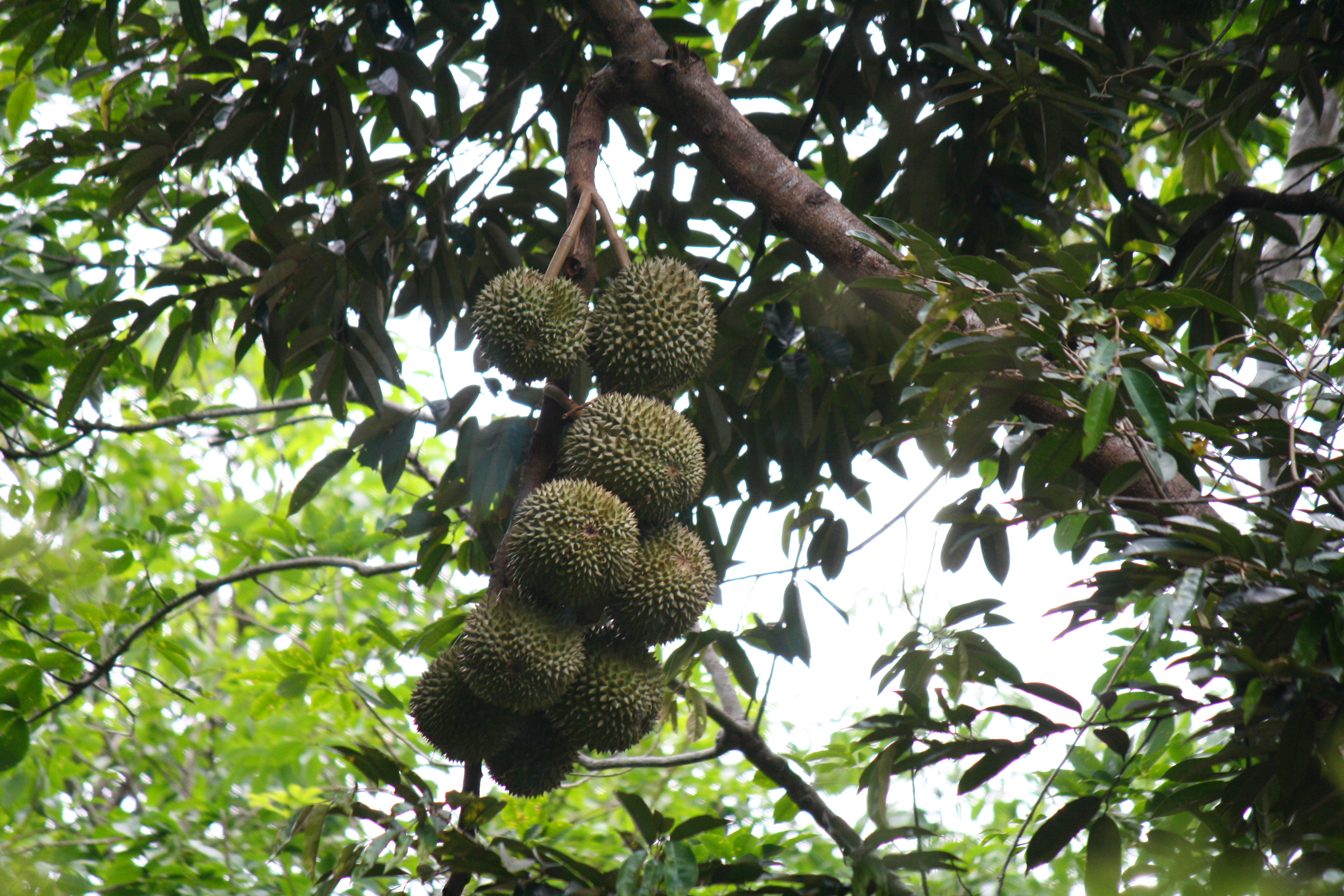
My last visit to Thailand in July 2011 was a memorable and fruitful one. I spent many days working on my plantation with my gardener and it was right at the peak of durian, bamboo shoot, and sator season. Durian (known as stinky fruit) and sator (also known as Petai or stinky beans) are infamous for their unique smells, though their health benefits transcend their strong odors. On my plantation, durian and sator grow side by side, a part of the Southern Thailand hillside landscape. One morning we had durian for breakfast with dark Thai coffee. As those of us who love durian say, “it tastes like heaven, a perfect custard on earth.” I was glad to taste durian again after a long time without it.

Life and culture around Seattle are not the same as in the village of Thailand. Here it is hard to convince friends and students to embrace durian’s infamous stinky side. My rules for eating durian are these: it must be a good durian (for me, this means a Phuket durian), in-season, not too ripe, eaten in small portions once or twice a year, and never mixed with alcohol. I would also recommend not socializing with people who don’t like durian the day you eat it, and don’t carry it around in a small closed space or a home with an air conditioning system. In Thailand, durian is considered contraband if you carry it in a rental car, or in air-conditioned public places such as buses, hotels or airplanes.
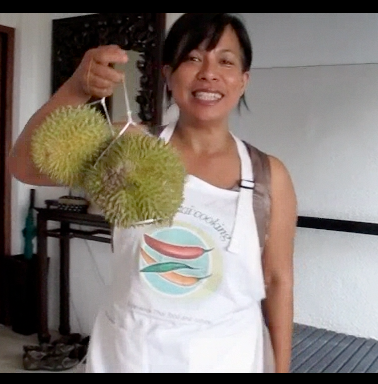
Pranee with Phuket cultivar of durian

There are many durian cultivars in Thailand but in Phuket the small, native cultivar is popular with locals as well as tourists from all over Asia. When visiting Thailand during durian season, ask someone who is knowledgeable about durian to introduce it to you. If you try the right one, chances are you, too, will taste the heaven—and the smell won’t put you off too much. And you will have something to talk about for a lifetime!

The best way to enjoy fresh durian is in moderation. Some people experience a fever after eating durian because it contains so many calories. One hundred grams of durian has about 30 grams of sugar, 25 grams of protein and approximately 144 calories (please see source below). Besides eating fresh durian, you may find durian in many desserts: Kao Neow Thurian, sticky rice with coconut milk and durian sauce; Thurian Icecream, durian ice cream; and Thurian Gwan, durian candies.

How to open the durian with a paring knife and cleaver

Opening durian requires some skill. Below are step-by-step pictures on how to open the durian the way a Phuketian does it. You will need two thick towels to protect the counter and your hand, a cleaver and a paring knife.
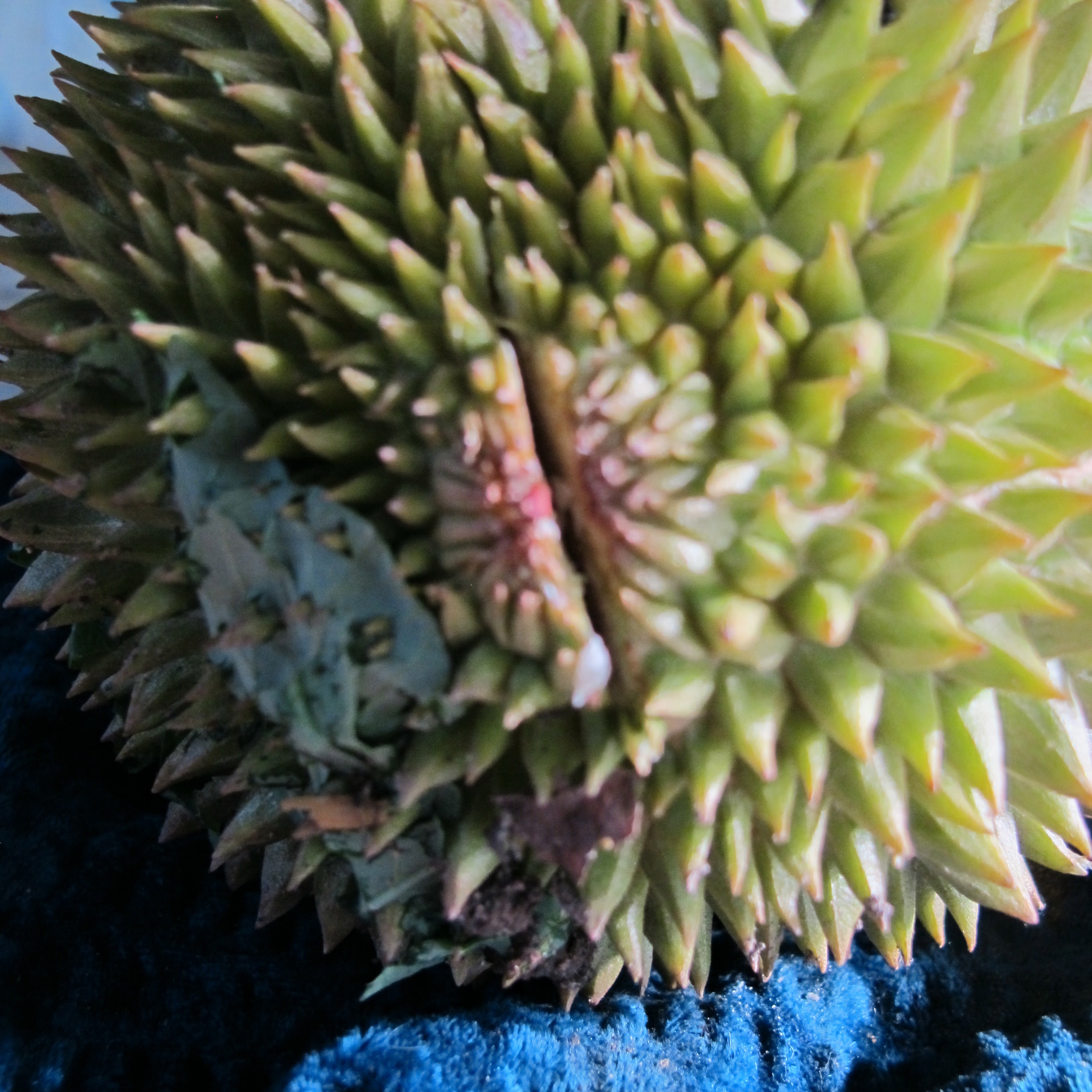
Look for a split in the durian

First remove the stem, then find the natural split in the hull. Use a paring knife to follow the split and make it wider, then use the cleaver to twist the hull open.

Insert the cleaver into the split line and then use the cleaver to twist the hull open.

Use both hands on each side of the split to pull and force until the hull opens completely
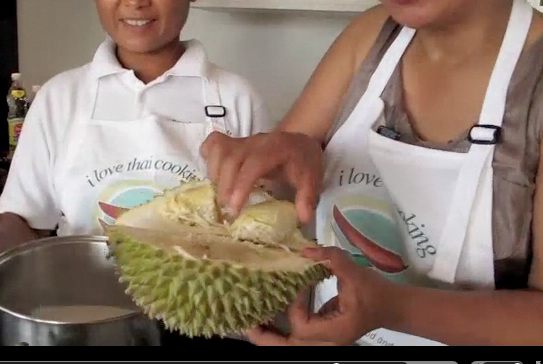
A perfect custard fruit snuggles inside

The custard lumps and seeds are snuggled inside each hollow hull.

Durian with delicious custard and seeds inside

© 2011 Pranee Khruasanit Halvorsen
I Love Thai cooking
Pranee teaches Thai Cooking classes in the Seattle area.
Her website is: I Love Thai cooking.com .

Read Full Post »

Under a Tamarind Tree

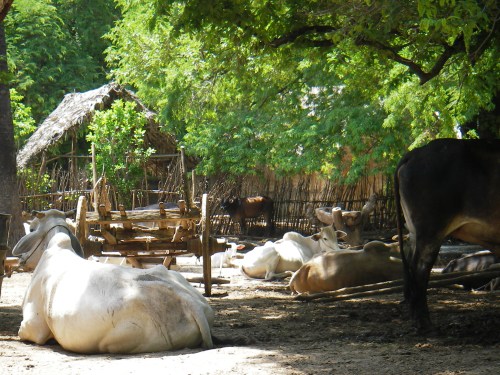
Tamarind branches provide shade for animal and people

The tamarind tree (Tamarindus Indica L) is a large tree that can grow to be 80 to 100 feet tall. Native to Africa, it was introduced to Southeast Asia and South America where it is now well established. From India to Myanmar, Thailand, Laos, Cambodia, Vietnam, Philippine, Malaysia and Indonesia, tamarind trees play a significant role in Southeast Asian cuisine and culture. I have been fortunate to have traveled to Malaysia, Laos, Myanmar and Vietnam and have seen how our cultures and cuisines have evolved in almost the same ways around tamarind trees and their fruit.

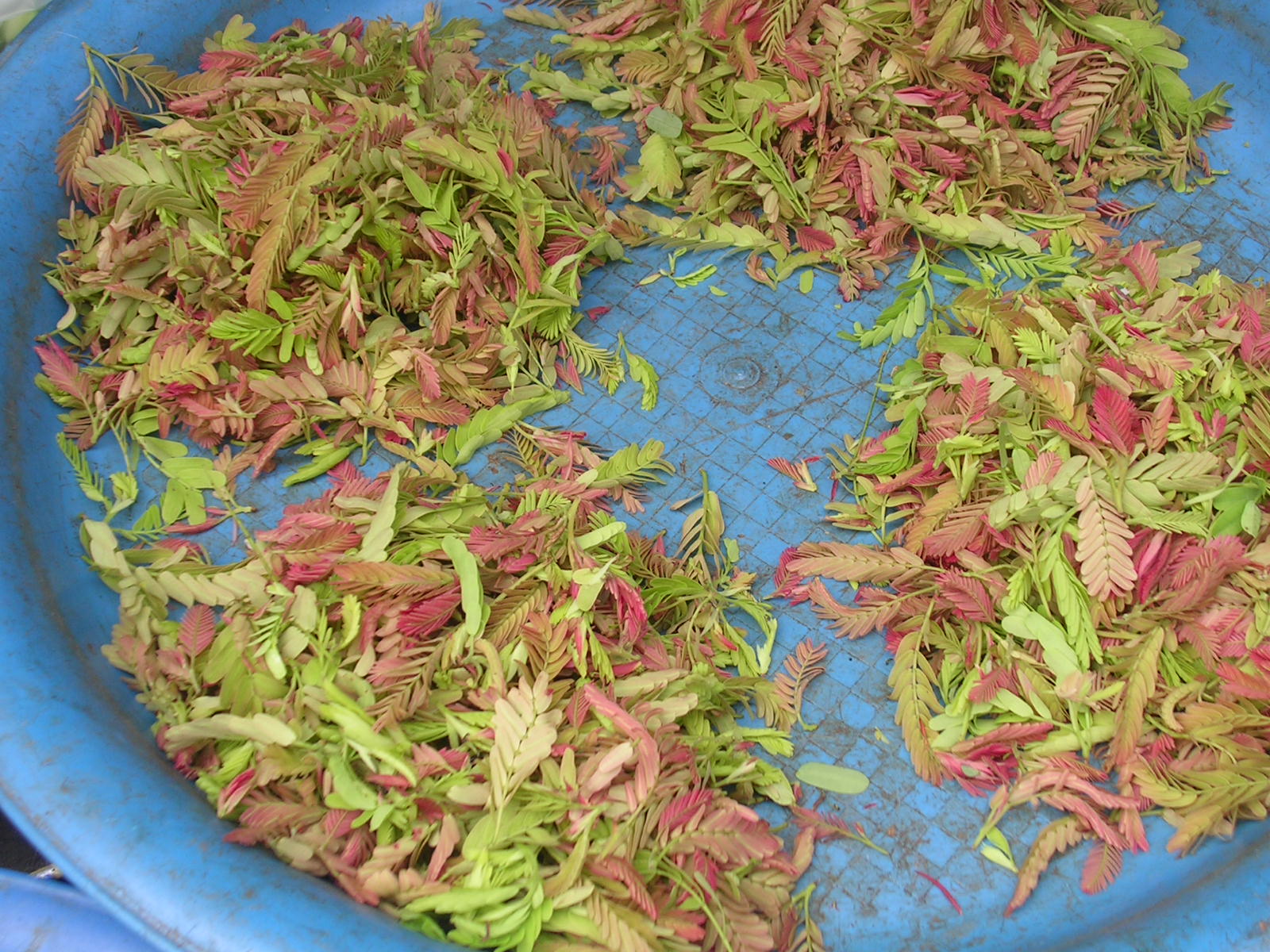
young tamarind leaves

The tamarind tree bears leaves and flowers that can be cooked like vegetables.

Tamarind pods

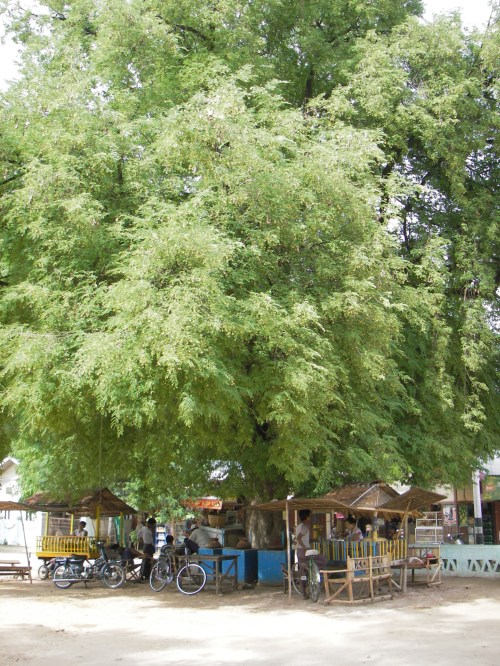
When the fruits are green, we snack or pickle them. The mature brown pods are made into a candy or kept for cooking. My grandmother loved adding a young tamarind leaf to her fish soup, and she also cleaned her brass ware with tamarind until it was shiny and pinkish. When I was young I loved playing with tamarind flowers. They were small, but have a beautiful orchid-like flower. The wood from tamarind tree is perfect for making a butcher block or cutting board. And most importantly of all, the large tamarind tree provides shade and a social gathering place during the day.

Shops under tamarind tree, Myanmar

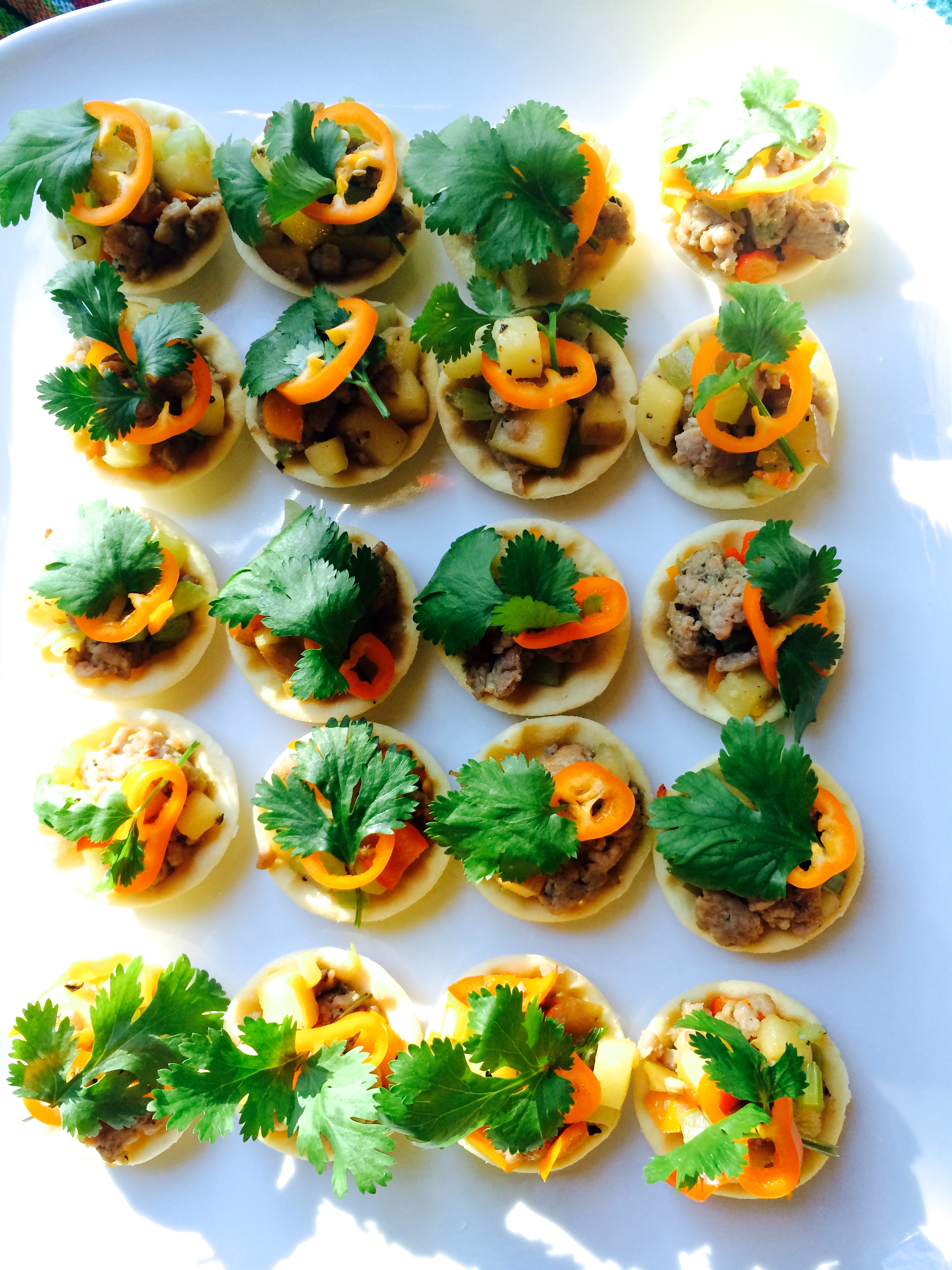
One of the first things you will want to learn about cooking with tamarind is how to turn a dry tamarind fruit paste or fruit pulp into a concentrate form that is ready to use in daily cooking. You won’t have any problem finding tamarind paste to buy;  it is abundant in Asian and Latino markets. In southern Thailand we use tamarind concentrate in dipping sauces, sorbets, salad dressings, chutney, beverages, peanut sauce, stir-fry sauce, curry, soup, and any dish that needs a gentle acidic flavor to heighten it. You can also find new ways of your own to use this fruity, acidic concentrate; below are several photos of dishes from my hometown to give you ideas.Tamarind is one of the ingredients in Worcestershire sauce, but there is not a perfect substitute for it as the fruity flavor of tamarind is so unique.

Tamarind Fruit is a Heart of Southeast Asian Cooking

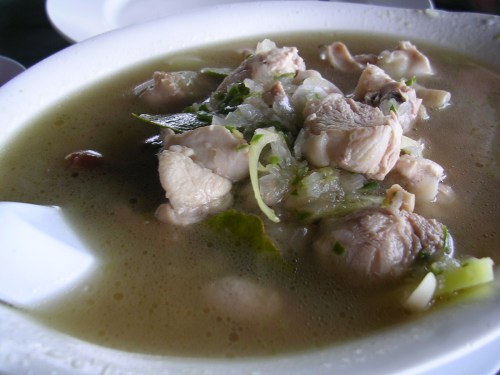
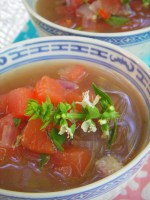
Chicken Soup with Tamarind Added for Sour Flavor

Above is my home town spicy soup similar to Tom Kha Gai (chicken sweet and sour soup with galangal and coconut milk). Tamarind gives the soup a nice gentle sour and refreshing taste.

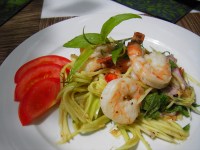
Pomelo Salad with Prawns, Fried Shallots and Tamarind Dressing

Tamarind concentrate is used in salad dressings to add a nice layer of flavors to a fruit salad. When combines with palm sugar, it provides a sophisticated  balance to the flavors.

Grilled Jackfish with Phuket Tamarind Sauce

Phuket’s signature tamarind sauce (Nam Jim Makham) for grilled jackfish over charcoal husks.

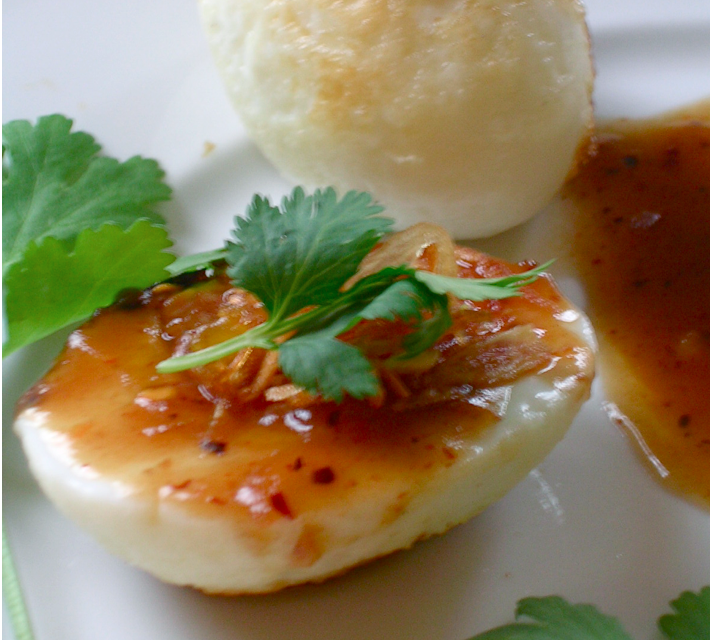
Kai Leuk Koey - Son-in-law eggs

The famous Thai Kai Look Keuy, Son-In-Law Eggs, has a well-balanced, gentle and fruity sour taste from tamarind, the sweet of palm sugar, a highlight of fish sauce, and the excitement of a few pinches of chili powder. It also has umami—or savoriness—one of the five basic tastes together with sweet, sour, bitter, and salty.

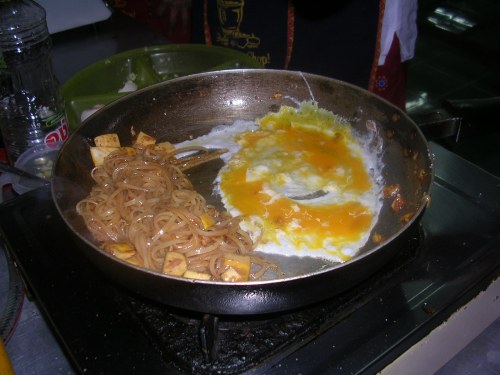
Phad Thai with Tamarind Sauce

Tamarind concentrate is an important part of Phad Thai, the renowned dish of Thailand. We can’t call it Phad Thai without tamarind concentrate!

Sour Curry Prawns with Cha-Om Omelette

Sour curry is a non-coconut curry soup.  Tamarind is an important part of the fish broth that gives the sour curry fish or seafood a harmonious balance. It’s flavor profile combines fruity, sour-sweet, and spicy.

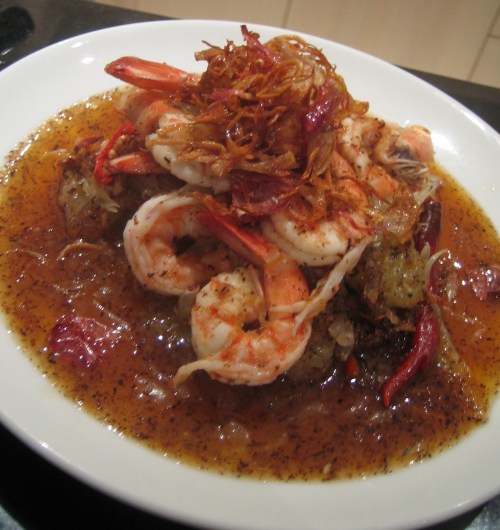
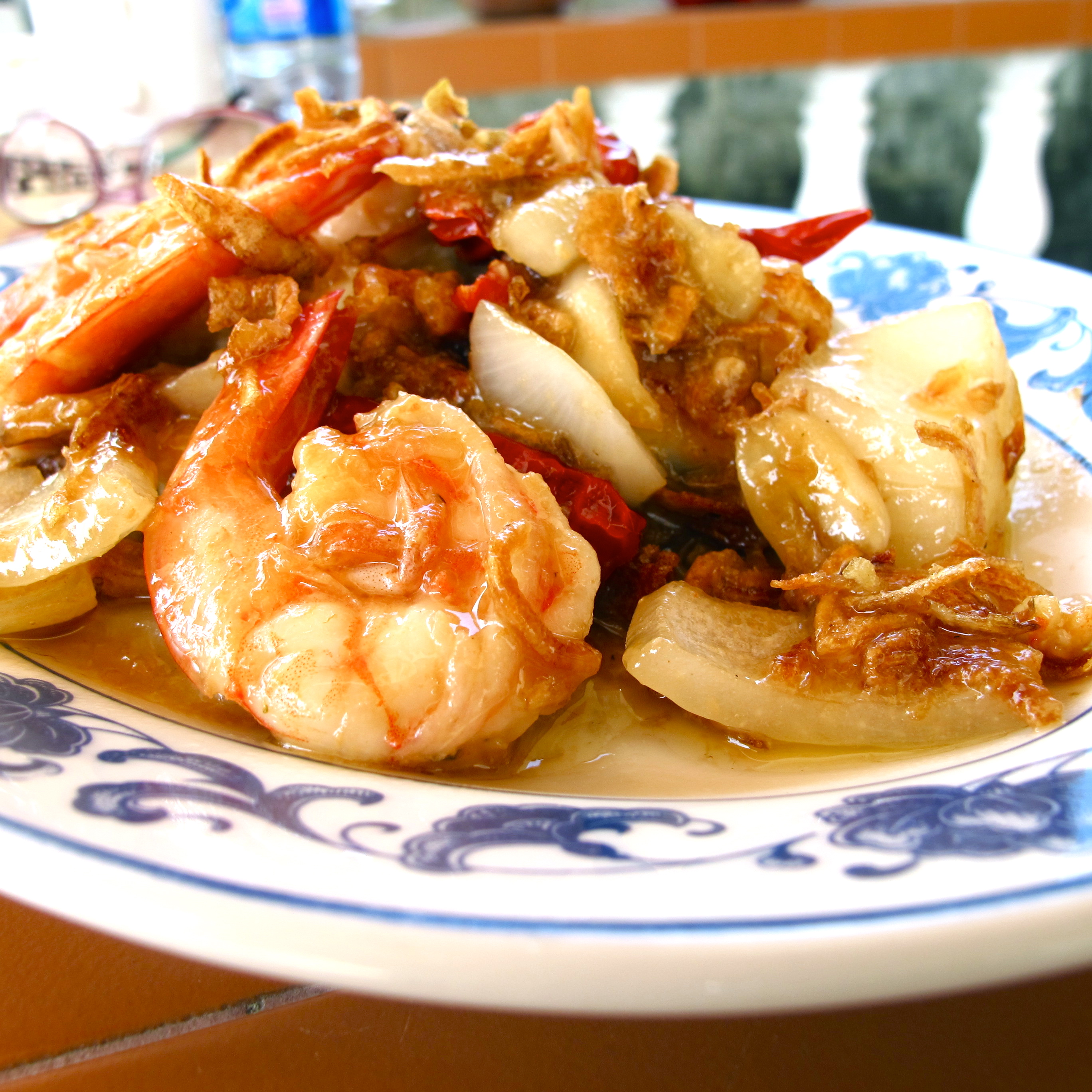
Stir-Fried Prawns in Tamarind Sauce

 Stir-fried prawns with tamarind sauce is another signature dish from Phuket.

Tamarind Candy from Thailand

Tamarind Fruit 

Makham มะขาม

Thailand ranks first in the world in the production of Tamarind and has the largest tamarind plantation in the world. Tamarind fruits resemble brown, flat, fava beans. When ripe, the fruit has a long, dark-brown pod with 5 to 8 seeds. Remove the shell, vein and seeds to get the dried and sometimes sticky fruit flesh. It will stay fresh for a year.

Two varieties of tamarind from Thailand are available in the US markets. One of them is the sweet variety, which you seldom see. It comes in a beautiful box with many good looking brown pods that you can crack open and eat like any dried fruit. It has a sweet fruity taste, reminiscent of dried apricots.

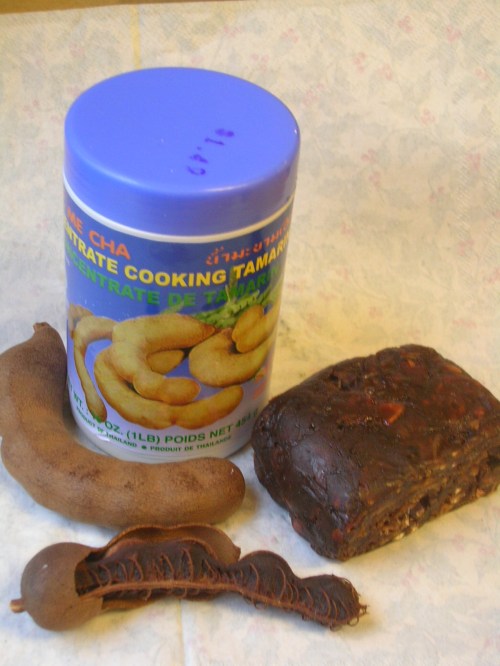
Tamarind pods, tamarind concentrate and tamarind paste

The sour variety of tamarind is the most common and the most important for Thai and Southeast Asia cooking. It is available in Asian markets either as a package of dried fruit in a 16-ounce rectangular brick, or ready to use in a plastic jar. The three forms of tamarind are shown in the photo above.  The dried fruit form give a purer sour flavor and doesn’t need refrigeration. The concentrate form must be kept in the refrigerator or freezer until ready for use. There is no best substitute for tamarind.

How to make a ready-to-use tamarind concentrate

Nam Makham

น้ำมะขาม

Yield: 2 cups

8 ounces tamarind flesh, about half of a 16-ounce package
2 1/2 cups boiling water

Place the chunk of tamarind into a large bowl, then pour boiling water over it and let it sit until the water is cool enough to handle. Massage and squeeze the tamarind in the water with both hands so the water and hands rub the tamarind to make a thick concentrate; the pulp and liquid should resemble a thick soup. Strain liquid though a large sieve into a medium pot. Squeeze the tamarind to get out all of the liquid, then discard the solid. Bring the strained liquid to a boil and cook for 2 minutes. Store and keep in refrigerator for two weeks, or in the freezer for 6 months.

Pranee’s note: To be safe, I recommend only using Tamarind grown in Thailand in my recipes.

© 2011 Pranee Khruasanit Halvorsen
I Love Thai cooking
Pranee teaches Thai Cooking classes in the Seattle area.
Her website is: I Love Thai cooking.com .

Read Full Post »