Feeds:
Posts
Comments

Archive for February, 2012

Not Just for Fine Dining, Golden Trout

Last Saturday I went to the Pike Place Market to get the fresh fish of the day for my family dinner. Golden trout caught my eye. When I visited the market last summer, only City Fish carried it. This time around it seemed that every fish stall had a pile of golden trout, so I thought this would be a perfect time to share my recipe with you for Steamed Golden Trout in Lime-Chili-Garlic-Dill Sauce. The pictures were taken a while ago, but the recipe is timeless. It is based on Phuket Pla Nueng Manao—steamed fish in lime juice—but the way I prepared it reflects my new home in the Pacific Northwest.

Golden trout is a sub-species of rainbow trout, both of which are related to salmon. The pale pink color of the flesh and its texture are a really amazing mixture of both trout and salmon. There are many ways to prepare golden trout, but today my favorite is to steam them. I love cooking fish whole, so using the oven is a quick way to go.

The golden trout I bought was from a farm in Idaho. Golden trout’s natural habitat is the “clear, cold headwaters of creeks and lakes at elevations above 6,890 feet,” but most golden trout come from fish farms. This is because you may fish for them for your personal consumption but not to sell them commercially. Most golden trout in the markets are from the Idaho Trout Company. From my research I learned that fly fishing for rainbow trout and golden trout is a very popular activity.

Fresh Rainbow Trout from Pike Place Market

When it comes to steaming fish, I am my grandma’s grandaughter. I ate many meals of steamed fish with my grandmother, like Clay Pot Lemongrass-Steamed Fish (Pla Nueng Morh Din). I hope you will have a chance to cook a few of her recipes. Several of them are featured in the Asian Grandmothers Cookbook by Pat Tanumihardja. At home here in Seattle, I have adapted my grandmother’s recipe into an easy and fun way to prepare fish for my friends and family. My recipe below reflects my quick and easy method for doing this at home. I will let you decide which way you prefer.
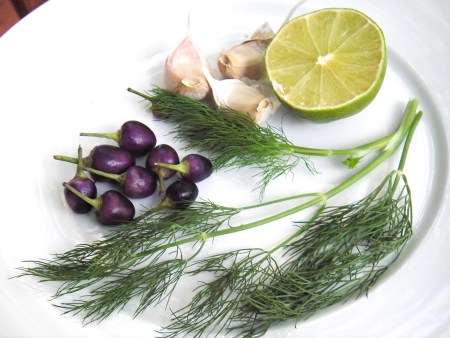
Garlic, Lime, Dill and Purple Chili

PLA NUENG MANAO

ปลานึ่งมะนาว

Steamed Golden Trout with Lime-Chili-Garlic-Dill Sauce

Servings: 4

Preparation Time: 15 minutes

Cooking Time: 15 minutes

If you love fish, this recipe works for all occasions! It is light, fresh and delightful — yet easy to prepare. While steaming the fish, prepare the sauce. When the fish is cooked, just pour the sauce over it and serve with hot, fragrant jasmine rice.

1 whole golden trout, or any fileted fish (cooking time may vary)
4 lemongrass stalks, trimmed and smashed
large sheet of parchment paper and foil
10 cloves garlic, peeled
5 Thai red chilis, purple chilis, jalapeno or Serrano peppers
1 cilantro root
1 teaspoon salt
2 tablespoons sugar
2 tablespoons fish sauce
3 tablespoons lime juice
1/4 cup chopped dill or cilantro
4 lime slices for garnish

Using a mortar and pestle, pound garlic, peppers, cilantro root and salt until smooth. With pestle, blend in sugar, fish sauce and lime juice until sugar dissolves. Stir in dill. Set aside.

Preheat oven to 375°F.  Place 1/4 cup water in a 9” x 13” baking pan, then spread the lemongrass out. Place the trout on the bed of lemongrass and sprinkle salt on top of the fish. Cover the dish with parchment paper and then the foil, wrapping it around the edges to form a seal. Bake until the fish is cooked, about 10 to 15 minutes. (The good thing about steaming is you never overcook the fish). To check if the fish is done, insert a knife into the thickest part of the fish and lift the flesh away from the backbone. If it is easy to separate the flesh from the backbone, then it is done. If not, steam a little bit longer.

Place trout on a serving dish along with all of the steaming water. Pour the lime sauce over the top, then garnish with sliced limes and serve with jasmine rice.


Cook’s Note:

~Thai chilies are recommended for this recipe because they have a lingering flavor; you may remove seeds if needed. To control the spiciness of your finished dish, use 2 chilies for mild, 3 or 4 for medium, and 5 or 6 for a full spicy flavor.

~Always add the fish sauce before the lime juice to keep the sauce vibrant and fresh tasting.

~Best of all is to prepare the sauce while the fish is cooking. If you have a steamer, you can steam the fish in a serving size bowl and pour the sauce on top just before serving.

~The sauce can be used as a dipping sauce for any seafood, including mussels, clams and crab meat.

I Love Thai cooking
Pranee teaches Thai Cooking classes in the Seattle area.
Her website is: I Love Thai cooking.com 

Read Full Post »

The Hungry Planet

I attended the Hungry Planet: What the World Eats grand opening at the Burke Museum. I was totally awestruck by the large photographic exhibit and printed information from Peter Menzel and Faith D’Aluisio who show us how the rest of the world eats and feeds their families with one week of purchased food supplies. “A picture said a thousand words” and I hope that you will have a chance to view the exhibition which will be at the museum through June 10.

On Saturdays, PCC Cooks also participates in the exhibition by providing a cooking demonstration of one of eight different cuisines from around the world. I had the honor of representing PCC Cooks one Saturday by preparing Kao Tom Gai, Rice Soup with Chicken. I demonstrated how to prepare this Thai dish and provided samples. When I was growing up in Thailand this particular dish meant so much to me and the rest of the country. It was a time when families had to nourish their families with simple, healthy foods.

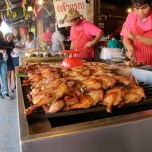
I was lucky to grow up in the land of plenty in Phuket, Thailand. My village has a mountain on one side and a rice field on the other. The Srisunthorn Road was on the edge of the mountain and our home was just off this main road. We spent our weekends gathering foods from the forest such as bamboo shoots, mushrooms and other edible plants. Our family also owned a plantation which provided an abundance of fruits such as rambotant, durian, jackfruit and coconut.  At the end of each month, or after each sale of a crop from the plantation, my grandmother made sure to purchase a month’s supply of rice and to stock up on all stable dry ingredients. Mobile markets would came every morning with meats, seafood and fresh vegetables and herbs. The open air market was full of venders of all sorts and once a week villagers could fill up their kitchen cabinets with food. In our family, when my grandmother was the treasurer of the household, she decided what was on the table on a daily basis, through times of abundance and scarcity.

Phuket Open Air Market

My grandma shared many bedtime stories with us about the lives of others or her experiences during economic down times. She taught us that every grain of rice should be eaten. Phuket is rich in tin,  rubber and other natural resources, but when it came to rice production, we depended on supplies from the central part of Thailand–a supply that was affected by the economy, politics, and climate. When the price of rice increased, our regular steamed rice would change to rice porridge to make our supply last as long as possible.

One cup of rice grains yields about 3 cups of steamed rice or 4 cups of thick rice porridge which can be thinned down to make 6 cups of rice soup. Instead of making 3 servings, 1 cup of rice can be stretched to provide 6 servings.

The Hungry Planet exhibit is eye opening. It shows how the rest of the world eats, what is available to them, what they can afford, what they choose, and the limitations. I love the picture from Mali, Africa, which shows the ritual of a family sharing a rice porridge that is cooked with sour milk.

For me, rice porridge is a soul food, comfort food and a health food. It has a healing and nourishing element and it is suitable for everyone and every occasion.

Now that you have heard my stories, what is yours?

Rice Porridge Three Ways

I know three ways to enjoy rice porridge. The first one is as a rice soup base which can then be made into Kao Tom Gai

Kao Tom ~ ข้าวต้ม

(Click photo above for Pranee’s Kao Tom Gai recipe)

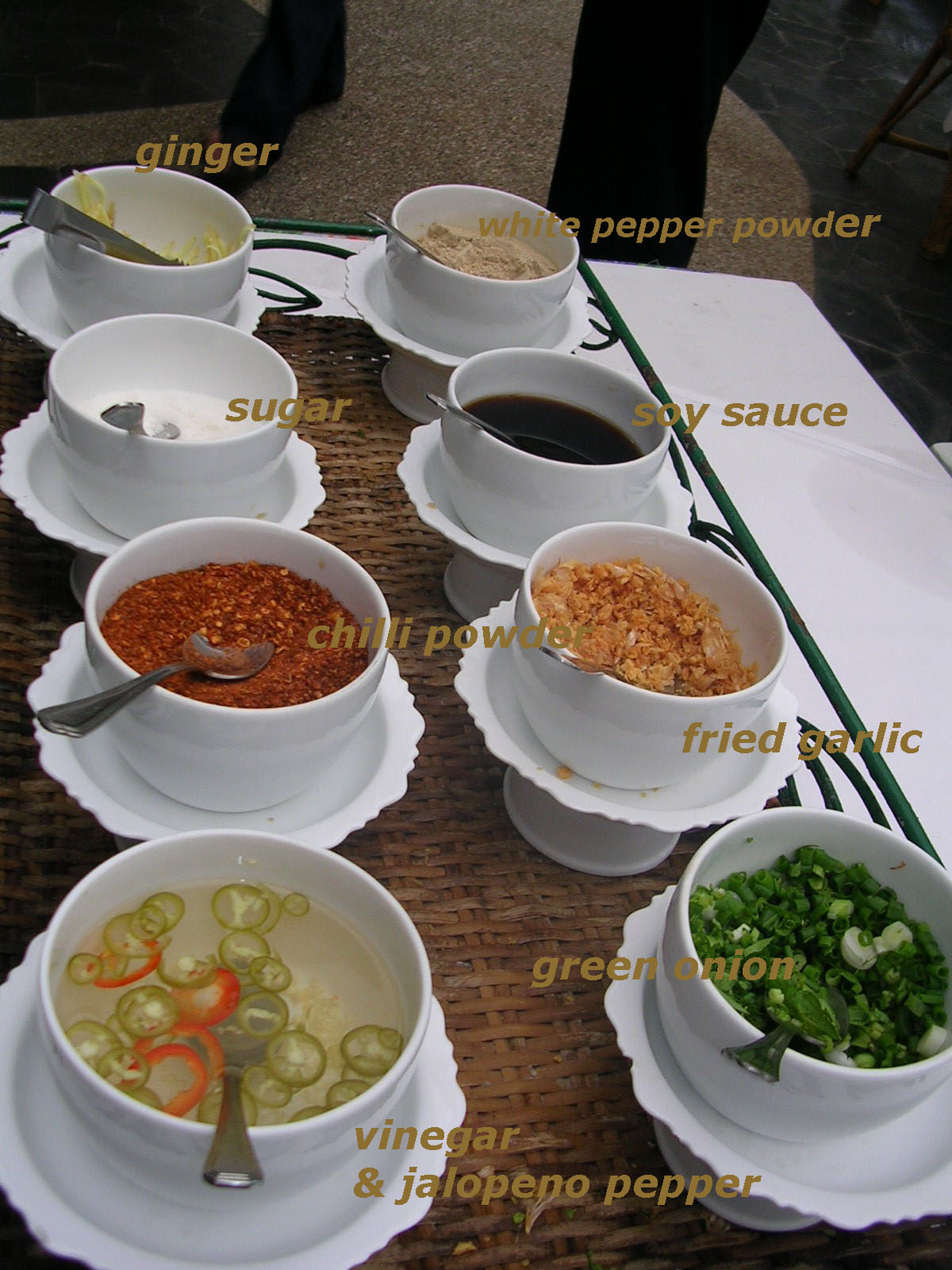
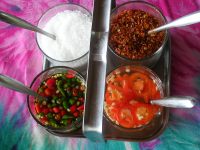
A second way to enjoy rice porridge is to make a rice soup buffet for a big crowd or special event.  To do this, take a rice porridge and add a little bit of ground meat. Cook it without adding flavoring, but serve it with condiments as shown in the photo below. The condiments typically consist of ginger, white pepper powder, sugar, soy sauce, chili powder, fried garlic, vinegar with jalapeno peppers and green onions.

Thai rice soup condiments

A third way to eat rice porridge is to serve it the same way as steamed jasmine rice but ideally with Chinese-Thai style main dishes such as stir-fried vegetables with salted soy bean or oyster sauce, salted egg, salted peanut, pickled mustard green, or braised pork in five spices.

Either for stretching a dollar or caring for yourself and your family, rice porridge is my comfort food for every occasion.

Kao Tom (Rice Porridge)

ข้าวต้ม

PREP TIME: 20 minutes

Yield: 4 cups

1 cup jasmine rice
6 cups water

Bring jasmine rice and 2 cups of the water to a boil on high heat. Stir often while cooking for 5 minutes.

Add the remaining 4 cups of water and bring to a boil. Let cook on medium heat for 15 minutes more, until it yields 4 cups.

I Love Thai cooking
Pranee teaches Thai Cooking classes in the Seattle area.
Her website is: I Love Thai cooking.com 

Read Full Post »

Eat the Jungle

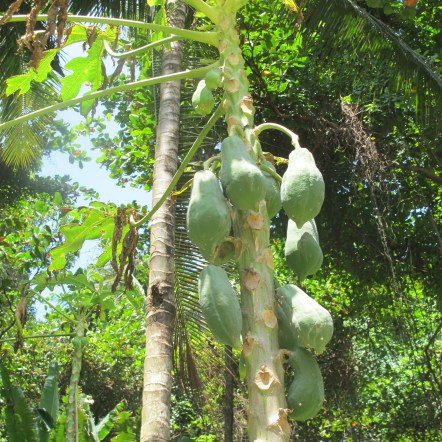
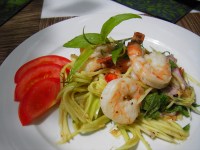
Papaya, Carica papaya Linn., is a native to South American and Mexico. From there it spread throughout tropical countries like the Hawaiian islands, Sri Lanka, India and Southeast Asia. In Thailand, we regard papaya as a herbaceous plant. The fruit shape is elongated and has a pointy tip. The green fruit is used in savory dishes such as green papaya salad, Gaeng Som (sour curry), Gaeng Kati (red curry), Gaeng Ohm (pork stew), or it is pickled or candied, stir-fried with egg, or used as a vegetable condiment. In our garden, when we want to have a ripe papaya we allow the green papaya to mature on the tree until a good portion of yellow and orange appears on part of its green skin. Then we pick the papayas and keep them covered with a rice sack until they fully ripen. Because the papain protein enzyme helps the digestive system, green papaya salad is an ideal side dish to accompany the grilled meat dishes common to Thai and Vietnamese cuisines—think of green papaya salad instead of coleslaw.

It is best to buy papaya with a great hint of yellow or orange color. When soft to the touch, peeled and seeded, ripe papaya is great eating fresh or in a smoothie.

Papaya is a great source for Vitamin A, C, folate and potassium. For an in-depth nutrient analysis please visit whfoods.com.

Thais eat fresh ripe papaya with a squeeze of lime and some sea salt. The seeds have a peppery flavor, but I haven’t come across Thais cooking with the seeds. We discard them, but Hawaiian cuisineuses the seeds in salad dressing.

Green Papaya

Papayas at the young and green stage are ideal for Thai, Laotian and Vietnamese cuisines. A few examples include the Thai green papaya salad Som tam which also know as Papaya Pok Pok–a fun name that comes from the sound that is made during preparation when the ingredients are pounded with a mortar and pestle. The Vietnamese movie The Scent of Green Papayaoffers an insight into the relationship of green papaya to Vietnamese cuisine and people. I personally have many stories to share about papayas.

Yield: ½ cup

1 shallot, halved and peeled 
6 garlic cloves, peeled
¼ cup minced lemongrass, about 1 stalk
1 teaspoon salt
1 teaspoon dry turmeric
½ to 1 tablespoon chili pepper flakes, or 10 to 15 dry Thai red chilies
1 teaspoon shrimp paste or 1 tablespoon miso paste or anchovy paste
1 tablespoon black peppercorns
¼ cup cooking oil

Place everything except the oil in the food processor. While the processor is running, pour in cooking oil as needed. Blend until smooth.

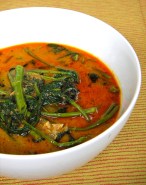
Phuket Jungle Curry with Green Papaya


Phuket Jungle Curry with Green Papaya

Gaeng Pa Malakaw Moo

แกงป่ามะละกอกับหมู

The exotic blend of peppery non-coconut curry with wild vegetables creates the flavor profile inspiration for this dish. I am glad most Thai restaurants carry it on their menus. You may be wary of any spicy Thai curry without coconut milk, but you will be amazed how each vegetable in this curry has it own sweetness when it’s cooked. Individual flavors from each vegetable stand out better than in a coconut curry dish.

Ingredients for Phuket Jungle Curry

Serves 4 to 6           Preparation time: 20 minutes           Cooking time: 10 minutes

3 tablespoons red curry paste or fresh Jungle Curry paste from recipe above
2 tablespoons canola oil
½ cup water
1 cup diced green papaya, peeled and seeded, about ¼ of a whole small green papaya
1 cup wedged Thai eggplants, about 5 whole Thai eggplants
1 cup yardlong beans or green beans, cut into 1 inch-lengths
1/4 cup sliced pork tenderloin, optional for vegetarian
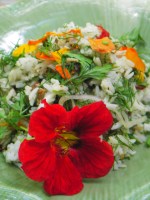
¼ cup Thai basil or any basil, or 3 nasturtium flowers (optional)
4 Kaffir lime leaves, optional if not available
1 tablespoon palm sugar or brown sugar
2 dashes fish sauce, or more to taste

Blend red curry paste and canola oil in a saucepan and cook over medium heat until fragrant, about 3 minutes. Add water and green papaya chunks, stir, then cover with a lid and let it cook for 3 minutes or until green papaya starts to look half-cooked. Add eggplant, yardlong beans and pork and stir, cover and cook for 3 more minutes until eggplant is soft but not mushy.

Stir in basil, Kaffir lime leaves, and sugar and cook for 30 seconds more; add fish sauce to taste. Remove from heat and serve with Jasmine rice.


This slideshow requires JavaScript.

© 2010  Pranee Khruasanit Halvorsen  
 I Love Thai cooking 
 
Pranee teaches Thai Cooking class in Seattle areas, her website is: I Love Thai cooking.com

Read Full Post »