Feeds:
Posts
Comments

Archive for January, 2012

Thai Kitchen Apprentice

Thai Kaffir Lime – Luk Makrut

Makrut and Bai Makrut (citrus hystrix)

When I was growing up, we used many citrus fruits in our family kitchen: lime, key lime, kaffir lime and calamansi, to name just a few. We use citrus juice in Thai cooking and when it comes to juice we depend largely on lime juice; most other citrus juices are for fun and creative cooking while they are in season. Kaffir lime is an exception. It was never important for its juice but rather for its precious rind.

Kaffir Limes – the rind is an ingredient for curry paste

Kaffir Lime (citrus hystrix), Makrut in Thai, is a bumpy citrus fruit that has a great deal of aromatic essential oil in the rind. In Thailand and Laos, we use the rind in curry paste. My grandmother would cut a kaffir lime in half and rub the lime on her head to massage her scalp and condition her hair.

Kaffir Lime Leaf ~ Bai Makrut is known as kroy saoch in Cambodia. These shiny, dark green, double-lobed leaves are used extensively in Thai, Lao and Cambodian cuisines as well as in the neighboring countries of India, Burma, Malaysian and Indonesia. For Thais, whole kaffir lime leaves have endless possibilities. They are an important ingredient in soups such as Tom Yum and Tom Kha, and are also always in curries. Whole kaffir lime leaves are used like bay leaves. The essential oil in the fresh leaves imparts flavor quickly and easily in boiling liquid, but the leaves themselves are not for eating. We never use dry kaffir lime leaves in Thailand. Letting them dry allows the delicate essential oil to disappear and nothing is left in the dry leaves. Ideally you want to freeze the fresh leaves right away while their moisture helps trap all of the essence.

When I was growing up, each home had one or more large kaffir lime trees in the back yard. The fresh leaves is the price that the trees pay for their alluring fragrance with citrus and floral notes. Besides using whole kaffir lime leaves in Thai soups and curries, another way to use the leaves is as a very fine chiffonade.

Kaffir Lime Leaves

The tender fresh leaves are ideal for cutting into fine chiffonade then adding to fish cakes or salads. There is no substitute nor any other ingredients that can truly imitate the alluring fragrance and flavor of kaffir limes. To avoid frustration, I keep a pound of frozen kaffir limes in my freezer for emergencies and for convenience, but I use fresh ones any time they are available at the store. I seldom chiffonade frozen kaffir lime leaves.

Thai Hua Mok batter wrapped in banana leaves ready for steaming

Thai Kitchen Apprentice

My mom is famous for Hua Mok – steamed fish cake in banana leaves. I was so proud of how people in the village raved about her Hua Mok that I found an opportunity to make her my business partner. I asked her to make Hua Mok and I would sell them right after school, around 4 to 5pm. That way people in the villages could purchase them for a snack or as a main dish for their family. She agreed and I became an apprentice cook at her side. The valuable lesson I learned was to shred the kaffir lime leaves into the finest slivers. A fine chiffonade of kaffir lime leaves is a high point of Thai cuisine, so it is important to be patient and to practice cutting the leaves; there is no compromise. The fine chiffonade of kaffir lime leaves is incorporated into many recipes: Tod Mun (fried fish cake), Hua Mok (steamed fish cake in banana leaves), Kao Yum (rice salad), Pla (spicy Thai herbal salad with meat, poultry or seafood), Phanang curry and Chu Chi curry. These are traditional Thai dishes that are always served with generous amounts of fine chiffonade of kaffir lime leaves on top.

I took the three pictures below when I visited Koh Kred, an island village of ethnic Mon people outside of Bangkok. For me, Koh Kred is a culinary treasure island. It is famous for traditional fried fish cake or steamed fish cake. Both recipes use extreme amounts of fine slivered kaffir lime leaves. In Koh Kred I visited Pha (Thai for Auntie) Mu and savored her steamed fish cake in banana leaves. She also kindly let me take her picture as she spent her time chiffonading kaffir lime leaves while selling her Hua Mok.

Kaffir lime leaves are stacked before being made into a finely shredded chiffonade

To chiffonade, layer three to four kaffir lime leaves and fold, then, holding them tightly, use a sharp knife to thinly slice them (see picture below). I tell my students that I often cut the air seven times to control my knife then I may succeed with three perfect fine slivers. There are two errors you are likely to make while cutting: one is cutting the air instead of the leaves, the other is cutting too big a slice. Cutting the air indicates that you are close to perfection. When the leaves are too old and tough, I would prefer not to chiffonade them at all – eating one will feel like you’ve eaten a fish bone. Only the tender fresh kaffir lime leaves are good for this.

I have posted many photos to give you a good sense of how Thai cuisine depends on the flavor of the kaffir limes and kaffir lime leaves. Today kaffir lime leaves are easy to find in America and around the world. I hope I have inspired you to incorporate this alluring citrusy sense and flavor in your cooking. You can use kaffir lime in practically everything!

Pha Moo is making a chiffonade of Kaffir lime leaves

Pha Moo spends many hours chiffonading her kaffir lime leaves as there is no shortcut for this step. Often, when I make a fine chiffonade in a classroom, students who are across the room will pause as they notice the alluring fragrance. The food’s citrusy taste is easily noticeable and appreciated.

Pha Moo’s famous steamed fish cake

Pha Moo’s steamed fish cakes are so scrumptious. Her regular customers come from the neighborhood and from Bangkok.

Tod Mun Pla and Tod Mun Khai Nok Katha – Fish Cake and Quail Eggs

Koh Kred Tod Mun Pla is packed full of herbs. Besides kaffir lime, Noh Kala, a local rhizome is added to the fish paste.

Pho Noodle Soup with Chicken, with fine fresh shredded chili and kaffir Lime

A famous Pho Noodle stall in Hanoi provides a fine chiffonade of kaffir lime leaves and Thai chili for customers to add to the Pho Ga, Chicken Noodle Soup.

Shredded kaffir lime leaves is one of the ingredients in Amok curry paste

Please click photo for Kroeung Khmer curry paste recipe

In Siem Reap, Cambodia at Le Tigre De Papier cooking class, a member of my tour learned how to add kaffir lime leaves to Khmer curry paste.

Pla Gai, Thai herbal salad in lime juice with fine slivers of kaffir lime leaves

In Phuket, the BoatHouse Cooking School teaches students to make a fine chiffonade of kaffir lime leaves for Pla Salad.

Phuket Spicy Devil Soup – Tom Prade Gai at Palai Seafood Restaurant

Coconut and Turmeric Curry of Blue Swimmer Crab with Southern Lime

Coconut and turmeric curry of blue swimmer crab with southern lime at Nahm Restaurant in Bangkok by David Thompson
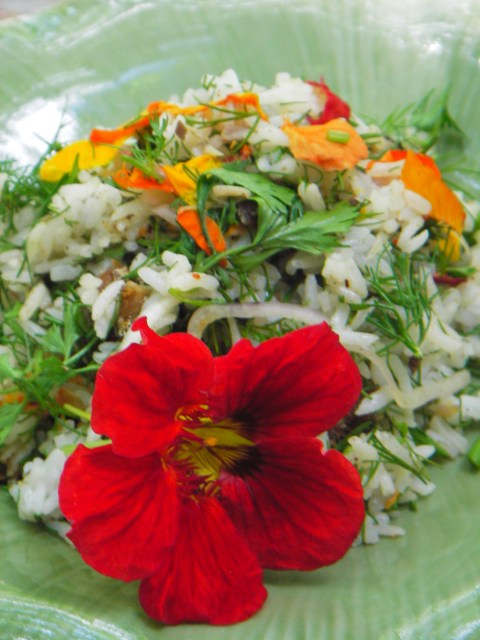
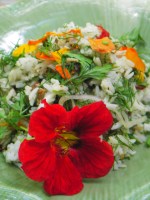
Southern Thai Rice Salad with Mixed Herbs

Please click photo to see Pranee’s Southern Thai Rice Salad Recipe

Pranee’s Salmon Fish Cake – Tod Mun Pla Salmon

Please click photo for Pranee’s Salmon Fish Cake Recipe

Kaffir lime leaves are available fresh or frozen in Asian markets, at the PCC Natural Markets, and from online stores. For fun facts and recipes, please also check kaffirlimeleaves.com

I Love Thai cooking
Pranee teaches Thai Cooking classes in the Seattle area.
Her website is: I Love Thai cooking.com 

Read Full Post »

Dreamy Coconut Frosting

I have been home from Maui for over a week now and I still dream of the luscious tropical deserts from my recent trip. I am totally inspired and determined to create an easy version of a coconut dessert that will reflect my trip. For a dinner party last Sunday I baked a coconut cake the day before by following a layer cake recipe from a box of cake flour and using coconut milk in place of milk and substituting coconut flavoring for vanilla. (You can do the same or try the links to the many wonderful coconut cake recipes that I have added at the bottom of this page.)

Last Sunday was perfect. I brought the coconut cake to a Thai friend’s dinner party to complement their Thai dinner. I was glad they liked the cake. They loved the light texture of the frosting and the generous amount of sweetened shredded coconut. I hope you will enjoy this recipe and add a dream-like tropical dessert to your Thai dinner at home.

A Creation of Tropical Flavors

Primroses greeted me in January; I used them to decorate the cake.

Coconut Cake with Coconut Frosting was the answer to my longing to create a dish to duplicate the flavors of a tropical land in a western kitchen. I personally have never tasted coconut cake in Thailand but came to love the cake in America and most recently on my visit to Maui. I can’t live without coconut and was excited about adding coconut cake to my repertoire.

The body of the cake that I envisioned can be any white, spongy cake that gets its coconut flavor from coconut milk and natural coconut flavoring. Its frosting should be light and fluffy with pure coconut flavor and a mouthful of shredded coconut.

Butter, Coconut Cream and Powder Sugar = Coconut Frosting

First step: Cream butter, then add powdered sugar and coconut cream.

Step 2: Coconut Frosting

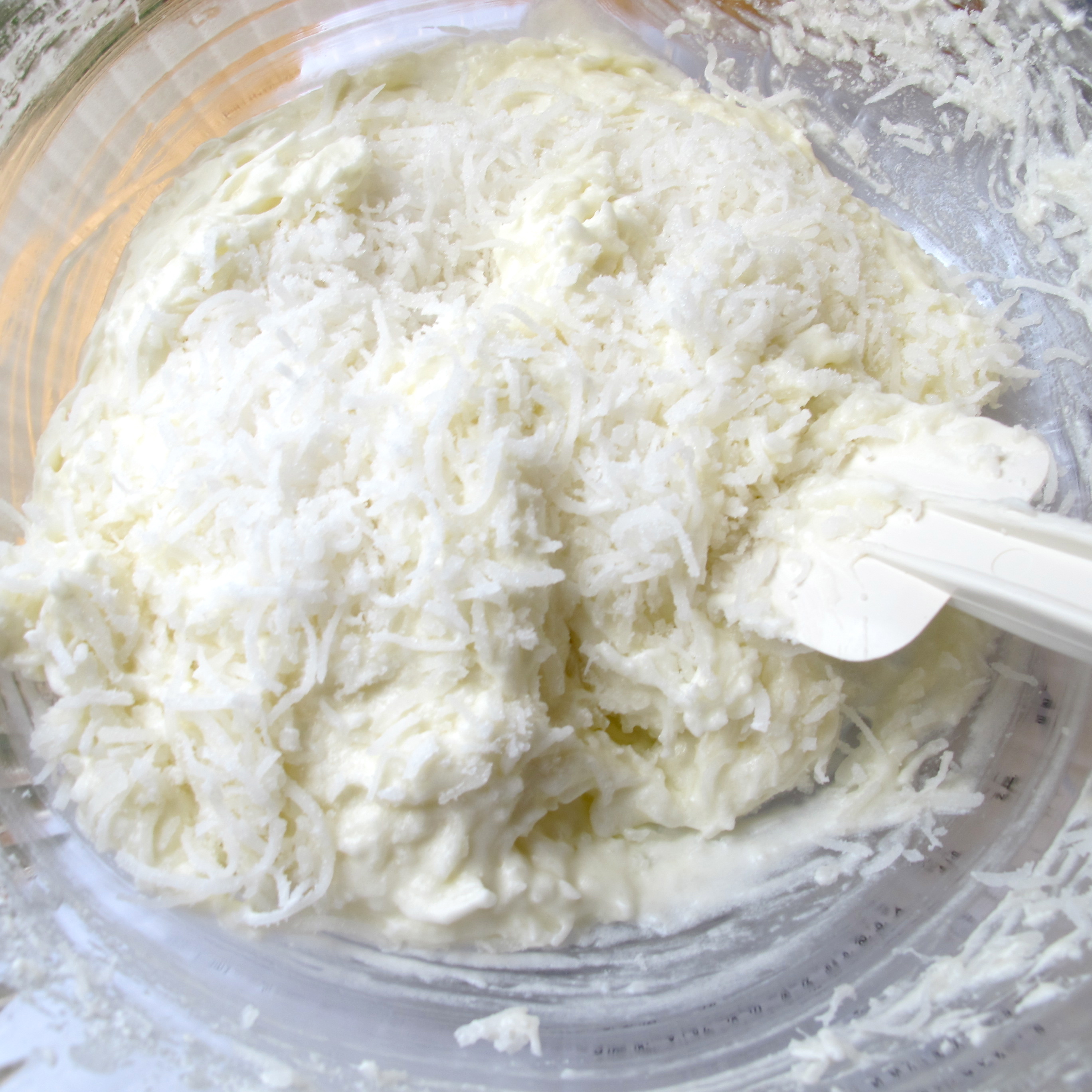
Step 2: Stir in coconut flavor, jasmine flavoring essence and sweetened shredded coconut.

Step 3: More Coconut on Coconut Frosting

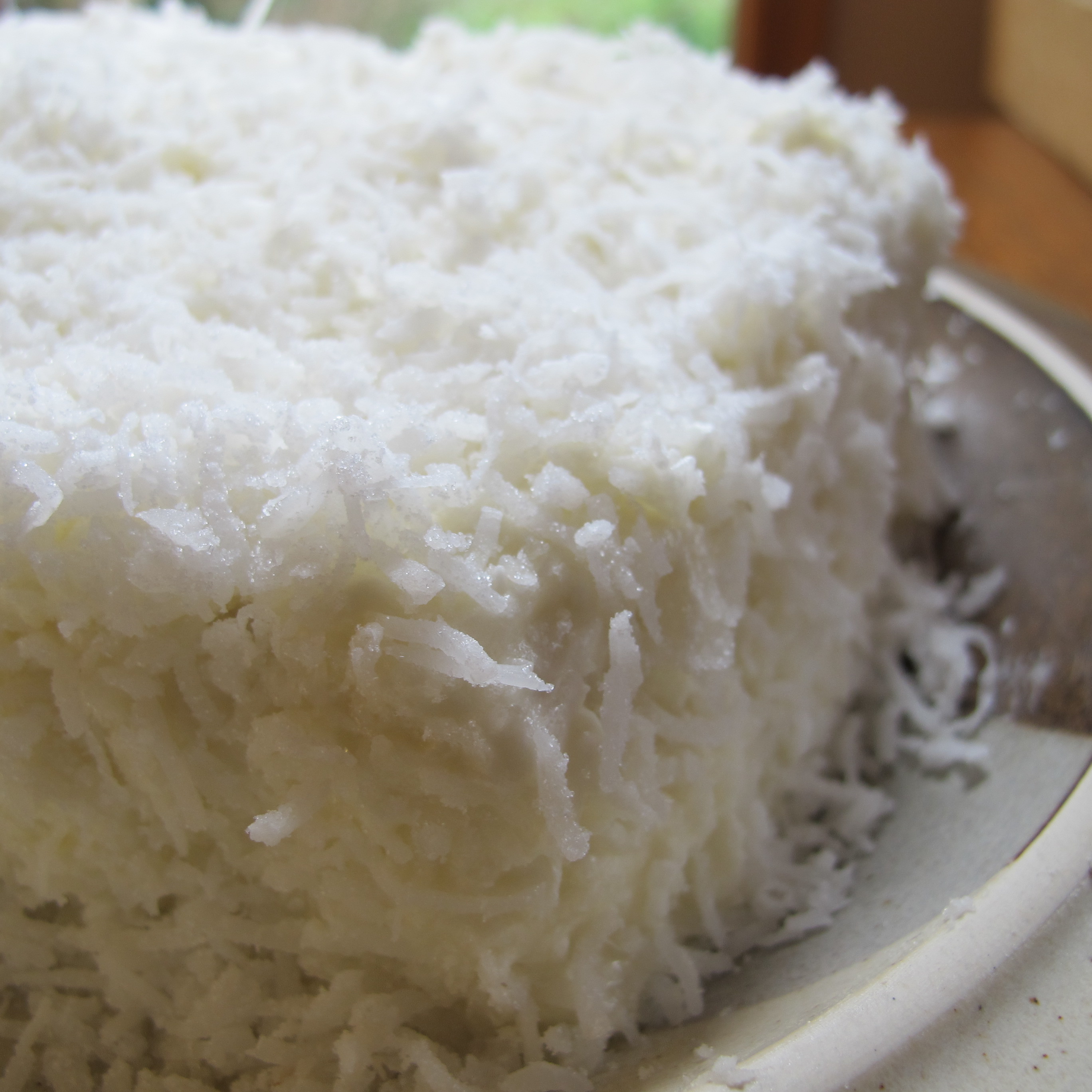
Step 3: Spread frosting between the layers and on the top and sides of the cake; add sweetened shredded coconut on the top and along the sides.

Dreamy Coconut Frosting

Pranee’s Coconut Cake with Coconut Frosting

When it comes to making coconut frosting for coconut cake, I keep it simple, low fat and fast.  The whole process should be easy and carefree. The frosting needs to be creamy, but thick enough to stick to the surface of the cake and to allow the shredded coconut to stick to it. We need either cream cheese or butter to begin with, then I use coconut cream to lighten it up and add powdered sugar until the mixture gets to the desired texture. For coconut, you can use dry coconut chips/flakes, freshly grated coconut or simply sweetened, shredded coconut. I baked the cake the day before and made the frosting the next day—it doesn’t take long to whip up and spread—then the cake is ready to serve. The secret to making this frosting dreamy is to have a real coconut flavor heightened with either vanilla, rose, lavender or jasmine.

Yield: 2 cups

1 stick unsalted butter, at room temperature
2 cups powdered sugar
1/3 cup coconut cream (the thick top layer from a can or carton of Thai coconut milk)
1 pinch of salt
1 teaspoon coconut flavoring (I like Frontier Natural Flavors)
1 teaspoon flavoring essence Jasmine (Mali)
2½ cups sweetened shredded coconut, divided
 
With an electric mixer, beat butter on medium speed until creamy. With a spatula, fold in sugar and coconut cream; beat until creamy, about 3 minutes. Fold in coconut flavoring, jasmine flavoring essence and 1½ cups sweetened shredded coconut. You may use ½ cup of the finished mixture as a filling and the rest, about 1½ cups, as frosting.

Spread the frosting to cover all of the cake surface, then cover the frosting with the rest of the sweetened shredded coconut.

I Love Thai cooking
Pranee teaches Thai Cooking classes in the Seattle area.
Her website is: I Love Thai cooking.com 
 

Read Full Post »

Maui, Upcountry Culinary Getaway

First of all, Happy New Year – Sawasdee Pee Mai – สวัสดีปีใหม่.

Maui, Upcountry

I have just returned from a family vacation to Maui. While I was there I had the chance to take two days off to totally explore Maui as a culinary getaway. For foodies and culinary enthusiasts, the upcountry is a must. No Maui vacation is complete without a full immersion into this land, people, food and culture.

View from Highway 37 between Grandma’s Coffee House and the Maui Winery

First Day – Grandma’s Coffee House, Tedeschi Vineyards, Ali’i Kula and the Hili’imaile General Store

On Friday December 23rd, I left Ka’anapali around 8:30am and drove along Highway 37 to the upcountry area. Upcountry is the high land area near the base of the Haleakala Crater and the Haleakala National Park. (Please see related links below for more information.)

I arrived at 9:30am at Grandma’s Coffee House – a must-visit place for coffee lovers, either on your way to the Maui Winery or afterwards if you are following the area’s bike route. Grandma’s serves breakfast and lunch.

Grandma’s Coffee House

Grandma’s Maui Coffee, Highway 37, Keokea.

grandmascoffee.com

I enjoyed a Grandma’s Americano and a Grandma’s Pineapple and Banana Cream Cake at an outside table. The cake was perfect—not too sweet, but with all the Hawai’i goodies: macadamia nuts, pineapple and bananas. The frosting was light with a swirl of caramel. My palate tasted the heaven.

Maui Winery

Tedeschi Vineyards at the Ulupalakua Ranch

Highway 37, Keokea. mauiwine.com

Around 10am I got back in the car and, continuing on Highway 37, headed to Ulupalakua. I arrived at the Maui Winery 20 minutes later, just in time for the first tour at 10:30am. The free half-hour tour provided extensive information about the winery and its wine, as well as the history, culture, and native land that connect to the spirit of the place. The old large tree and hilly landscape made for a very tranquil atmosphere.

Ulupalakua Ranch Store and Grill

Ulupalakua Ranch Store and Grill, Highway 37

 ulupalakuaranch.com

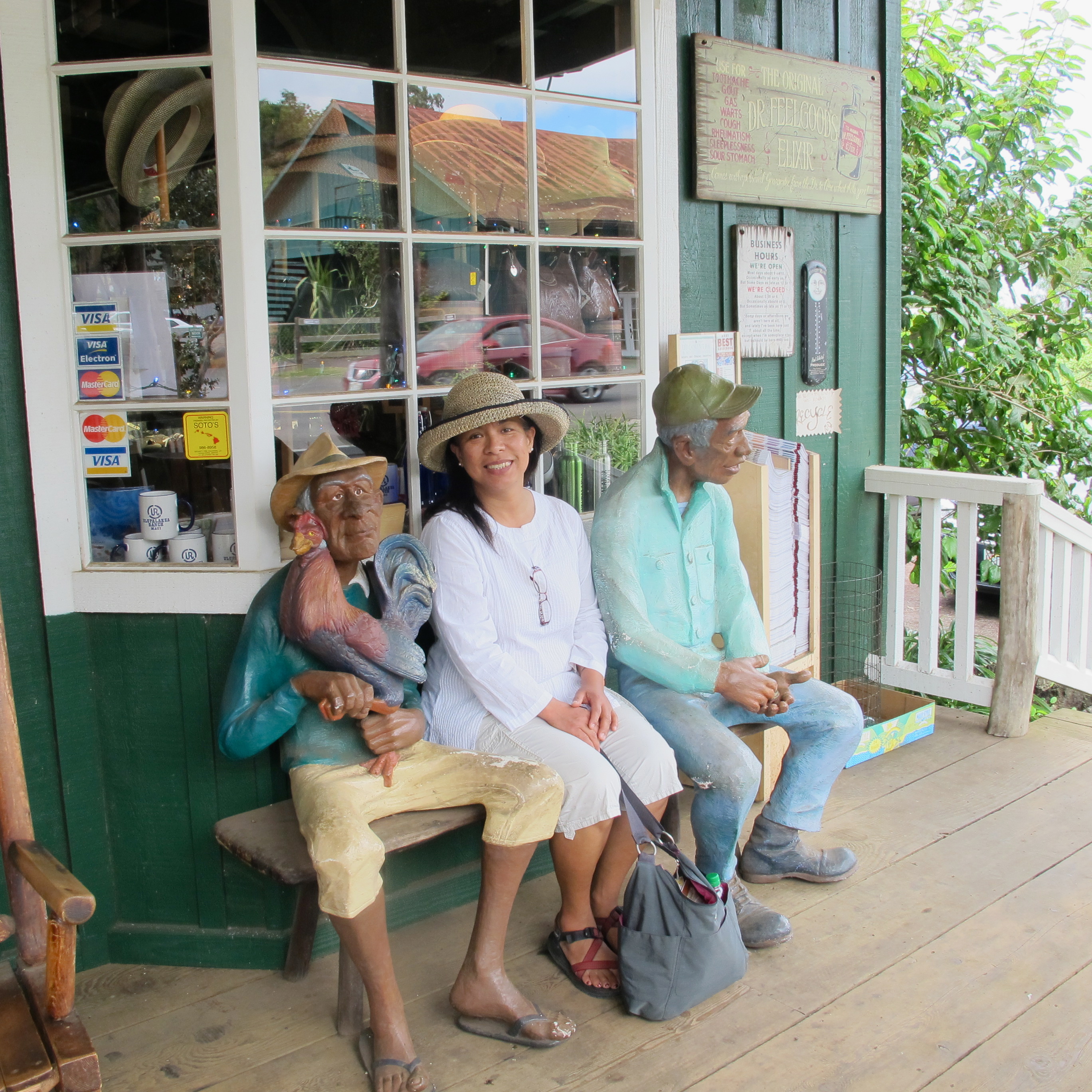
Then I walked to Ulupalakua General Store and had my picture taken between the sculptures of two Hawaiian cowboys. I could have ordered an elk burger, salad or sandwich for lunch, but the Ali’i Kula lavender Farm was my next destination and I planned to have a late lunch after that at the Hili’imaile General Store.

Ali’i Kula Lavender Farm

Ali’i Kula Lavender Farm, 1100 Waipoli Road, Kula.

 aklmaui.com

Twenty minutes later, I arrived at Ali’i Kula Lavender Farm. Admission to the farm was free, but I decided to take the 30-minutes tour at 1pm for $12. This gave me plenty of time to enjoy the gift shop, eat a lavender scone and sip some lavender black tea on the patio. I enjoyed the retreat-like setting in the beautiful garden with its cool air and great view and felt at peace.

Thank you to Kathy Gehrt, my friend and author of the cookbook Discover Cooking with Lavender, who recommended this place to me. If you wish to learn more about cooking with culinary lavender please visit Kathy’s blog: Discover Lavender.

Right after the tour ended, I excused myself and headed out to The Hili’imaile General Store. I arrived at 2 pm, just 30 minutes before the kitchen was to close.

The Hili’imaile General Store Restaurant

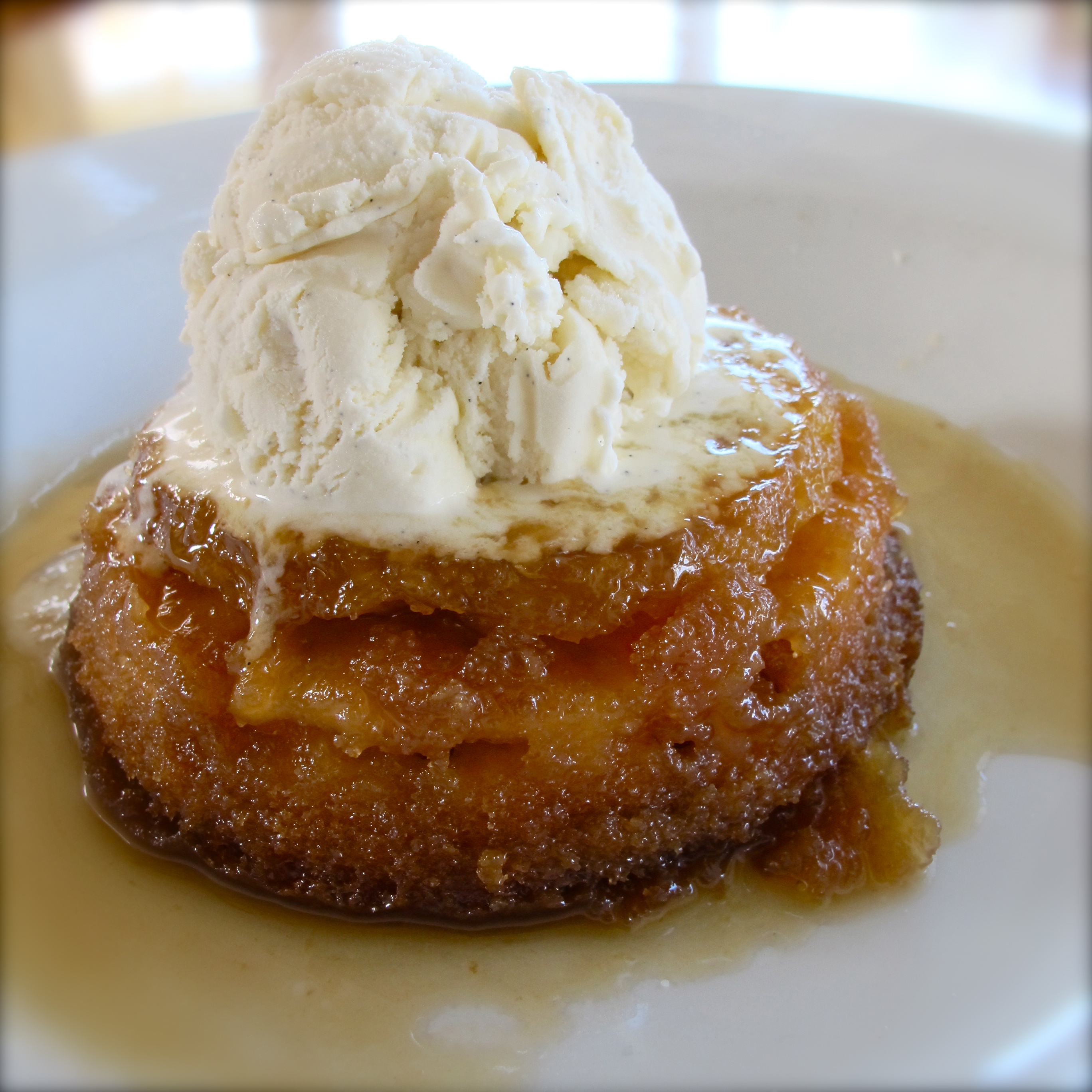
The staff was very friendly and I took their recommendations for what to order. I was glad I did. To share my memorable meal with you, I have found Chef Beverly Gannon’s recipes online and placed the links to them right under the pictures of these dishes. The Sashimi Napolean and the six times award-winning Pineapple Upside-Down Cake are not to be missed. The recipes are also in her second cookbook, Family-Style Meals at the Hali’imaile General Store which is published by Ten Speed Press.

Sashimi Napoleon

Sashimi Napoleon Recipe by Chef Beverly Gannon

Pineapple Upside-Down Cake

Pineapple Upside-down Cake Recipe by Chef Beverly Gannon

Recipes and information on her second cookbook

with Chef Beverly Gannon

The Hali’imaile General Store

900 Hali’imaile Road, Makawao, HI 96768
Phone: 808.572.2666 | Fax: 808.572.7128

Second Day – Kula Lodge, O’o Farm and Makawao

On Monday, December 26th, the second day of my upcountry culinary getaway, I started my day with breakfast at Kula Lodge, then drove to the O’o Farm which is only 10 minutes away. I arrived at the farm just 10 minutes before a farm tour was to begin.

O’o farm, harvesting Salad Mix for Our Lunch

O’o Farm, 651 Waipoli Road, Kula. Tours and lunches

 oofarm.com

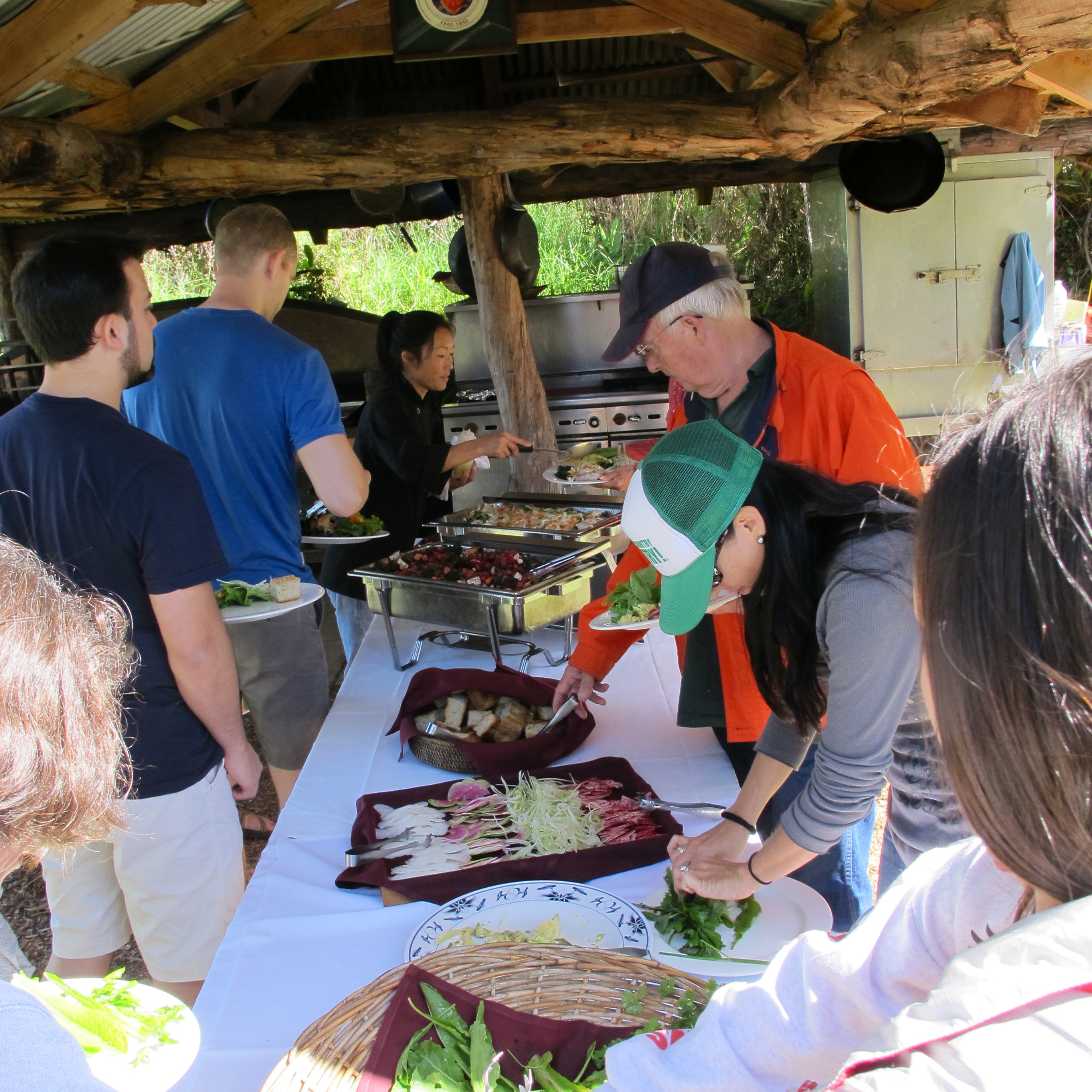
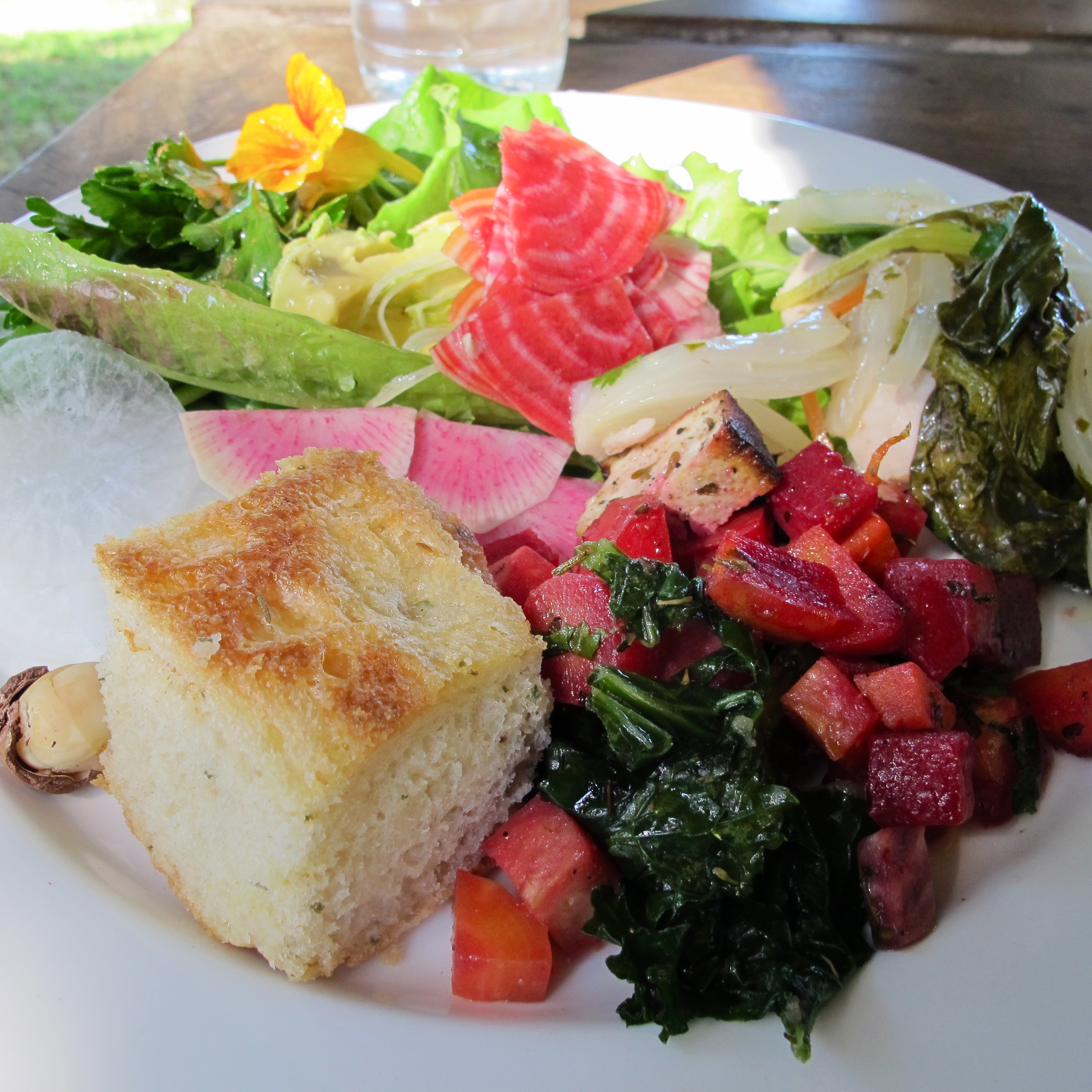
Farm Fresh Lunch Prepared by Chef Caroline Schaub

Chef Caroline Schaub prepared some amazing and inspired farm-fresh dishes.

O’o farm, lunch area

The farm tour and lunch package costs $50; booking in advance is recommended. The tour, which included about 26 people from all across the United States, was guided by the farm manager. It started at 10:30am and we picked our own salad mix at the end. We all enjoyed the tour and were inspired by our farm-to-table experience.

Lunch at O’o Farm Tour

After leaving the farm I spent a pleasant hour in Makawao, a delightful small town for visiting art galleries, eateries and shops. Then I made a leisurely drive back to Ka’anapali and met up with my family in the late afternoon.

Pranee Khruasanit Halvorsen

Related articles

Read Full Post »